

If you are coming to Amsterdam and planning to explore a little further: Haarlem, Zaanse Schans, Leiden, or Rotterdam, Dutch public transport will probably become part of your trip.
It’s efficient, clean, and reliable. But if you’re not used to it, small things like tapping in and out or understanding platforms can feel confusing at first.
So here is a calm, practical guide to help you move confidently.
Start with the Right App
In the Netherlands, three tools are commonly used.
The NS app is the most accurate when it comes to trains. It shows real-time departures, platform numbers (called spoor in Dutch), delays, and whether a train requires a small supplement. If you’re traveling between cities, this is the app I personally trust the most.
If you want a full door-to-door route that combines train, tram, metro, and bus, the 9292 app is excellent. It calculates walking time, transfers, and total journey duration in one overview.
Google Maps works too, but for train details and last-minute platform changes, NS is usually more precise.
Paying Is Easier Than You Think
In recent years, the system has become very visitor-friendly.
Most travelers simply use their contactless debit or credit card, Apple Pay, or Google Pay. You tap your card when entering the station and tap again when exiting. The system calculates your journey automatically.
That’s it.
You don’t need a special card for a short visit.
If you prefer more control, you can also buy train tickets directly inside the NS app and use the digital QR code instead of tapping.
Residents often use an OV-chipkaart, but visitors rarely need one unless staying longer.
The One Rule You Must Remember
Always tap in. Always tap out.
For train journeys, tapping in happens at the entrance of the station and tapping out happens when you exit at your final destination. If you are changing trains within the same station, you stay checked in, no need to tap out in between.
If you transfer from train to tram or bus, you tap out of one system and tap into the next. Each transport company has its own readers.
Forgetting to check out is the most common mistake. If that happens, the system may temporarily charge a higher amount. With OVpay (contactless payment), you can request a correction online. It’s usually easy to fix.

If you’re planning a visit to Zaanse Schans, here is my complete guide to exploring it independently.
Peak and Off-Peak Hours
If you hear someone mention “off-peak,” they are referring to quieter travel times during the day, typically after the morning commute and before the evening rush.
Visitors using contactless payment don’t need to think too much about this unless they are buying special discounted tickets. But it’s helpful to know that mornings before 9:00 and late afternoons after 16:30 can be busier with commuters.
Trains That Require a Supplement
Some faster trains, such as the Intercity Direct between Amsterdam and Rotterdam, require a small additional fee.
The NS app clearly indicates this. You can either pay the supplement or choose a slightly slower train without it.
It’s not complicated, just something to be aware of.
Traveling with Children
Children under 4 travel free.
Children between 4 and 11 can use a special flat-rate Railrunner ticket, which makes day trips very affordable for families.
If you’re planning multiple city visits with kids, this makes a noticeable difference.
Understanding Platforms and Train Boards
When you arrive at a Dutch train platform (spoor), you’ll see a digital board above the track.
The board shows:
- The departure time of the next train
- The final destination
- A list of intermediate stops
- And a small visual diagram of the train itself
That small drawing is more helpful than it looks.
It shows the length of the train and your position on the platform in relation to it. If the train is shorter than usual, you’ll see which section of the platform it will actually stop at. This helps you avoid standing too far forward or too far back, especially useful during quieter hours when trains may run with fewer carriages.
It also allows you to position yourself near the correct wagon before the train arrives.
First Class, Second Class & Silent Carriages
Dutch trains usually have two classes:
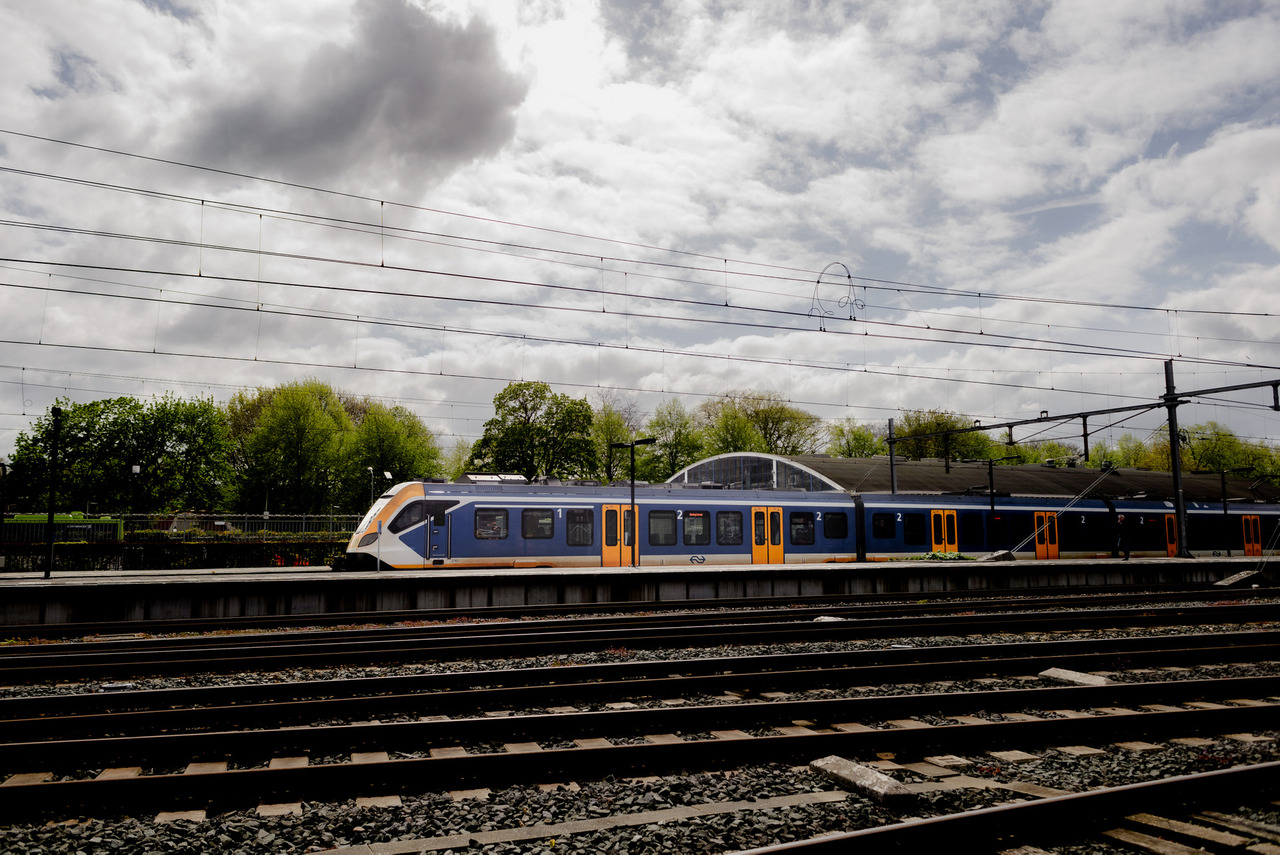
- 1st Class (marked with the number 1 on the outside of the carriage)
- 2nd Class (marked with the number 2, most visitors travel in this section)
The difference is mainly in seating space and quietness. Tickets must match the class you sit in.
Some carriages are designated as Silent (Stilte) Wagons.
Inside these, phone calls and conversations are not allowed. Even low conversation is discouraged. If you enter one accidentally and see a silence sign on the window, simply move to another carriage.
It’s a small detail, but respecting it keeps the experience pleasant for everyone.
A Note on Park & Ride (P+R)
If you are renting a car but don’t want to drive into central Amsterdam, Park & Ride locations outside the city can be a smart solution.
You park on the outskirts and take public transport into the center at a reduced cost, as long as you follow the conditions correctly.
For some travelers, this creates a nice balance between flexibility and simplicity.
A Few Cultural Details
Dutch public transport works well because people respect shared space.
Inside trams (and often buses), you’ll notice different seat colours. Blue seats are regular seats, while red seats are preferred seats (priority seating). These are intended for people who may need them more, such as:
- elderly passengers
- pregnant passengers
- passengers with disabilities or limited mobility
- people traveling with very small children
Near the doors, you’ll also see dedicated spaces for wheelchairs and strollers. These areas often have foldable seats, and it’s expected that people make space quickly if needed.
A few small habits also help everything flow smoothly:
Passengers exit before others enter.
Escalators: stand on the right, walk on the left.
Voices stay relatively calm, especially in trains (and extra calm in silent carriages).
When Public Transport Works Best
Public transport is perfect for day trips to Haarlem, Leiden, and Zaanse Schans. It runs frequently and connects everything logically.
For very time-sensitive moments, like a proposal or a tightly scheduled photo session, I always recommend building in buffer time. Trains are reliable, but giving yourself a margin removes stress.
Final Thought
The Dutch system may look complicated from the outside, but in reality, it revolves around two simple ideas:
Tap in. Tap out.
Once you understand that, the rest flows naturally.
And if you ever feel unsure about how to connect your day, two points like Amsterdam and Zaanse Schans, or a multi-city day, you can always design your schedule around the rhythm of the trains, or let someone local help you connect the pieces smoothly.
See you in Amsterdam,
Joanna
Your Photographer in Amsterdam