

There is something remarkable about standing before an object made hundreds, or even thousands, of years ago. We often see ancient objects as treasures. We admire their age, their craftsmanship, and the fact that they have survived for so long. But sometimes we forget something very simple: many of these objects were once part of somebody's everyday life.
That was one of my biggest discoveries during my visit to Glass, Made in Antiquity at the Allard Pierson Museum in Amsterdam.
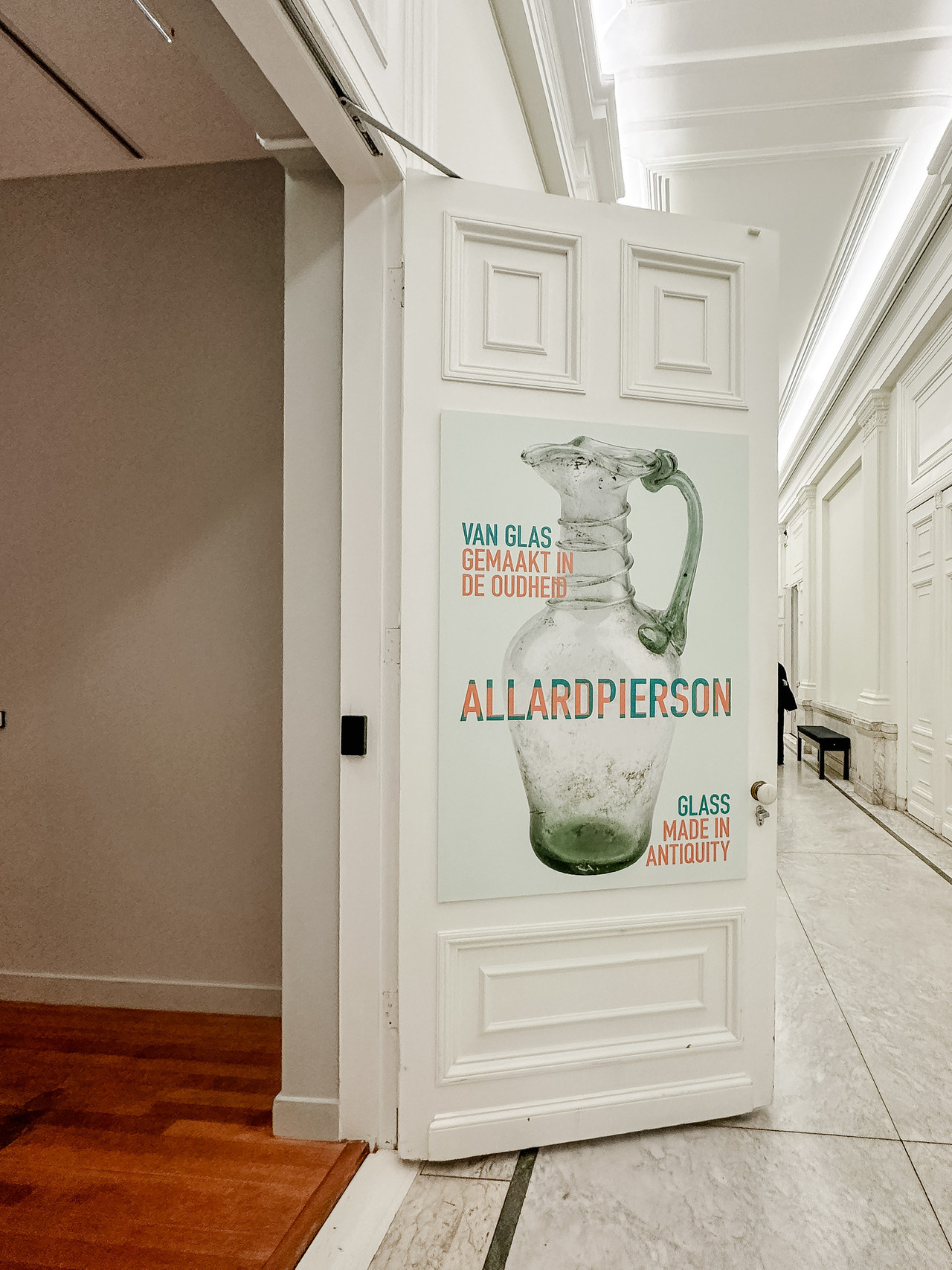
My first visit to the Allard Pierson Museum
Although I have lived in Amsterdam for several years, this was my first visit to the Allard Pierson Museum's permanent collection. I arrived curious about its archaeological collections and particularly interested in the glass exhibition. I had no idea how much I'd have to explore.
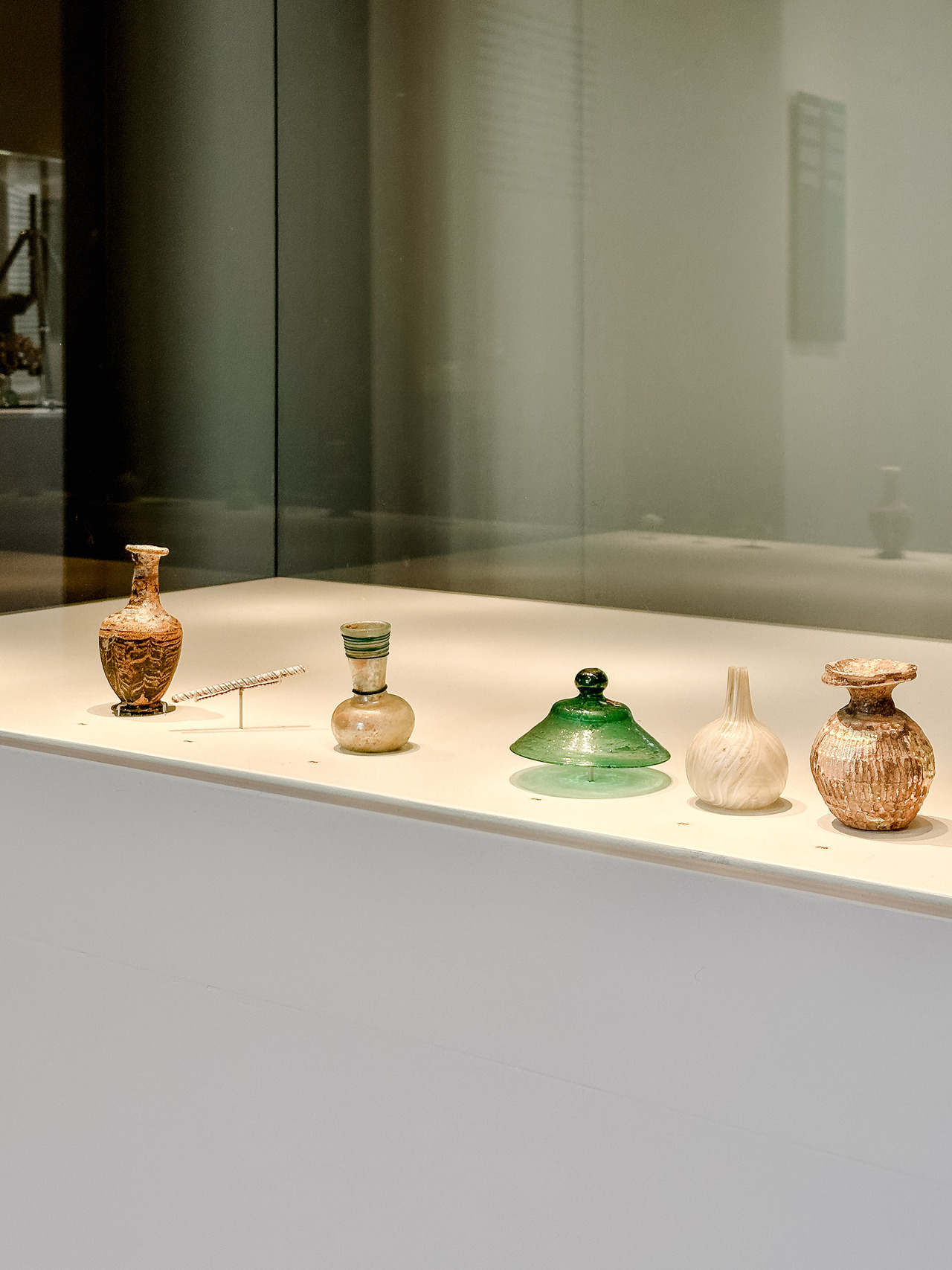
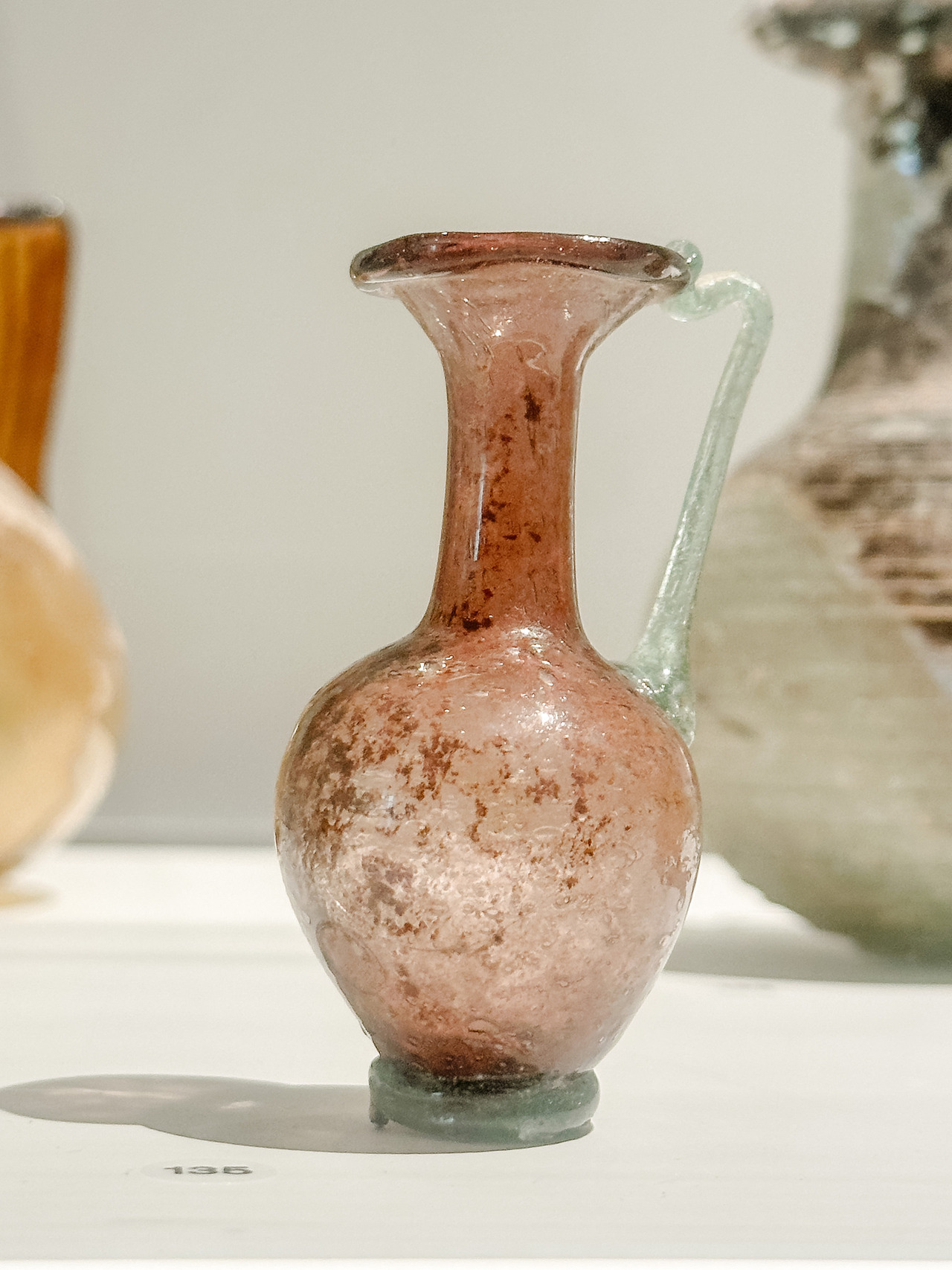
I started with the exhibition, which brings together more than 200 glass objects from the museum's archaeological collection, spanning approximately 1500 BCE to 1100 CE. The collection includes bowls, bottles, small containers, and decorative objects. Some are colorful; others transparent. Some are surprisingly delicate, while others have thick walls and irregular shapes.
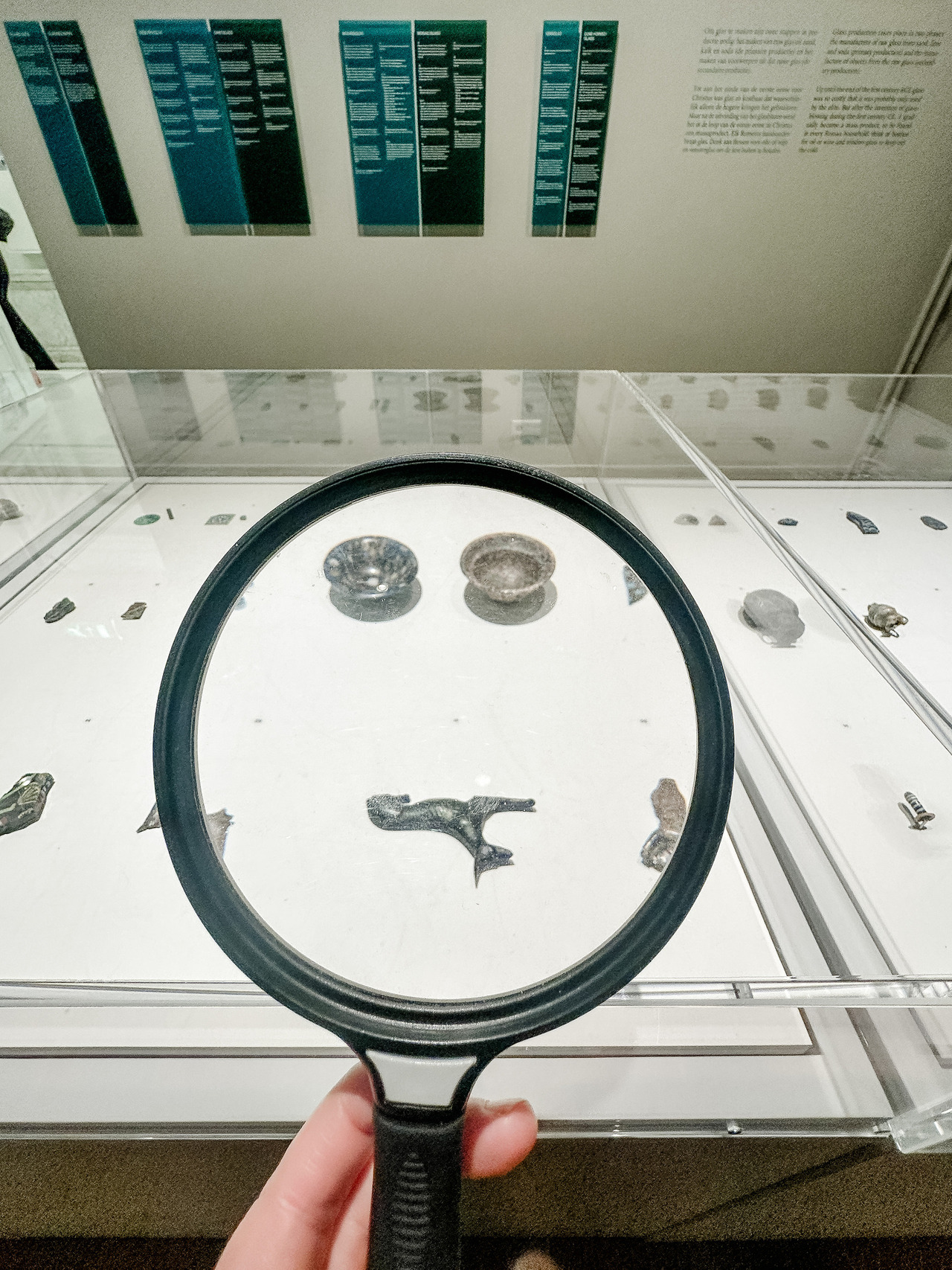
Objects that were once ordinary
Looking at the ancient glass vessels, I kept thinking about the objects we use today. A bowl is still a bowl. We still need containers to store things, vessels to drink from, and beautiful objects to decorate our homes.
Of course, the designs and manufacturing techniques have changed. But the basic needs behind many of these objects have remained remarkably similar. I found that fascinating. Imagine someone centuries ago reaching for a glass container in their home without thinking much about it, just as we reach for a glass or a bottle today. They couldn't have imagined that one day their ordinary possessions might be displayed in a museum, admired by people living in an entirely different world.
It made me wonder which of the things we use today might become museum objects in the future.
When contemporary art changes the way you see the past
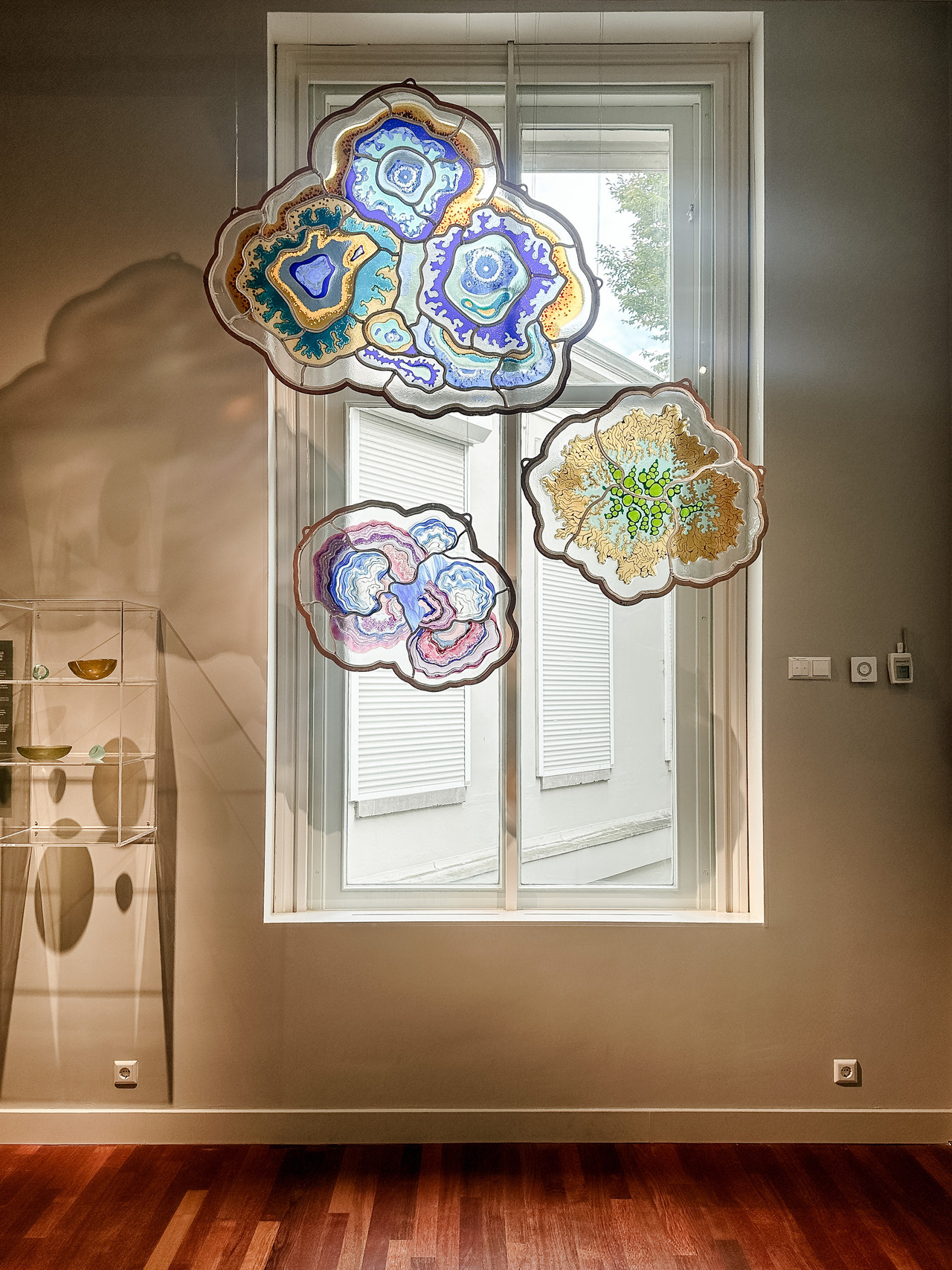
One of the exhibition's most interesting decisions is including contemporary glass artists alongside the ancient objects. The exhibition features work by Bert Frijns and Emmy van de Grift, showing how glass continues to inspire artists today. I was particularly drawn to Bert Frijns's work.
His glass sculptures have a delicacy that contrasts with many of the ancient vessels. Some of the bowls appear incredibly thin and clear, and the way light travels through them is beautiful.
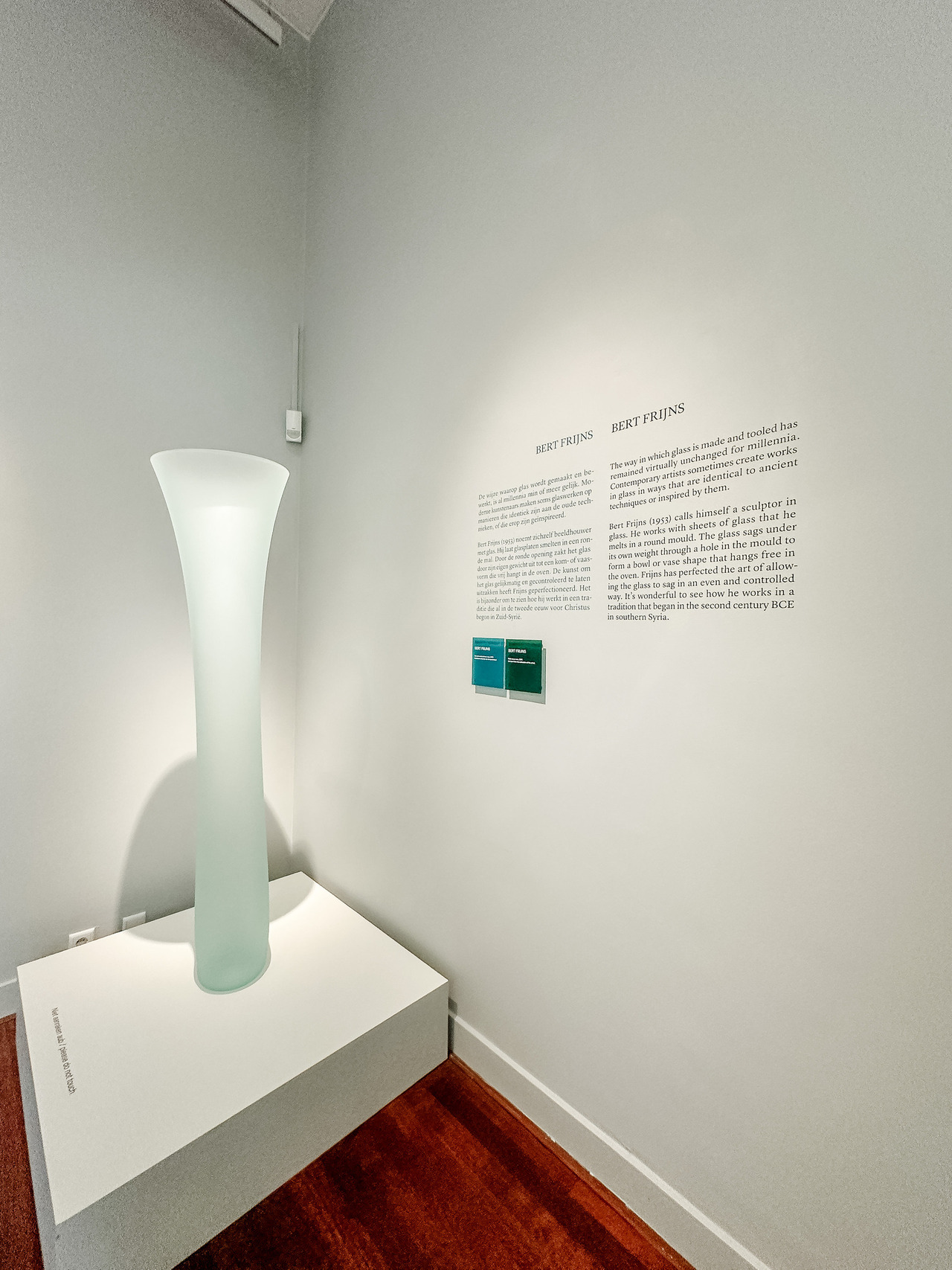
One sculpture, with three rounded forms stacked vertically, especially caught my attention. The reflections and transparency made it almost impossible to stop looking.
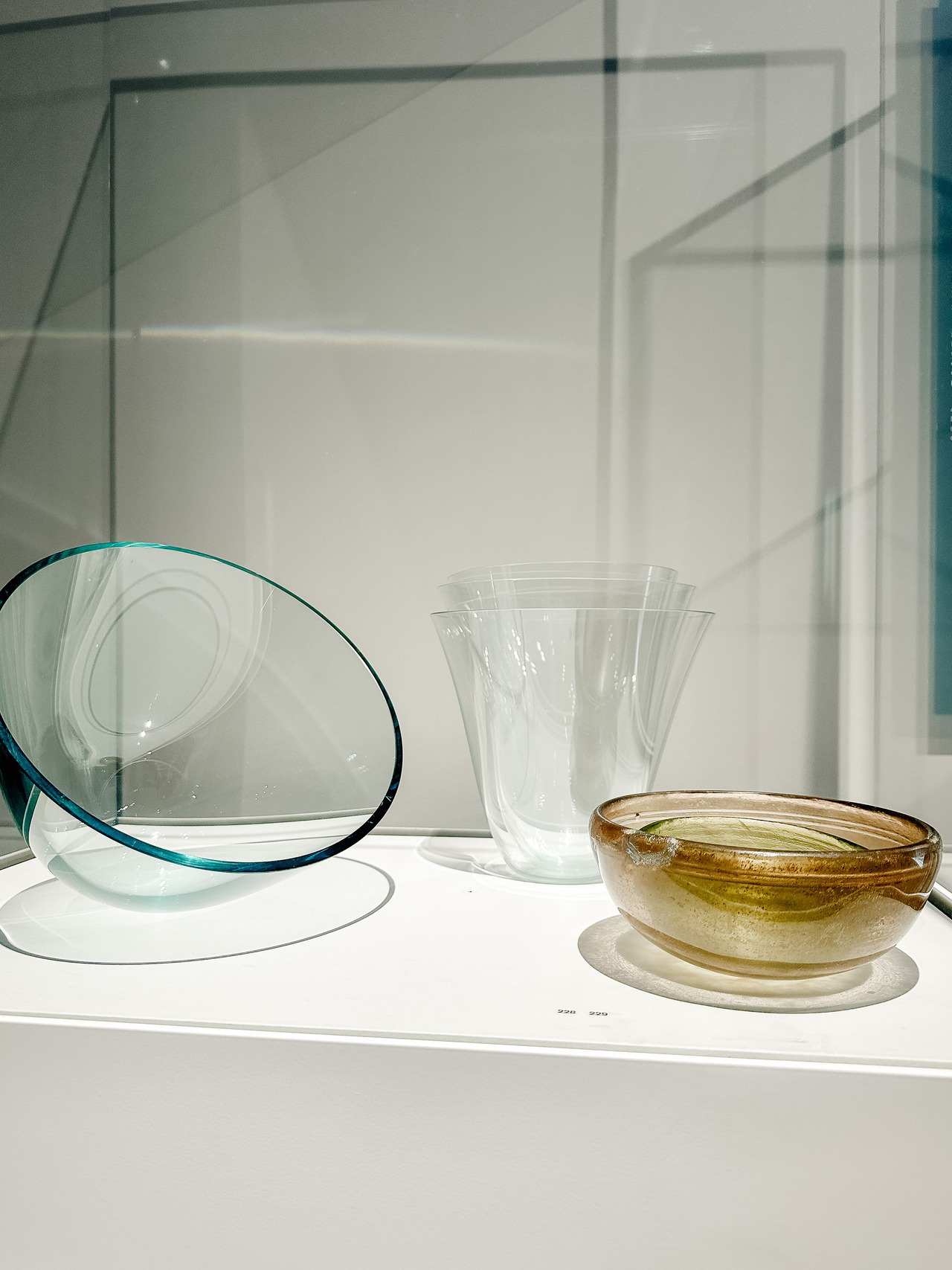
Rather than seeing the old pieces only as archaeological discoveries, I started seeing them as things people had made for practical purposes, for beauty, or perhaps for both. It also reminded me that ancient glassmakers were extraordinarily skilled. Transparent glass was already possible in antiquity, even though production techniques and consistency differed from those available today. The evolution of glass is not simply a story of old techniques being replaced by better ones. It is also a story of changing possibilities, tastes, and purposes.
The science behind the objects
Another part of the exhibition that fascinated me was the research into how ancient glass was made. Researchers use modern scientific techniques to examine objects without damaging them. These include X-ray fluorescence spectroscopy to study chemical composition and imaging techniques to examine surfaces and manufacturing marks.
One method particularly caught my attention: Reflectance Transformation Imaging, or RTI. The display showed how an object can be photographed repeatedly under different lighting conditions. By studying how light interacts with a surface, researchers can reveal details that are hard to see under ordinary lighting. As a photographer, I found this especially interesting.
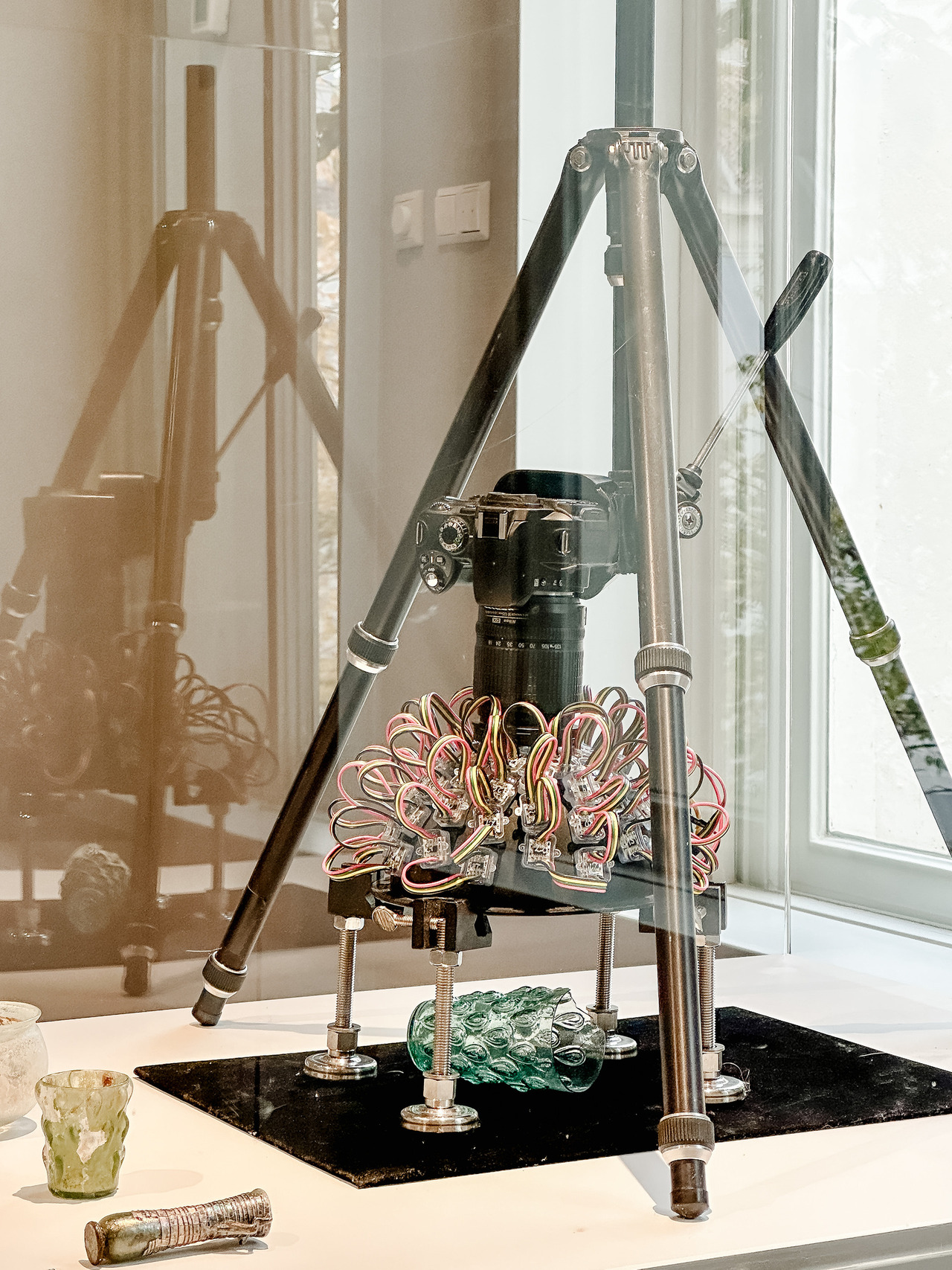
We usually think about lighting as a way to create atmosphere, reveal texture, or make a photograph beautiful. Here, light and photography become tools for investigating history. The same principle that helps me bring out a subject's texture in a photograph can help researchers understand how an ancient craftsperson worked. I hadn't expected to find such a direct connection between my profession and an archaeological exhibition.
Glass and the passage of time
Something else that stayed with me was the nature of glass itself. It can be fragile enough to break when dropped, yet some glass objects have survived for thousands of years. Glass can also be melted and reused, so its history isn't always straightforward. An object may disappear, but the material can live on in another form. That idea made me think about how we measure an object's life.
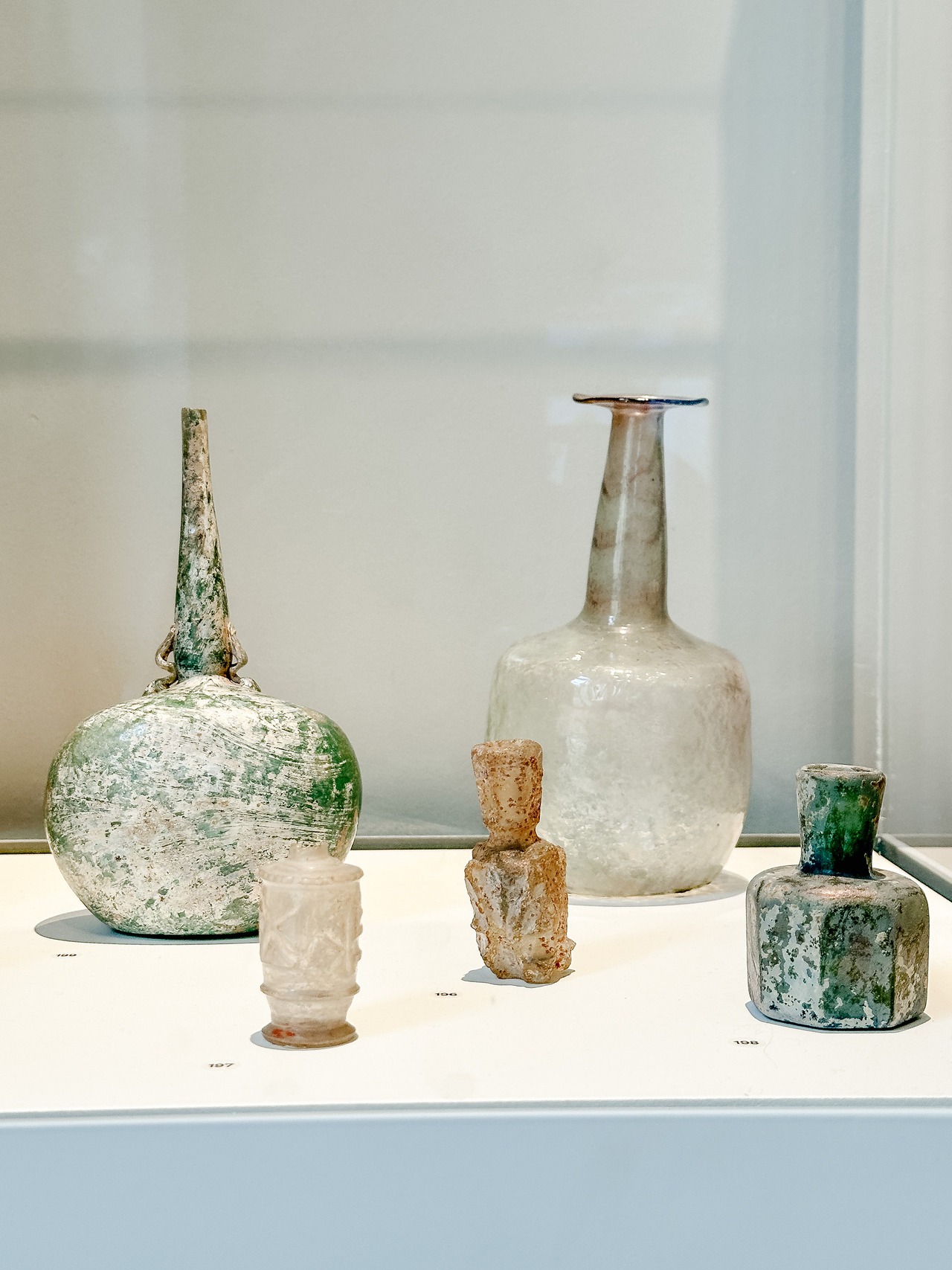
Is it the moment it was created? The years it was used? The time it spent buried? Or the moment someone discovered it and decided it was worth preserving?
This exhibition definitely makes you look at ordinary things differently. We live with different technologies, materials, and possibilities. Yet we still surround ourselves with practical objects that make our daily lives easier, and sometimes more beautiful.
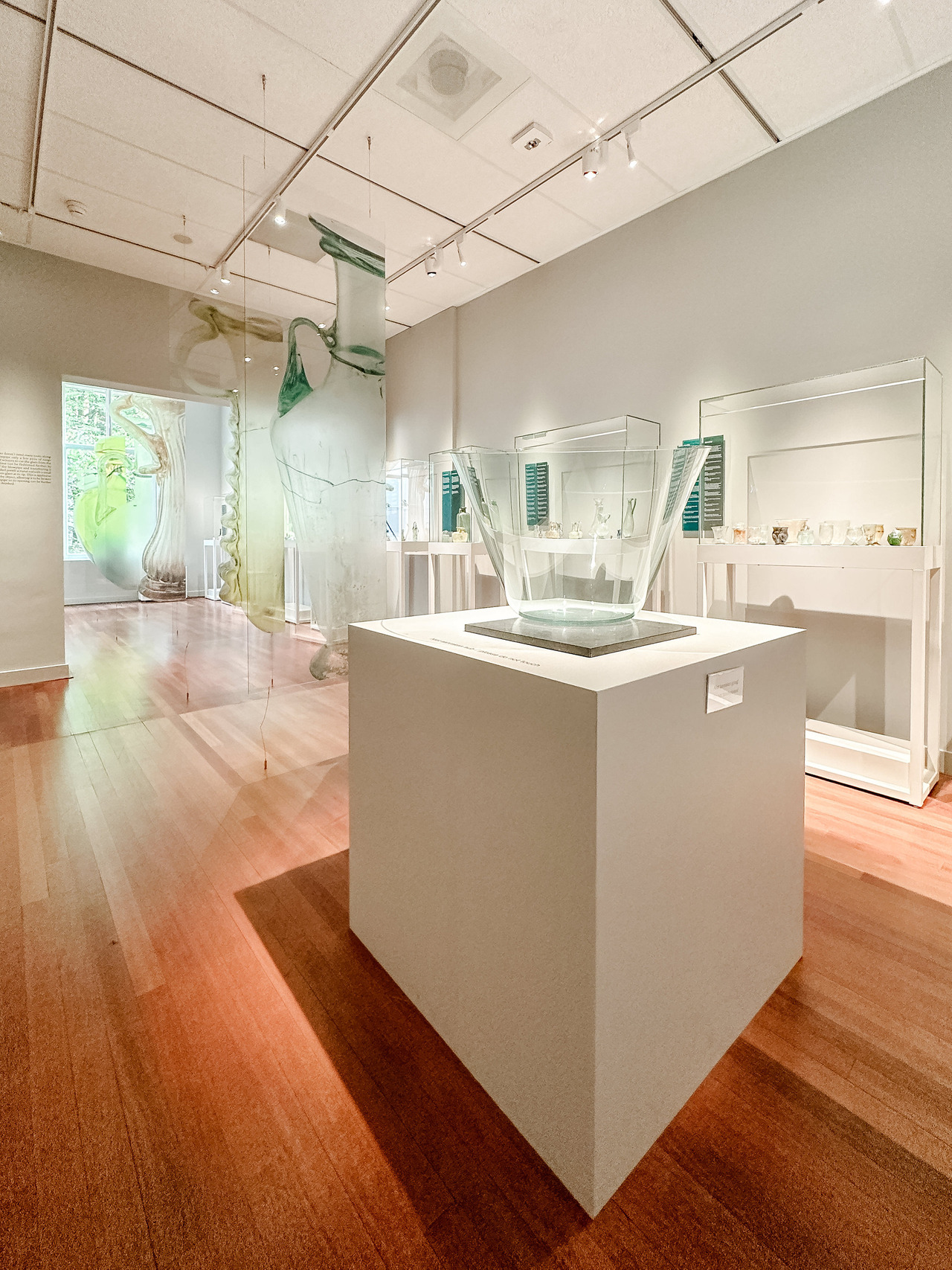
The contemporary artworks helped me appreciate that connection. The scientific displays showed me how much we can still discover from a simple piece of glass. And together, they made the ancient world feel surprisingly close.
For me, that is what makes an exhibition memorable: not simply learning something new, but leaving with a different way of looking at something familiar. Sometimes, understanding the past begins with noticing the things we use every day.
Visiting the exhibition
Glass, Made in Antiquity is presented at the Allard Pierson Museum in central Amsterdam, part of the University of Amsterdam's cultural heritage collections. The exhibition combines archaeological objects, contemporary glass art and research into ancient glassmaking. If you enjoy history, craftsmanship, design or photography, it offers several different ways to engage with the subject.
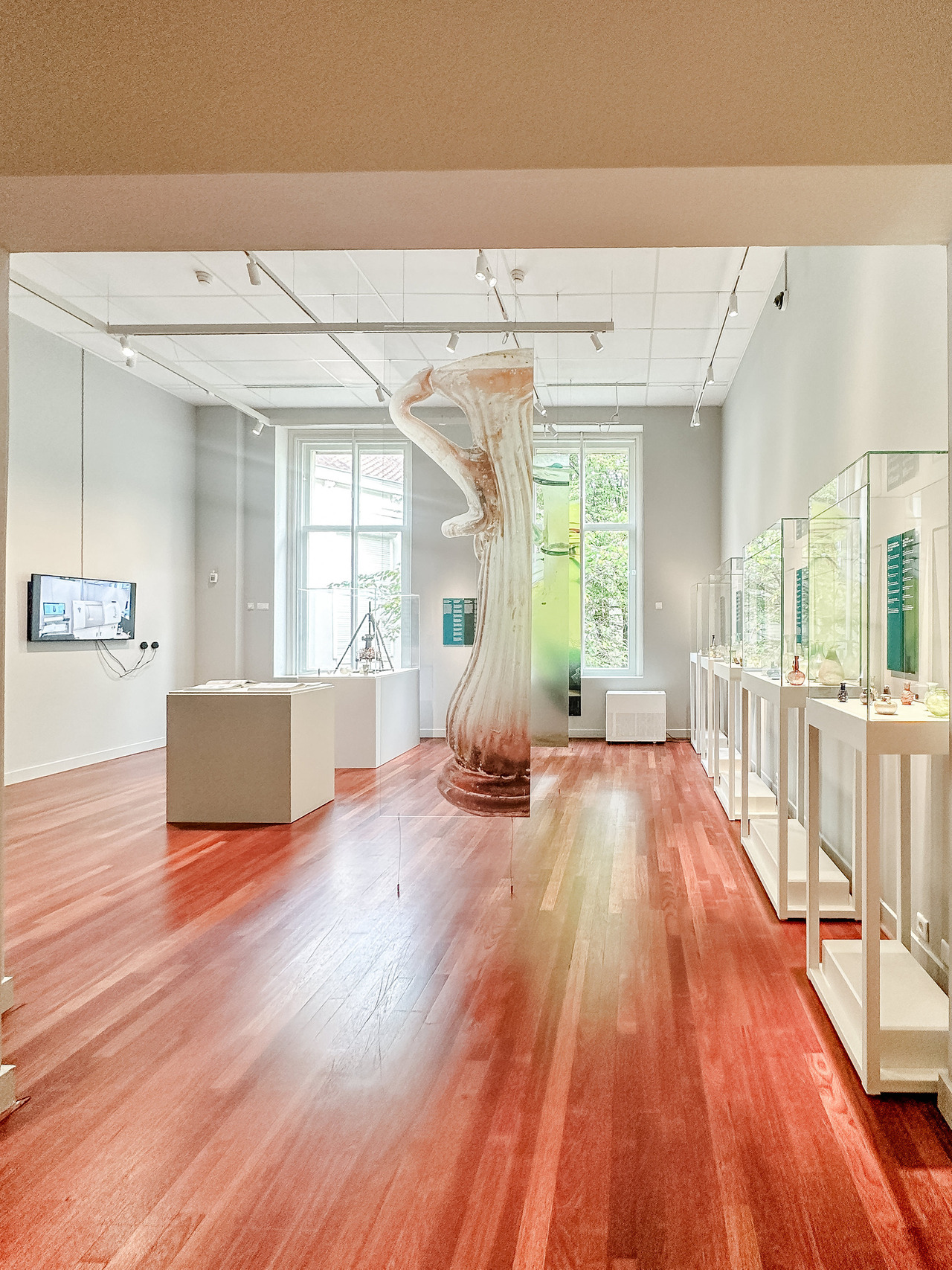
I suggest taking your time, especially when you compare the contemporary pieces with the ancient vessels. That comparison was what made the exhibition particularly meaningful to me.
Exhibition: Glass, Made in Antiquity At the Allard Pierson, Amsterdam, until 01 November 2026.
Check the museum's official website for the exhibition dates and current visitor information.
Joanna Pantigoso
Amsterdam Vacation Photographer and Proposal Planner
All photographs were taken with an iPhone 14 Pro during my visit to the Allard Pierson Museum in Amsterdam.
Affiliate disclosure: This article contains affiliate links. If you book through one of them, I may receive a small commission at no extra cost to you.