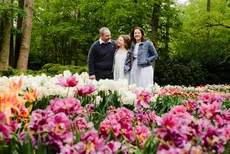

One of the most common questions I receive during tulip season is whether the flowers will still be there or if they disappear partway through the season. Closely linked to that question is another one people often hesitate to ask: why are there fences in the gardens, and will they appear in the photos?
The short answer is yes, tulips are carefully protected. And no, you do not need to worry about what that means for your experience or your images.
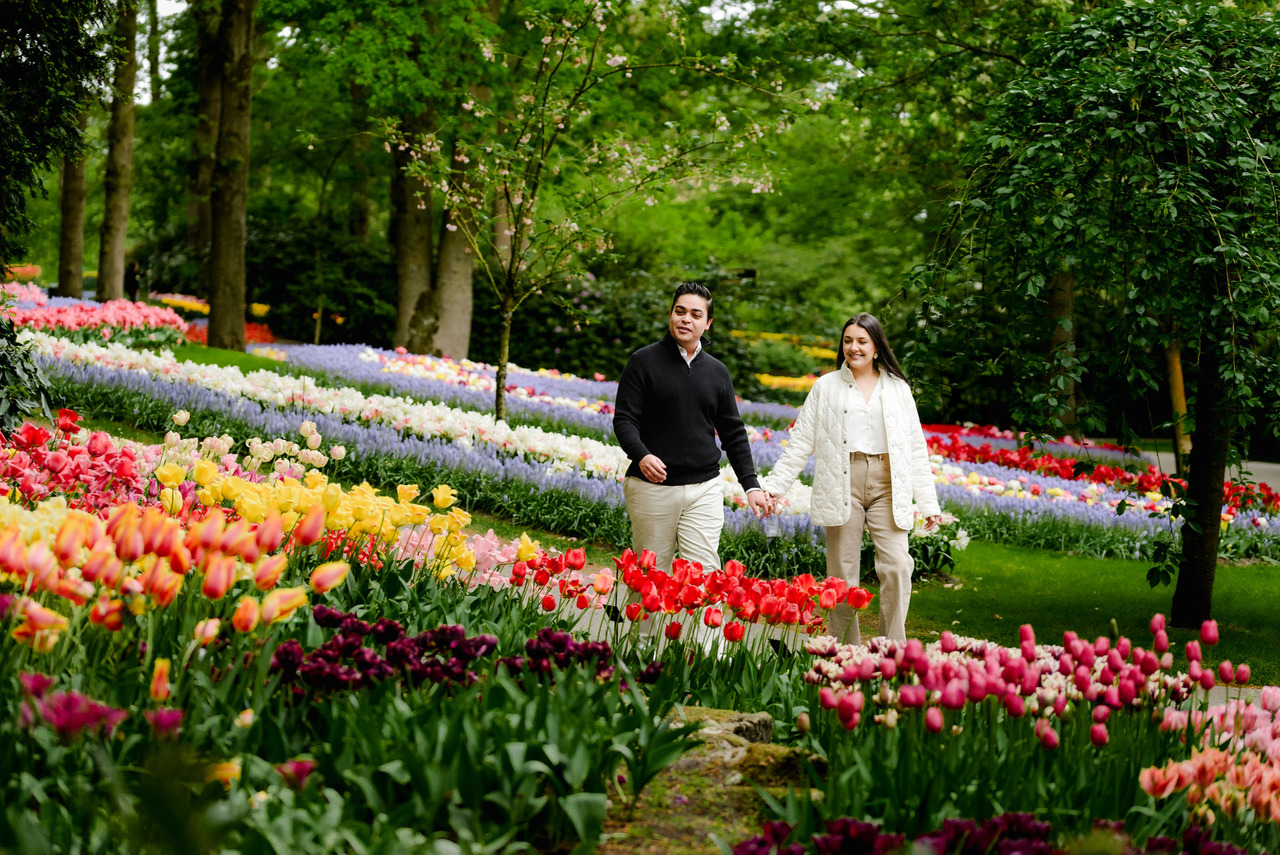
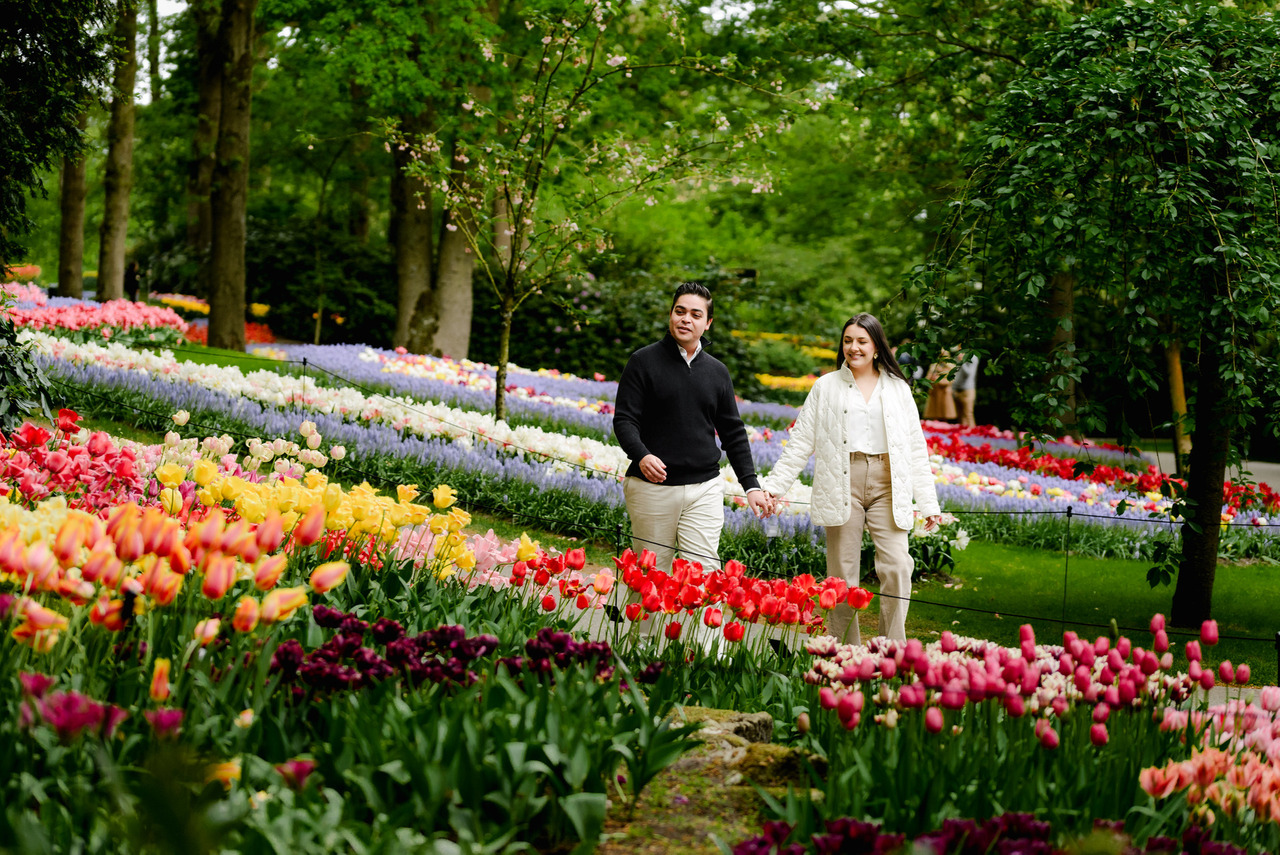
This picture was the final one sent to the clients. The one below was the edited capture with the fences and people in the background. The difference is subtle, and I took care of positioning and directing them in a way that the final result was close to the goal.
Tulip season in the Netherlands is beautiful, but it is also fragile. Understanding how it works helps you enjoy it more, and it helps protect the landscape that makes these experiences possible in the first place.
Gardens Are for Visitors, Fields Are for Production
This is a phrase I repeat often during sessions: "choose gardens, not fields."
Tulip gardens exist for people to visit. You enter with a ticket, walk on designed paths, and enjoy the flowers up close without causing damage. These places are created with visitors in mind, and they are managed to balance beauty, access, and care.
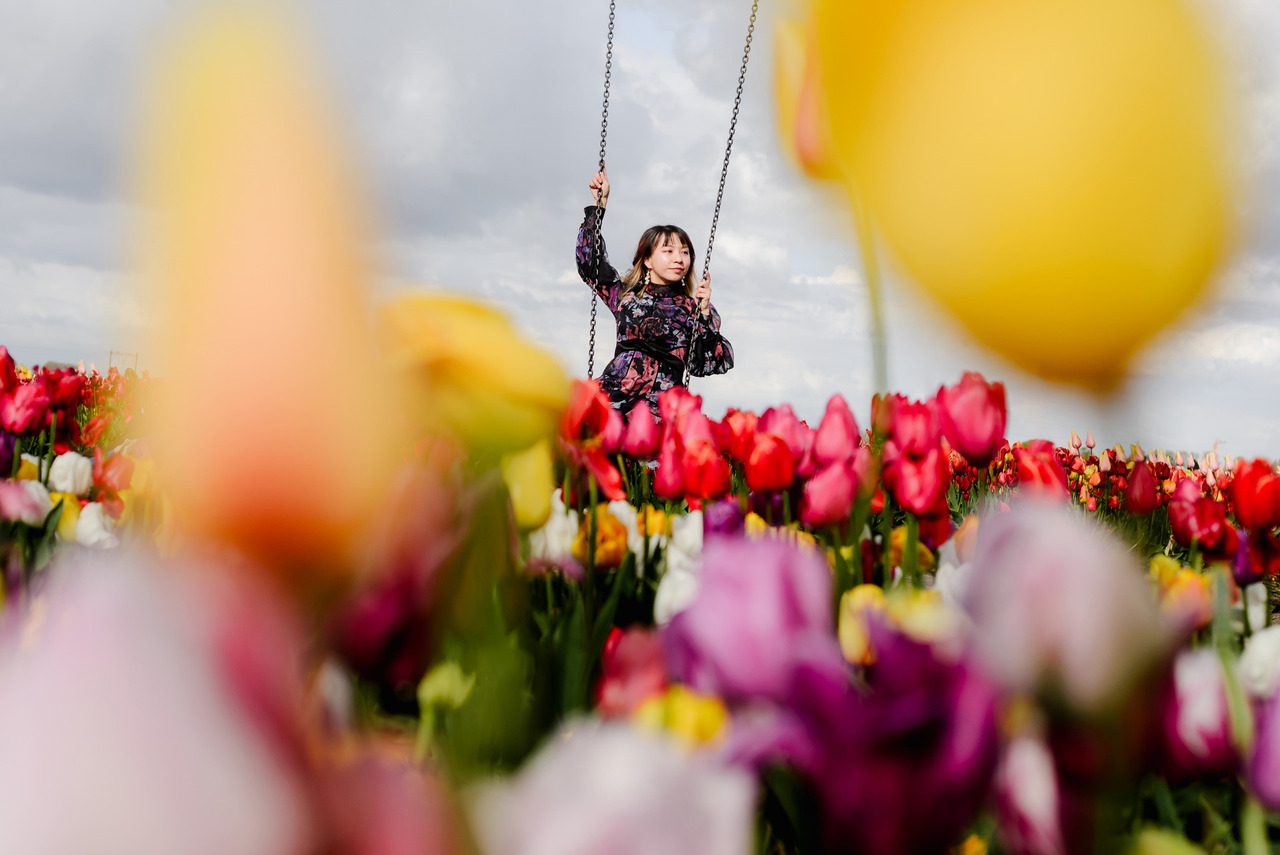
Tulip fields are different. They are working agricultural land. The real value is underground in the bulbs, not in the flowers you see above. Walking through them damages the soil and affects future harvests. That is why responsible tulip experiences always happen in gardens or designated visitor locations.
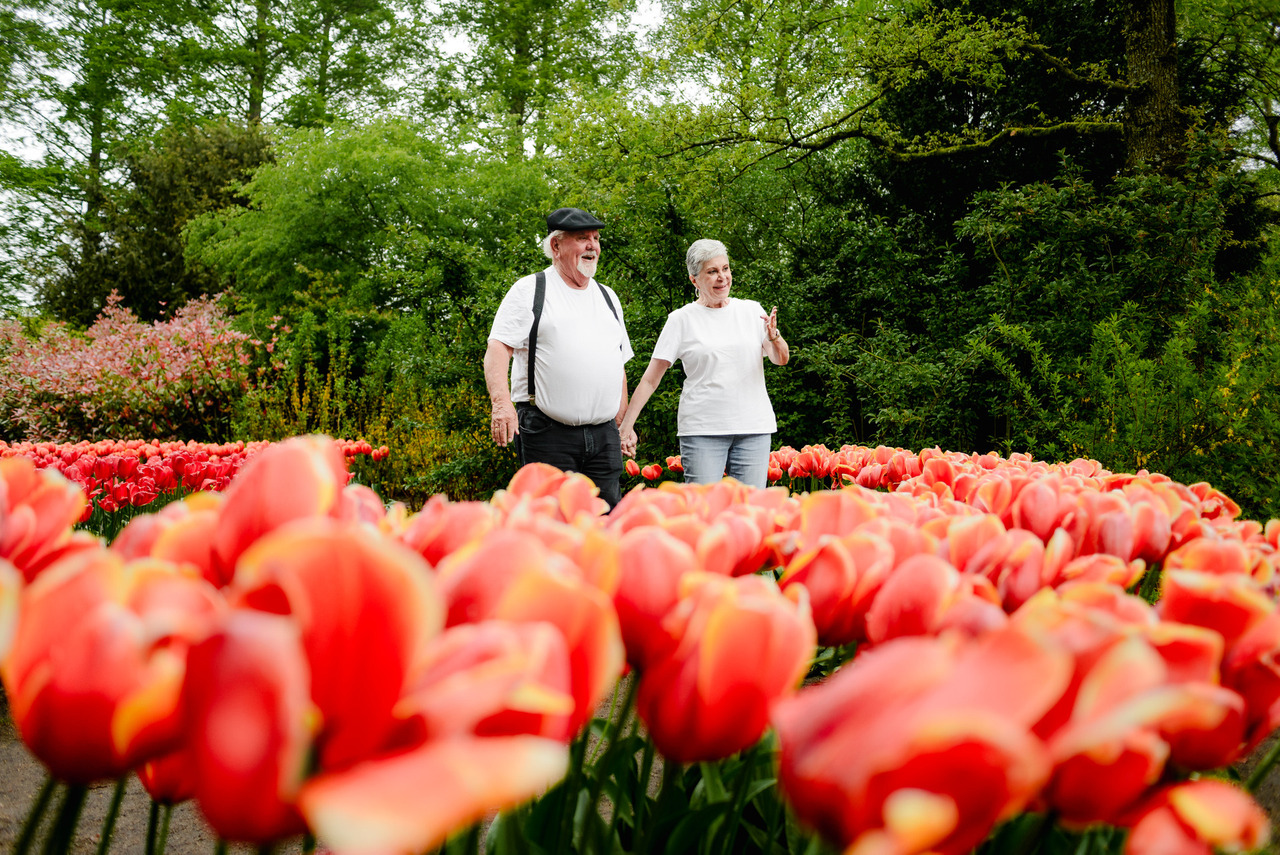
Keukenhof takes very good care of its flowers. To guarantee tulips throughout the season, many areas are fenced. This protects the plants and allows everyone to enjoy them over several weeks instead of just a few days. During a visit or a photo session, we stay on cement paths and respect the garden layout completely. This is non-negotiable and also part of what keeps the gardens so well-maintained year after year. At the same time, your photos do not need to reflect those practical elements.
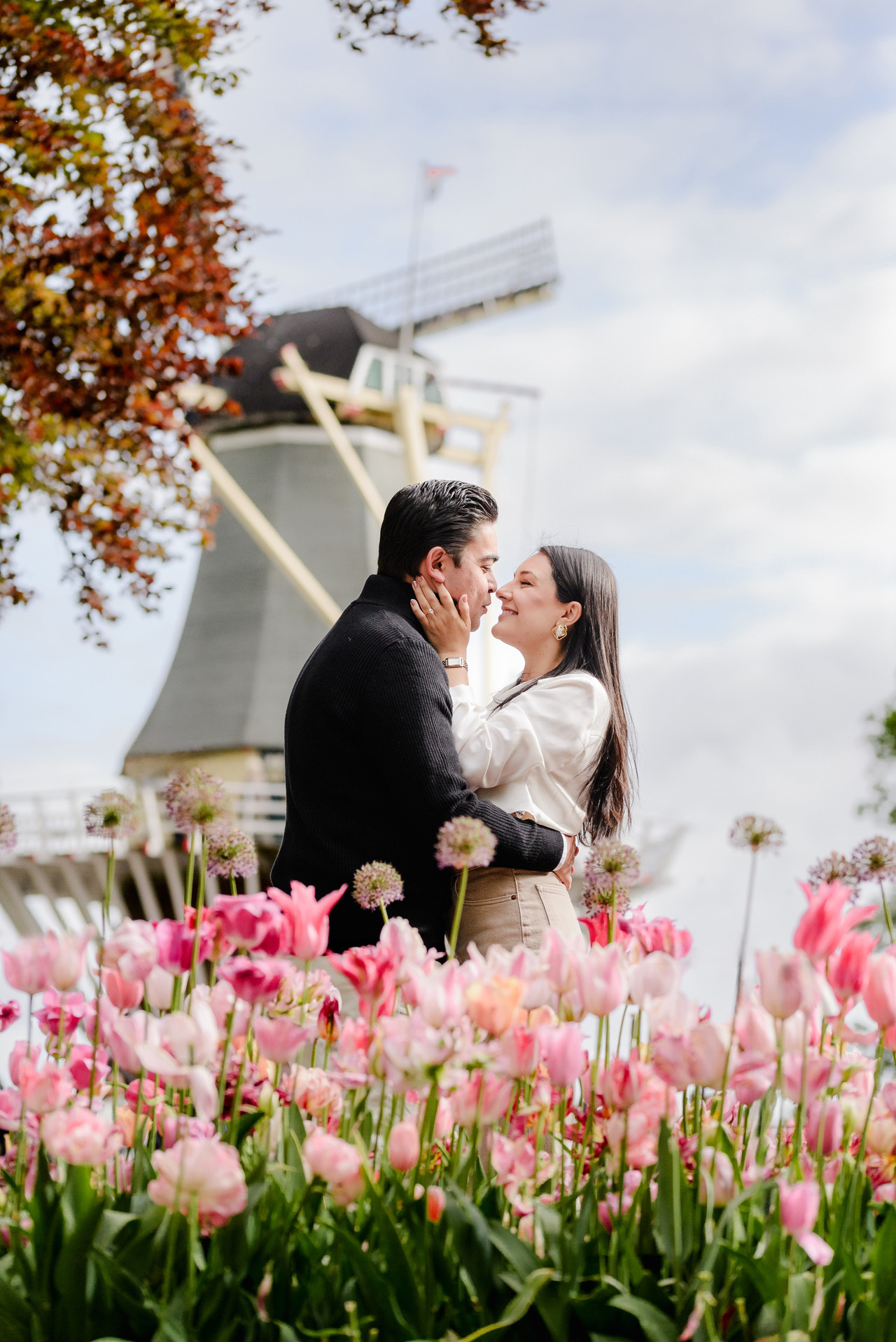
This again shows us the before and after of the correction of the fences. We also see no people on the windmill, which is a plus to the overall effect of the final picture.
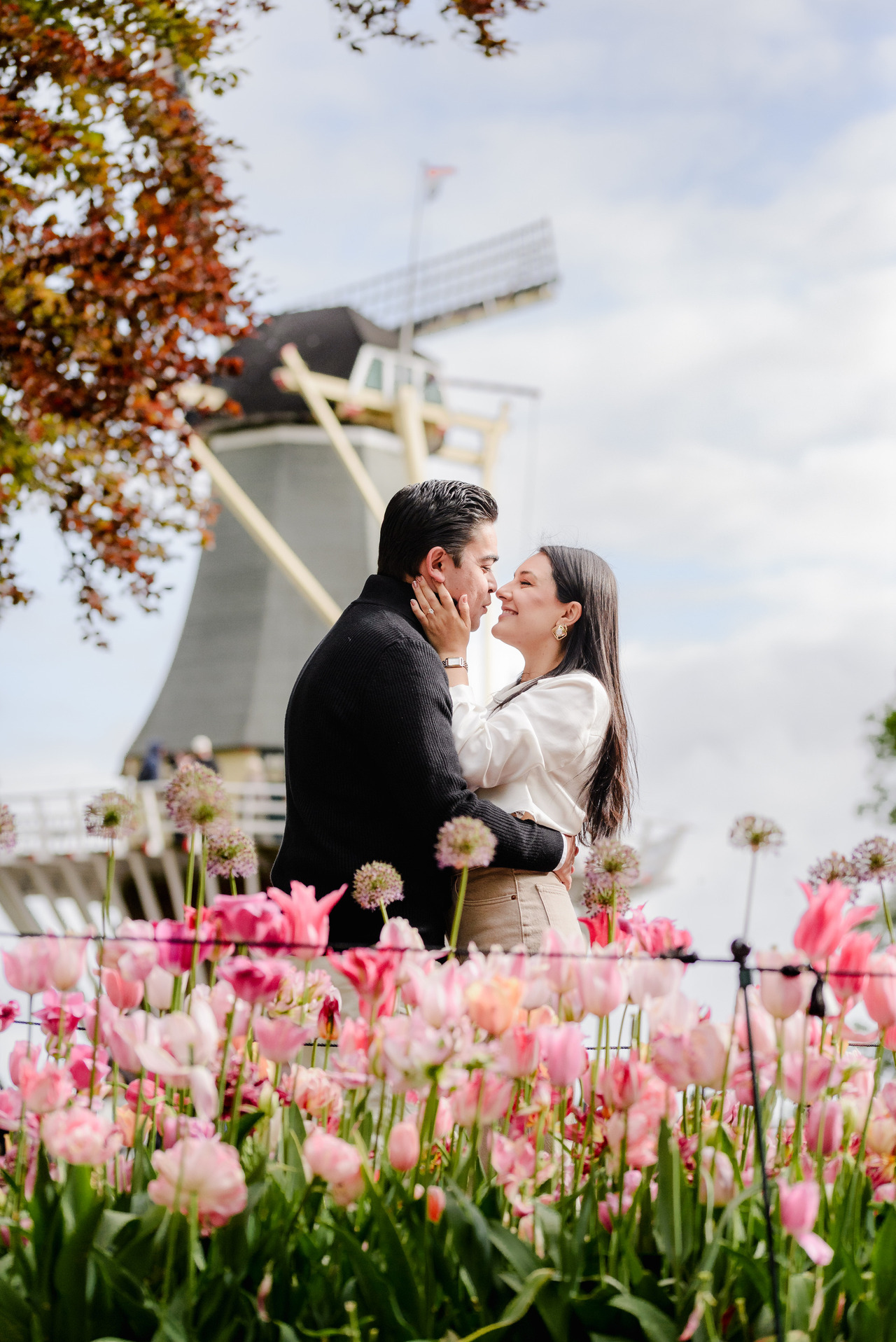
When I plan a session at Keukenhof, I am already thinking about how the gardens will look in the frame. Angles, distance, light, and background all matter. If a fence appears in a way that distracts from the image, it is handled carefully during editing so your photos stay clean, natural, and focused on the moment you are living.
This is not about changing reality. It is about guiding the eye and removing elements that pull attention away from the story.
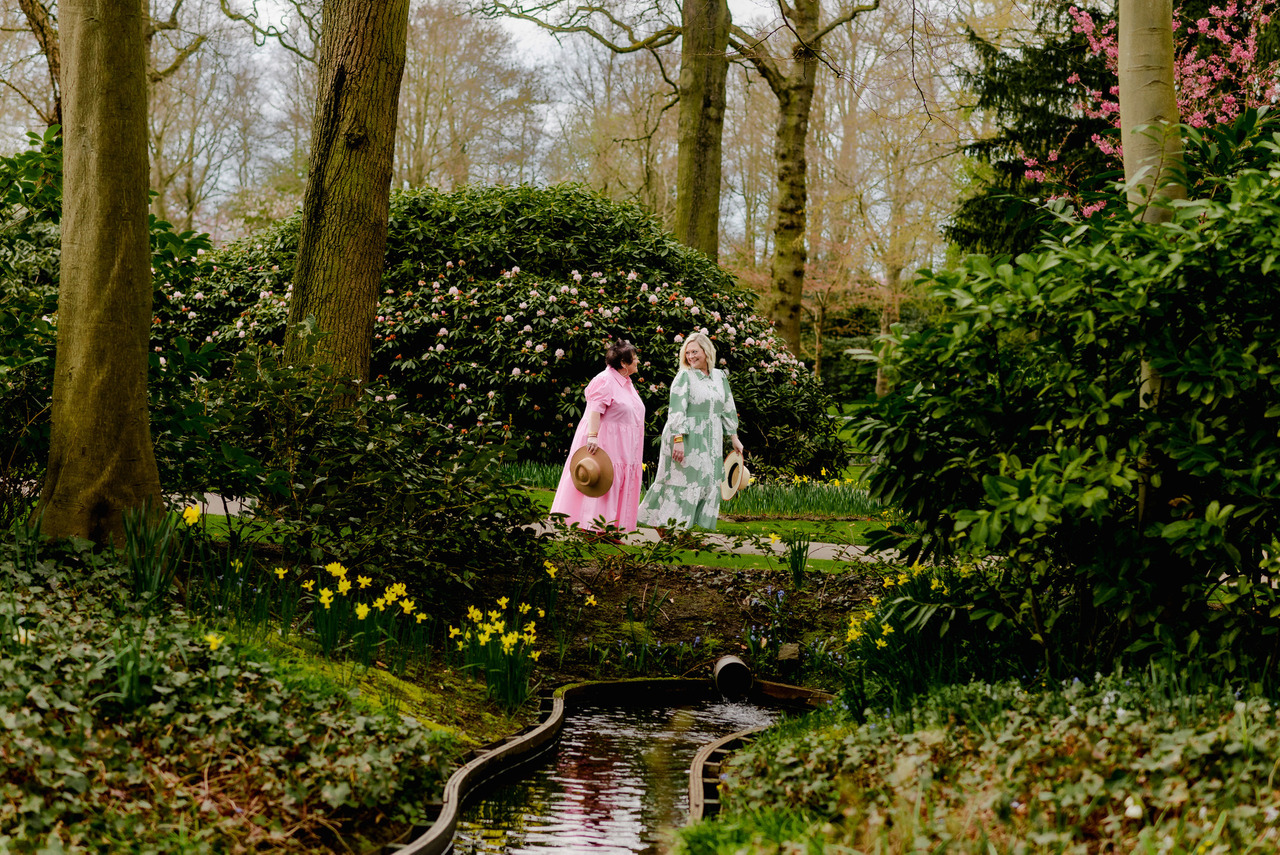
You can walk, talk, and enjoy the gardens without worrying about where fences are or how things will look. That work is already built into the process.
Every tulip season is slightly different. Weather shifts, blooms develop at their own pace, and each week looks a little different from the last. That is why preparation matters so much. I visit the gardens multiple times throughout the season. I follow how areas change, which paths feel quieter, and how the light moves through the gardens at different times of day. This allows me to guide you with confidence and clarity, so you can relax and enjoy the experience.
You are not just arriving at a location. You are stepping into something that has already been observed, planned, and adapted to that specific moment in the season.
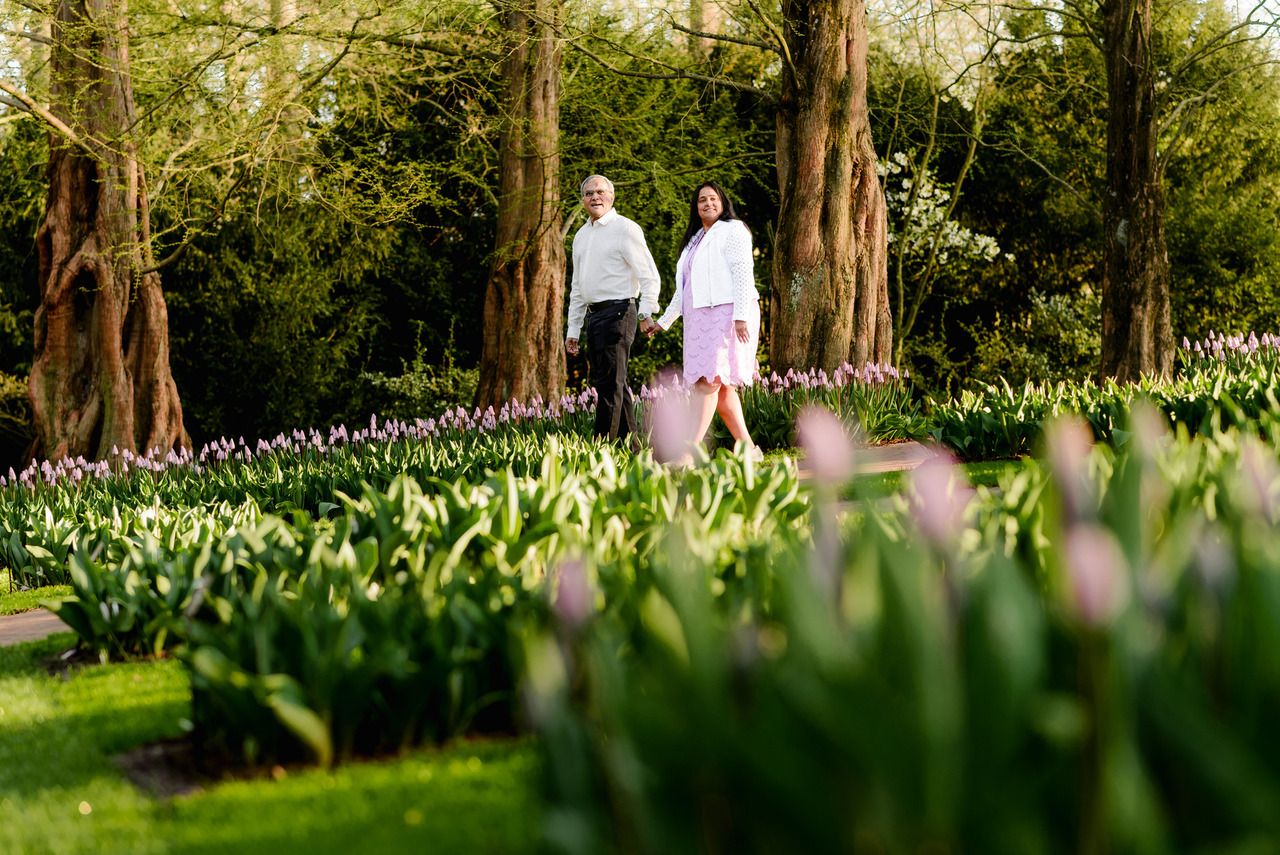
Tulip season is not only about beautiful photos. It is also about respecting the places that make those photos possible. By choosing gardens instead of fields, by staying on paths, and by approaching the experience with care, we protect the flowers and the future of the season itself.
Your role is simple. Be present. Enjoy the moment. Trust the process.
The rest is taken care of.
Until next time in Amsterdam, or somewhere among the tulips,
Joanna
Your Photographer in Amsterdam