
Rain does not automatically ruin an Amsterdam proposal. It simply changes which plan we use. When you are planning from another country, the weather can become one of your biggest concerns. You may have already booked your flights, hotel, museum tickets, boat, and restaurant. Moving everything to another day may not be possible.

This is why flexibility is part of the proposal design from the beginning. We create the main plan around your vision, but we also consider what can change if the forecast moves. The goal is to protect the surprise, keep everyone safe, and make sure you know what to do without managing every detail yourself.
Amsterdam weather can change during the same day
An Amsterdam forecast can look completely different from one day to the next, or even change several times during the morning.
Rain expected to finish at 2:00 PM may continue until 3:30 PM. A dry afternoon can suddenly include a short shower. Wind may become stronger, or the sun may appear earlier than expected.

This does not mean we change the proposal every time the forecast moves slightly. I continue monitoring the conditions and look at the complete plan. Sometimes waiting for a short period is enough. Sometimes we adjust the starting time, change the route, or use a more protected location for the portraits afterwards.

The person proposing receives clear instructions, while the person receiving the surprise should experience the day naturally.
A proposal is different from a regular photoshoot
If difficult weather is expected during a normal couple, family, or solo session, moving to another day or time may be the most comfortable solution, but a proposal is different.
It may be connected to a museum visit, lunch reservation, private boat or dinner. The couple may only have one suitable day in Amsterdam, and changing the plan could make the surprise suspicious. The proposal itself may also need to happen before another part of the itinerary begins.

For those reasons, I treat proposal weather differently from regular session weather. When conditions remain safe, we look for ways to adapt before deciding that the experience cannot happen.
Every proposal begins with Plan A
Plan A is the experience we would choose under the expected conditions. It includes the proposal location, meeting point, timing, route, photographer’s position, and the signal the person proposing needs to follow.

If the proposal includes a private boat, restaurant, flowers, or another supplier, those timings also become part of the plan. Everyone involved knows their role, but the experience remains completely hidden from the person receiving the surprise.
A clear Plan A is important because the person proposing should not make decisions while already feeling nervous. They should know where to go, what to look for, and when the moment will begin.
What happens when we need Plan B?
Plan B protects the same idea while changing the part affected by the weather. Depending on the proposal, that may mean beginning slightly later, waiting under cover before approaching the proposal point, or adjusting the time while the photographer waits. The exact alternative depends on the couple’s itinerary and any fixed reservations.

A good backup plan should not feel like a completely different proposal. It should protect the feeling and intention of the original idea.
Flexibility is part of the service
During autumn and winter, I intentionally limit how many proposals and photography sessions I accept each day. This creates room to respond when the weather changes. If one proposal needs to begin slightly later, I am more likely to have space to make that adjustment. It also gives me time to check the location, adapt my transport, and arrive early without rushing from another session.

Flexibility does not mean that every reservation can move freely. Boats, restaurants, museum visits, and other suppliers may have fixed times. It means that we identify which parts of the experience can move and use those parts to protect the proposal.
What happens with a bridge proposal?
A bridge proposal can offer more flexibility than an experience connected to a fixed private venue. If the couple’s itinerary and my schedule allow it, we may adjust the proposal time around a period of rain. We can also select a nearby alternative that offers more shelter or works better with the wind direction. The real proposal still happens naturally.

If strong wind affects hair, clothing, or the general comfort of the portraits, we can move afterwards to a street protected by surrounding buildings. We may also briefly recreate the proposal position for a few additional photographs. This does not replace the real moment; it complements it.
The first reaction, answer, and emotion remain completely genuine. Recreating the position simply gives the couple a few cleaner portraits in more comfortable conditions after the surprise has already happened.
What if the proposal includes a private boat?
Private boats normally have fixed departure times, so they cannot always be moved when the forecast changes. For proposals planned from September onwards, I recommend selecting a boat with a covered option. In normal rain, this gives us more protection and allows the experience to continue comfortably.

The photographer can already be aboard, remaining hidden as part of the crew. The proposal can happen inside the covered area or during a dry moment when part of the boat is opened. The best position depends on the particular boat. Some boats provide more room, better visibility, and greater separation from the skipper than others.

When the boat is booked through me, I consider these details while selecting the option. If you have already reserved a boat, I review its layout, departure point, and route before recommending how to structure the proposal. A covered boat does not remove every effect of the weather, but it gives us more control.
Can we combine a bridge proposal with a boat?
Yes, and this can give us more possibilities. The proposal may happen on a bridge before boarding, followed by a covered private boat celebration. Alternatively, the proposal can happen aboard the boat, with street portraits created before or afterwards when conditions are better.

The boat time may remain fixed while the photography around it is adjusted. For example, if the rain is expected to end shortly before departure, we may move the bridge proposal closer to the boat’s meeting point. If the streets remain uncomfortable, we can protect the real proposal aboard the boat and look for a dry period for additional portraits.

The experience is designed as one connected sequence rather than several unrelated reservations.

Protecting the surprise while changing the plan
Weather changes must be communicated discreetly. The person receiving the proposal should not suddenly be asked to arrive at a strange place without a believable reason. Moving the time repeatedly or changing the itinerary too dramatically can create suspicion.

This is why I communicate directly with the person proposing and help find a natural explanation for any adjustment. Sometimes lunch lasts a little longer. Sometimes the couple spends more time inside a museum. Sometimes the boat appears to be the original plan while the proposal remains hidden inside it. The explanation must fit the day the couple is already having. Protecting the surprise is just as important as protecting the photography.
What should the person proposing focus on?
You do not need to study the weather throughout the day while also preparing to ask an important question. I will follow the forecast and contact you when a decision is needed. Your role is to remain reachable, follow the final instructions, and keep the day feeling natural for your partner.
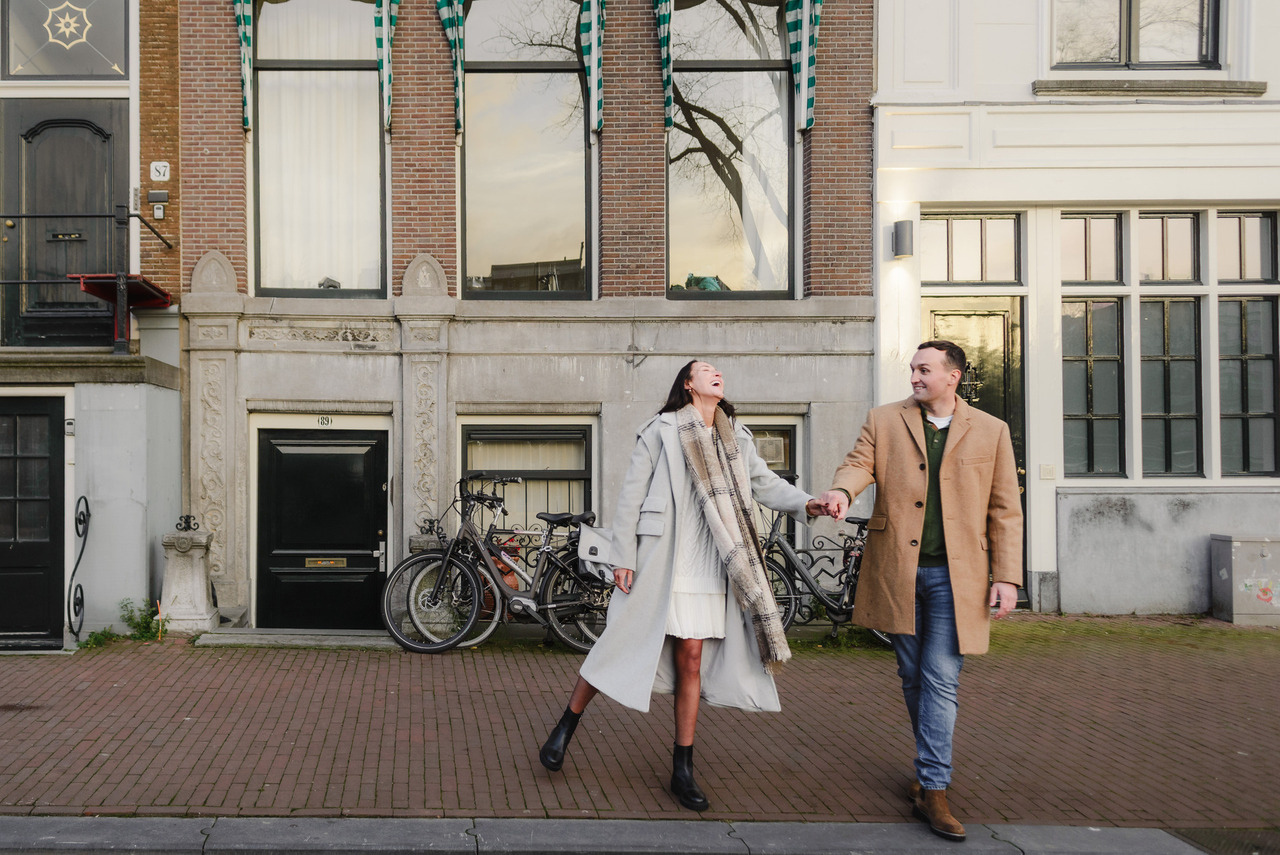
When there are two safe possibilities, we decide together which one suits the experience better. Once the decision is made, I coordinate the photography and any changes needed with the other suppliers involved. You should be able to focus on your partner and what you want to say.
When does the weather become unsafe?
Rain or wind does not automatically mean your proposal needs to be cancelled. When the weather is uncomfortable but still safe, we discuss the options and adapt the route, transport, and portrait locations around it. If an official code orange or red warning makes being outside unsafe, the session is automatically cancelled and refunded. Safety is the only point at which the plan is no longer flexible.
A proposal is important, but no photograph or reservation is more important than the people involved.
Will the photographs still look beautiful?
Difficult weather changes the appearance of a gallery, but it does not prevent us from creating meaningful photographs. Rain can create reflections on the streets and deeper colours around the canals. Clouds provide soft light, and a covered boat can feel warm and private while the city moves outside.

Wind requires more patience. We may change the direction you face, move closer to buildings, or wait briefly between stronger moments. The goal is not to pretend the weather was different; the goal is to create the strongest possible photographs within the real conditions of your day.

Should you worry about rain when planning an Amsterdam proposal?
No. You should be aware of it, but you should not allow every forecast to take over the experience. Most weather changes require adaptation, not cancellation. A thoughtful proposal plan includes enough structure for you to feel prepared and enough flexibility for us to respond when Amsterdam changes its mind.
We begin with the experience you want to create. From there, I help choose the location, timing, and route, while considering which parts can move and which reservations will remain fixed.
At the end, the forecast may change, and the plan may change with it.
See you in Amsterdam soon,
Joanna
Your Proposal Planner and Photographer in Amsterdam