

Every tulip season, the same confusion appears online. Photos of people walking among tulips spark strong reactions, especially from locals. The comments can feel intense, but the reason is simple: for people living in the Netherlands, the difference between tulip fields and tulip gardens feels obvious. For visitors, it often is not.
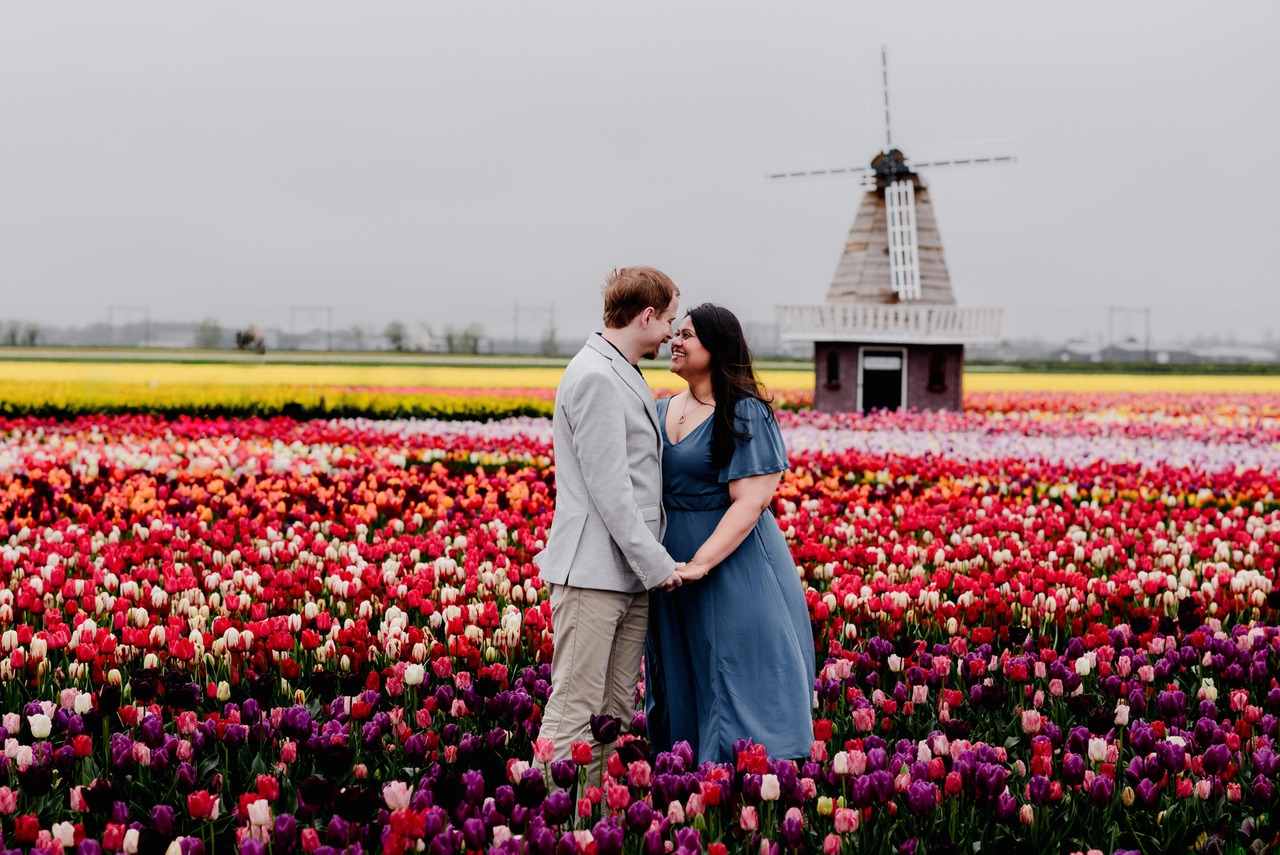
This is the Tulip barn, the most accessible tulip garden in the region, as it's easily reachable by train and a quick walk. You will see fields on the way. Please do not enter those as they are private property, even when they are not fenced.
As we approach tulip season, here is a clear and practical guide to understanding the difference, why it matters, and how to recognize each one.
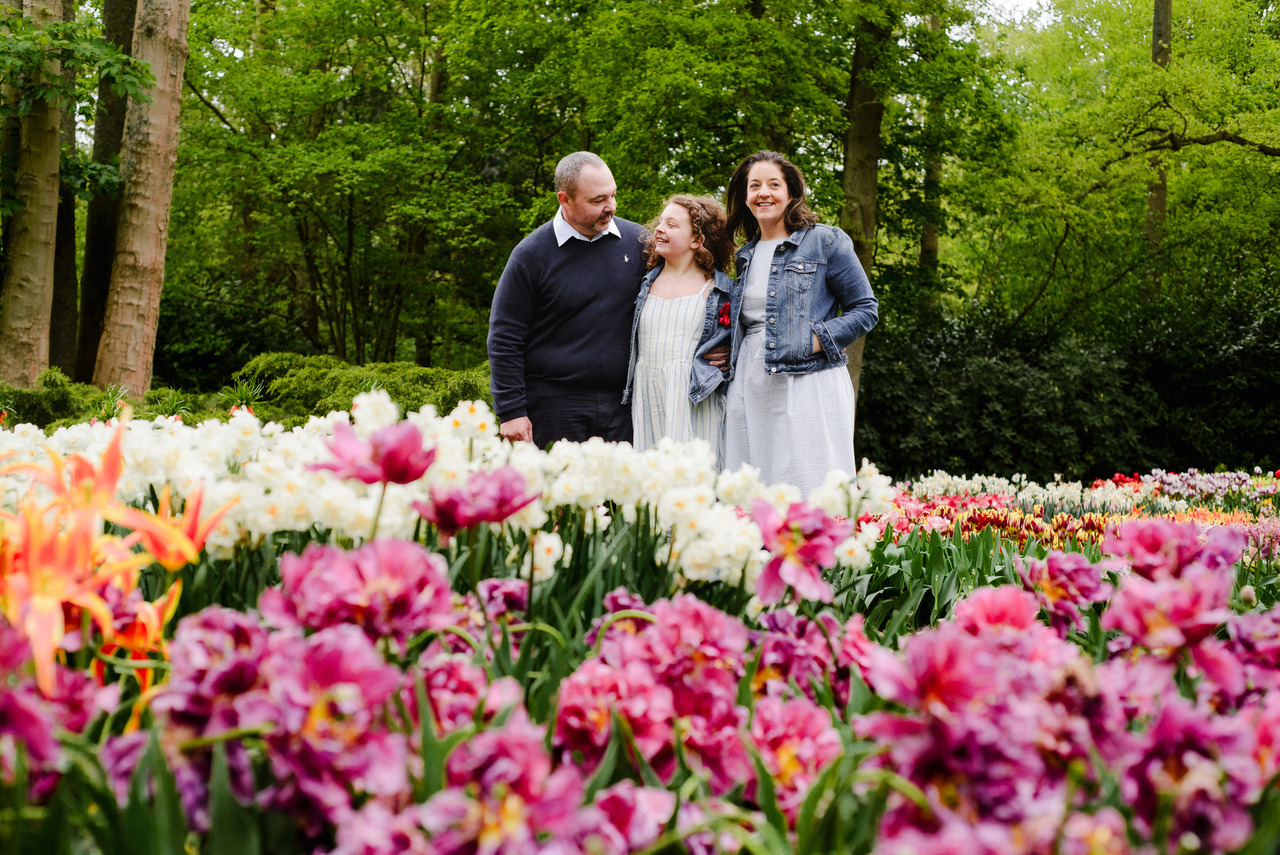
Keukenhof is easily identifiable, as you will have trees and greenery as a backdrop.
What Are Tulip Fields?
Tulip fields are production areas. They are 100 percent private property and are part of a highly specialized agricultural industry.
Tulips in these fields are not grown for their flowers, but for their bulbs. The flowers are temporary. The bulbs are the product that gets sold and exported all over the world.
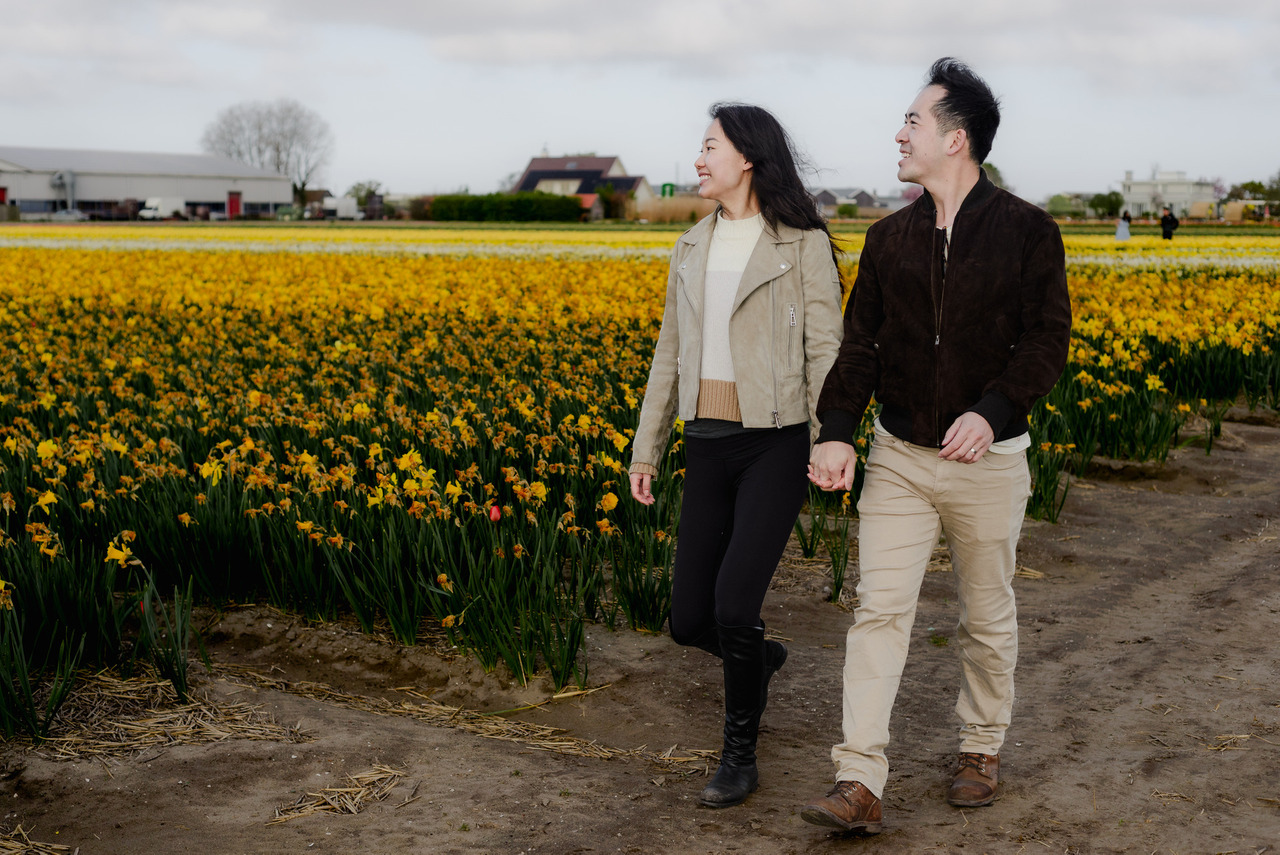
There is a daffodil field by De Tulperij. In March, when there are no tulips, this location allows visitors to visit their daffodil fields by booking a timeslot.
Even when there is no fence, visitors are not allowed to enter the tulip fields. Standing or walking inside a field can contaminate the soil, damage bulbs, or crush future growth underground. For this reason, you are expected to stay at least two meters away from the edge of the field.
If you see a wide field with long rows of one single color and no signs inviting visitors in, you are most likely looking at a tulip field.
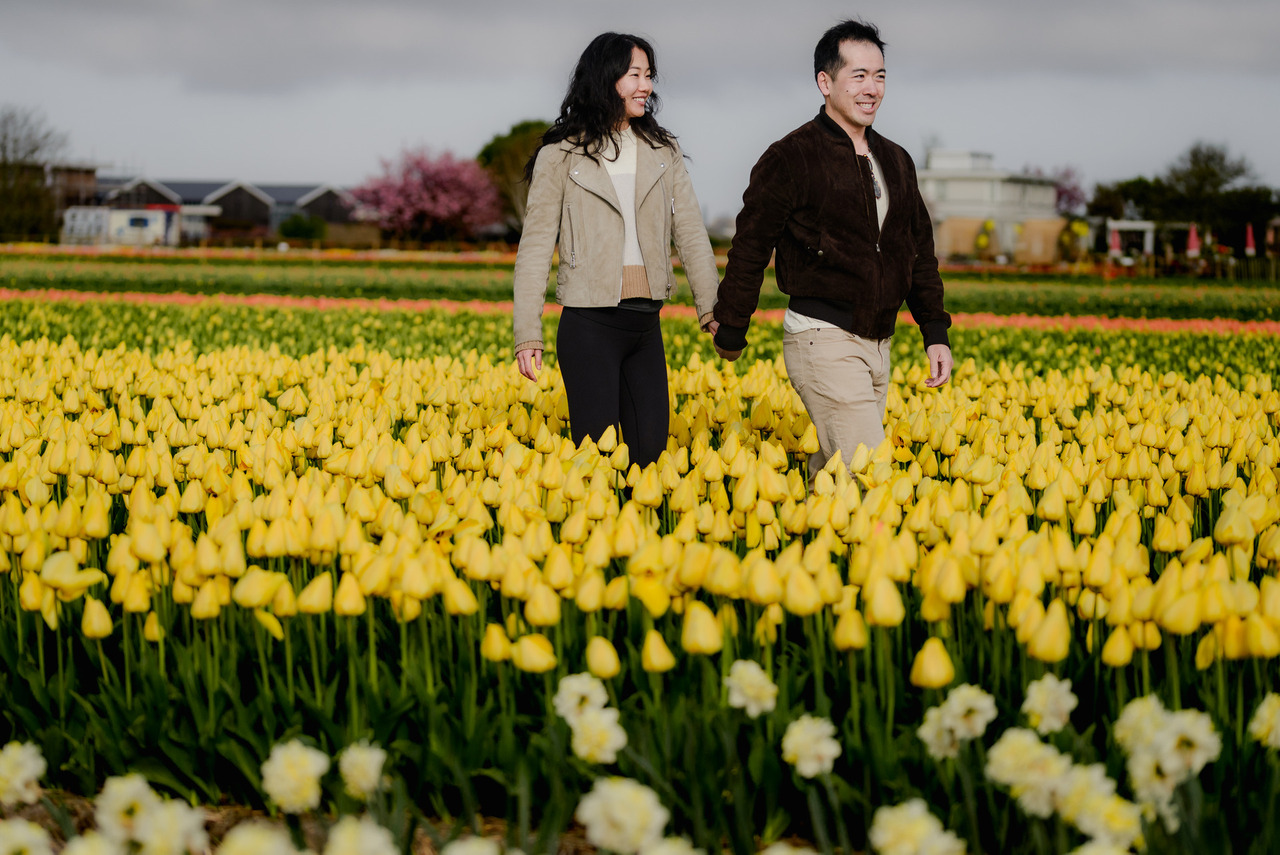
Now, during tulip season, there are some locations that allow visitors with certain restrictions and paying a fee. This picture was taken at De Tulperij. You have rules to follow, and a fixed timeslot. Limited visits are allowed.
What Are Tulip Gardens?
Tulip gardens are areas created by the same farmers who grow tulips commercially. These gardens exist to give visitors a way to enjoy tulips up close, without harming the production process.
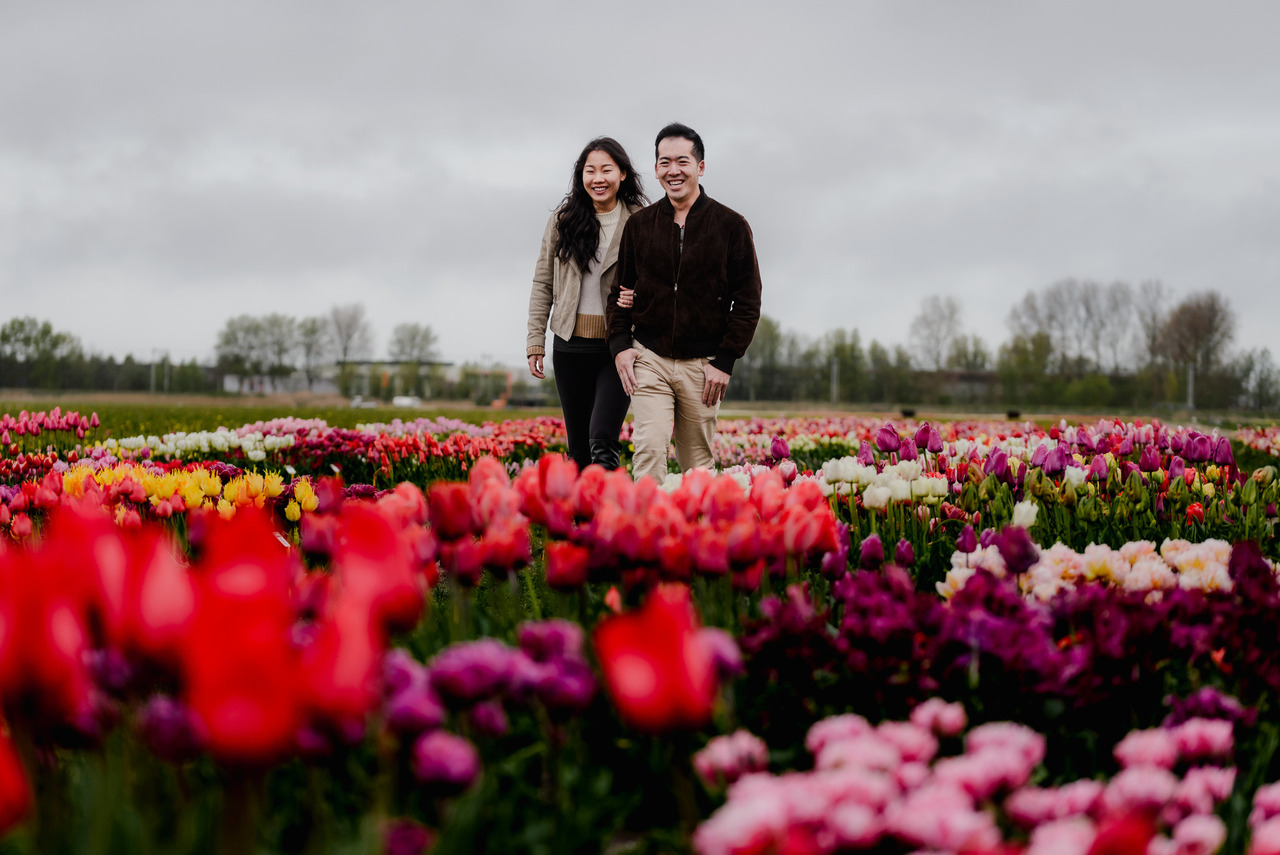
Here we are at Tulip Showgarden, this one has free entrance, but clear rules to follow. It's one of the most beautiful tulip gardens I keep visiting every year, and this is also the farm from where I buy my tulip bulbs every year.
Tulip gardens are designed for walking, photography, and learning. They often include paths, signs, and clear rules. Some charge an entrance fee, others do not, but all of them clearly communicate that visitors are welcome.
This is where photography sessions, guided visits, and relaxed walks among tulips are meant to happen.
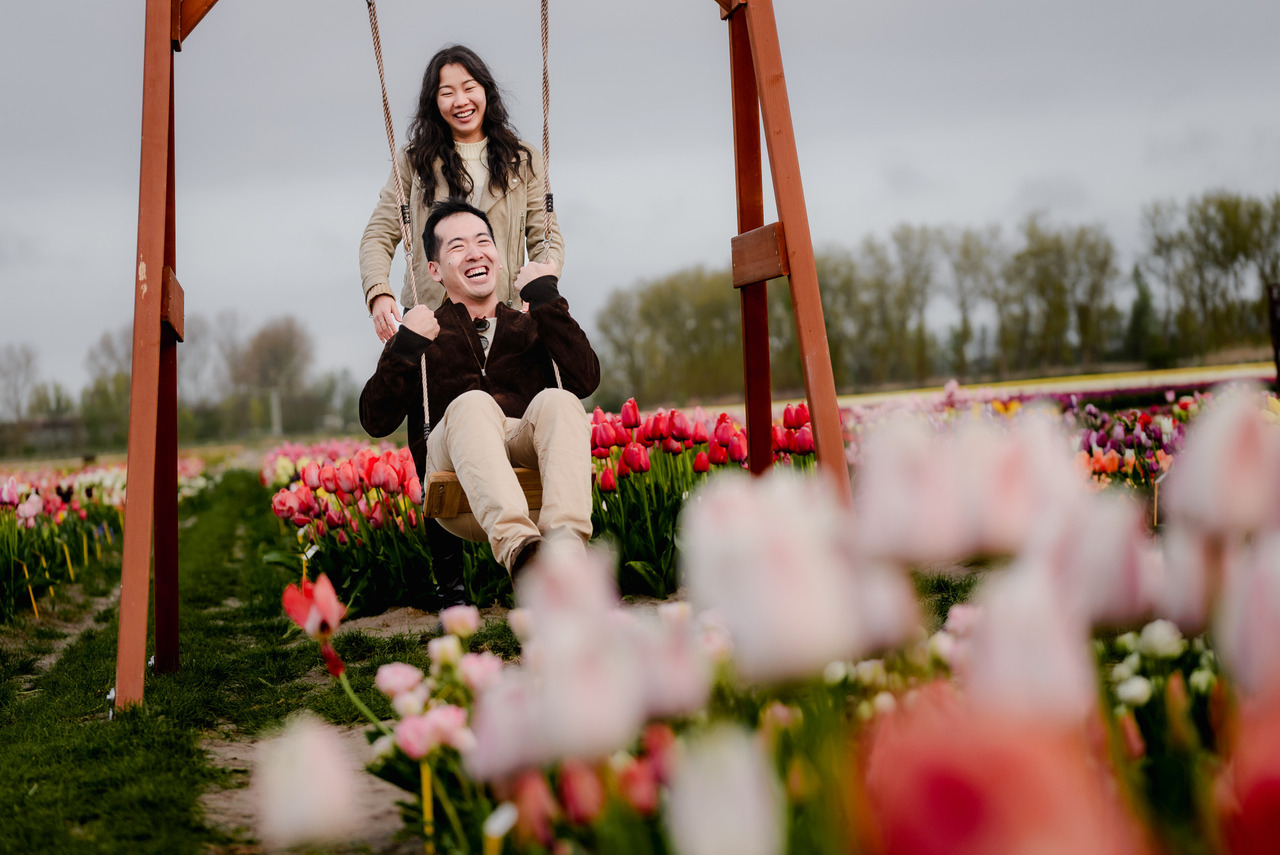
Tulip gardens usually have additional amenities: a café, places for photography, props, and colourful paths. Fields usually have one colour of tulips as it's easier to collect, select and dispatch.
How to Recognize a Tulip Garden in Photos or in Real Life
This is where most confusion happens, especially on social media. Here are the clearest signs you are looking at a tulip garden, not a field.
1. Many colors mixed together
This is usually the first and strongest clue.
Tulip gardens often have many colors planted side by side. Production fields are usually one single color, because that makes harvesting easier.
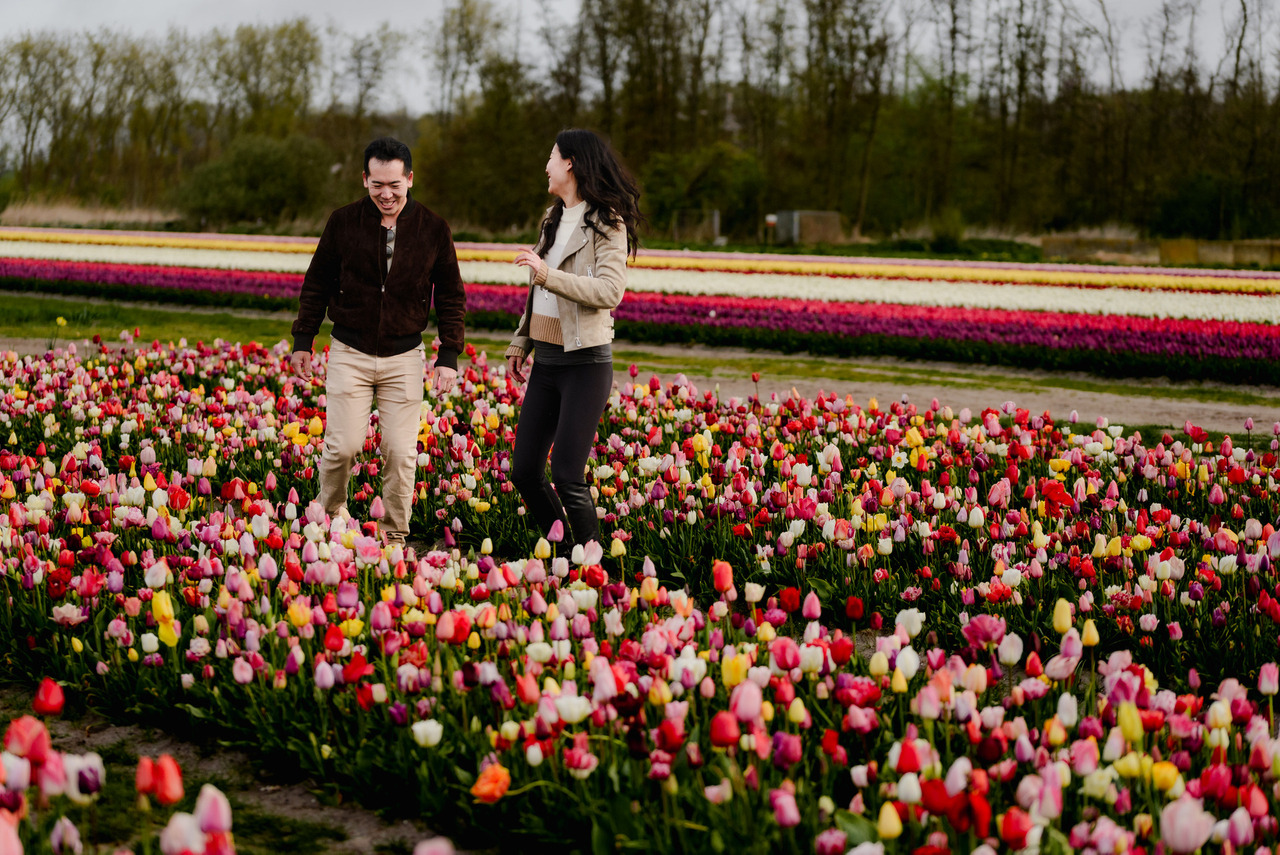
Above you have the Tulip Showgarden, and below the fields of De Tulperij. Both are within walking distance.
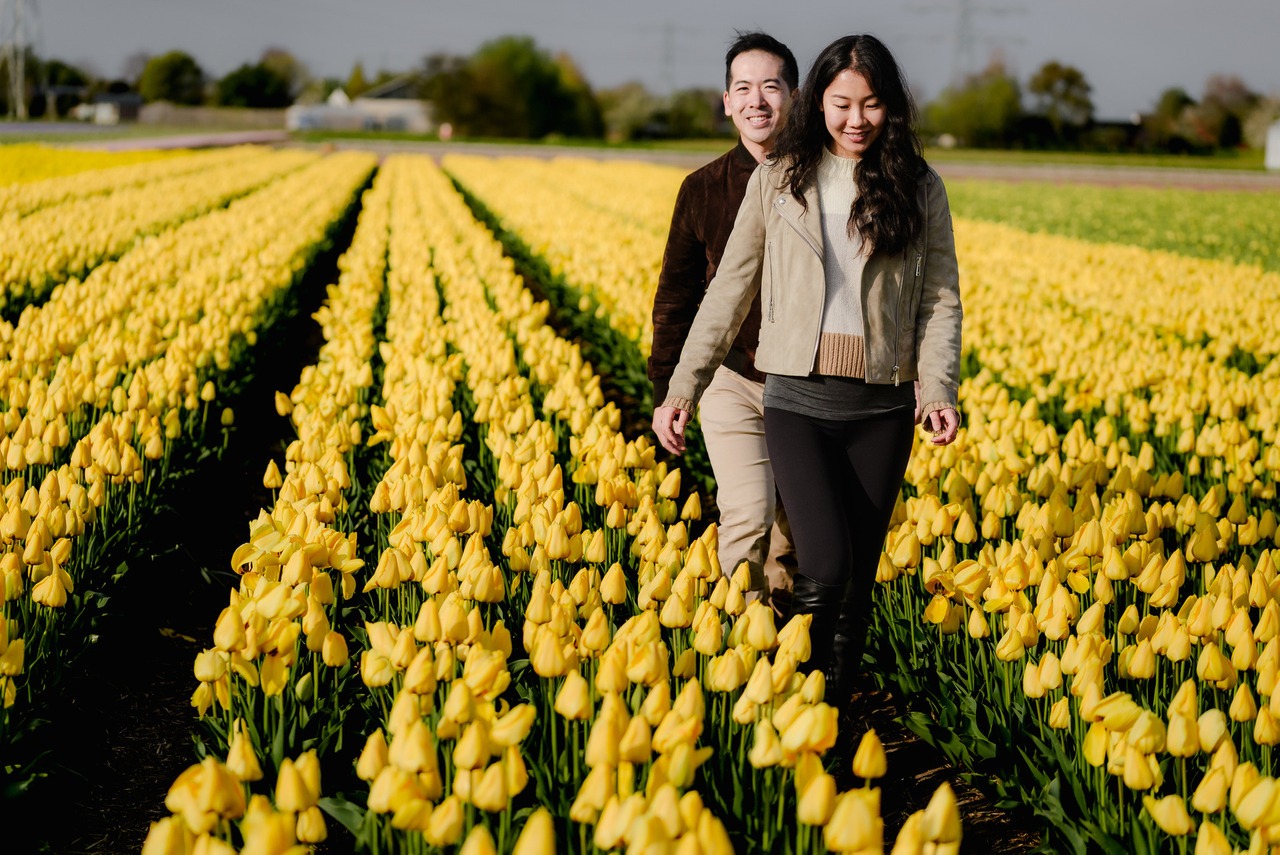
Here we are at the fields of De Tulperij, accessible during the full season. You don't have too many colour options, but as they are a real production field, they give you the feeling everyone wishes when thinking of visiting tulips.
2. Clear walking paths
Gardens have visible paths between rows or sections. What I have noticed after visiting some fields is that you can walk easily in gardens, but fields have narrow paths, making it hard to walk without looking at the ground.
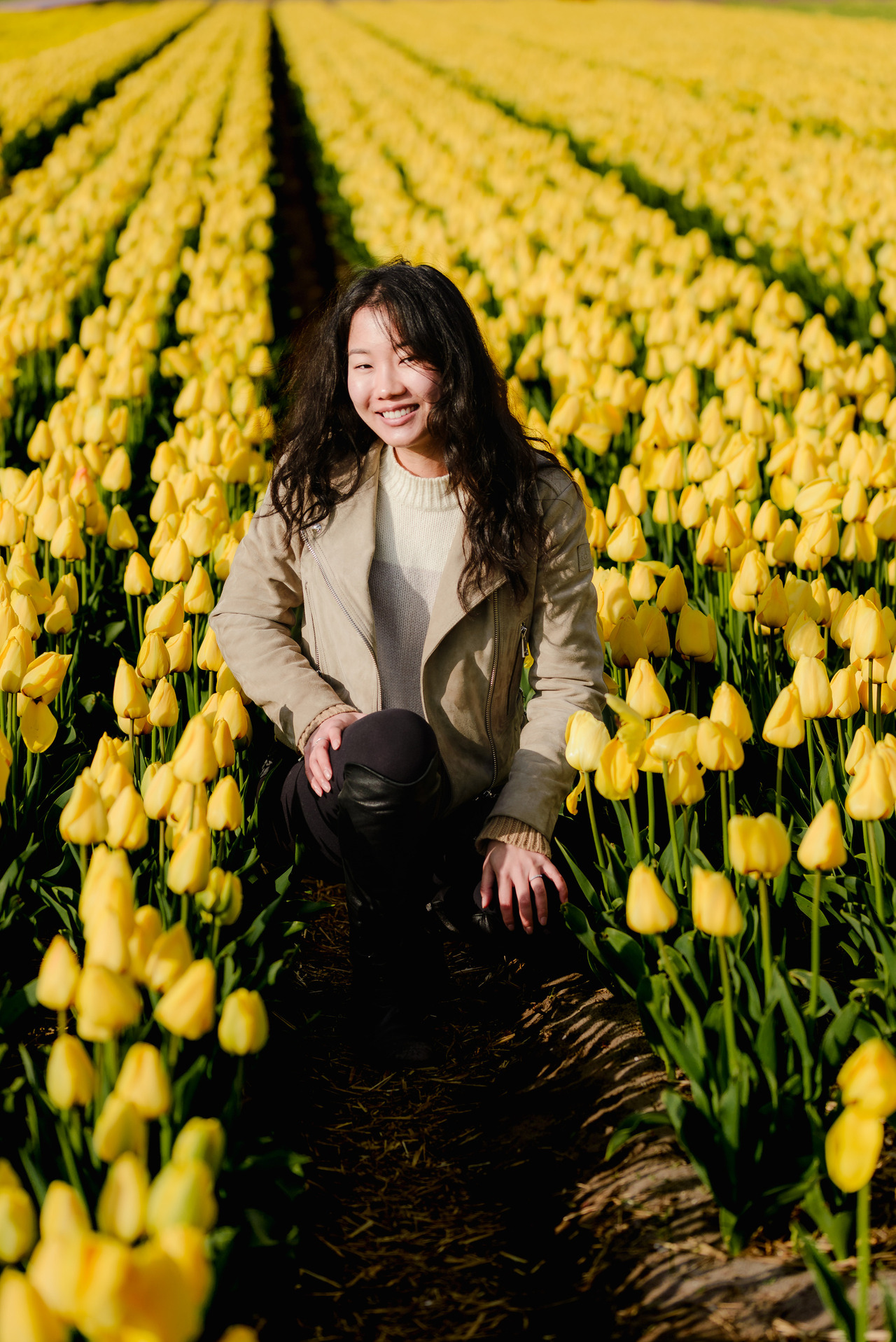
Here we are at the fields of De Tulperij, accessible during the full season.
3. Signs, rules, or information boards
Gardens explain where you can walk, how to behave, and often share information about tulip history or bulb production.
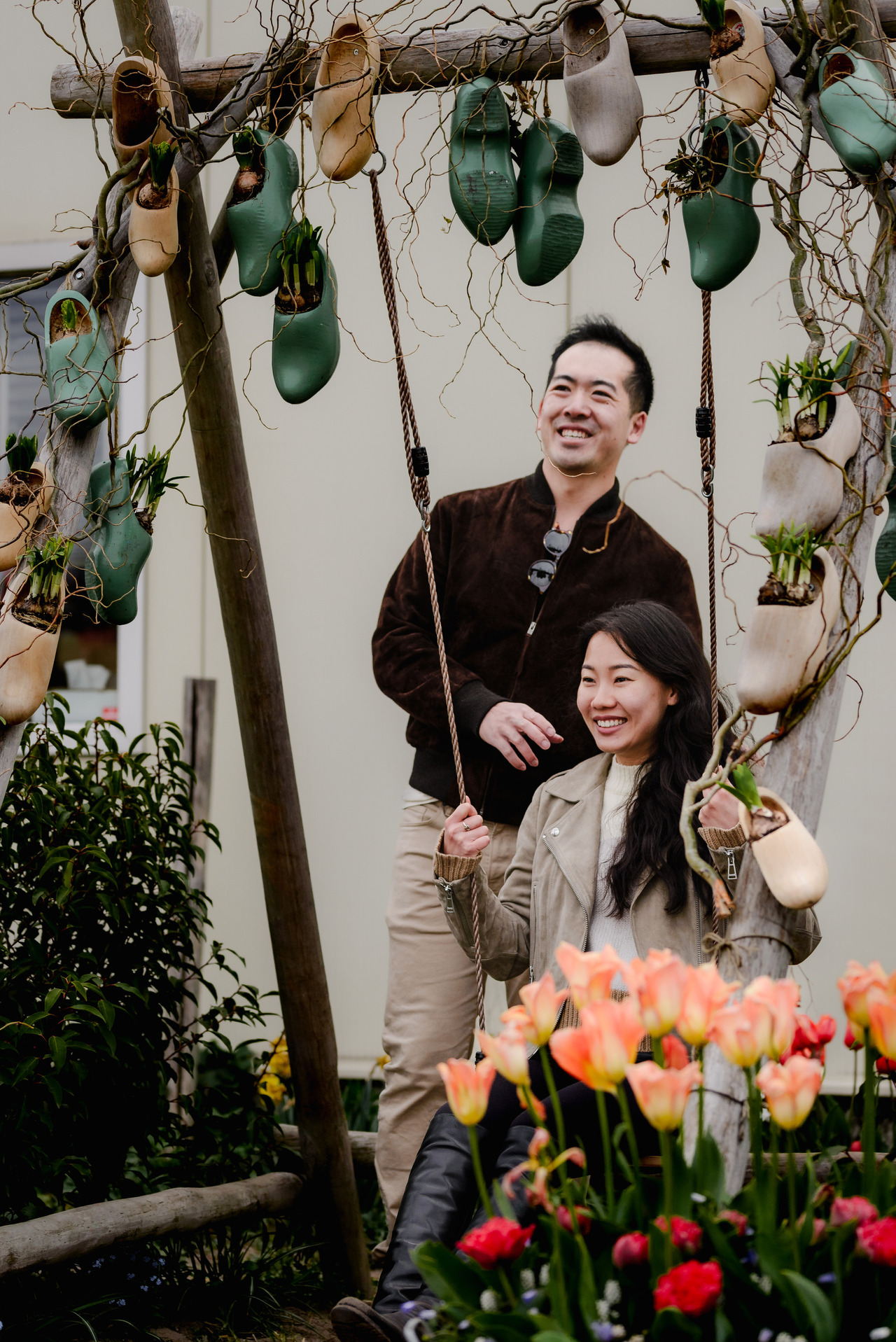
Here we are at the De Tulperij show garden, accessible during the full season. They have a café and a showroom with lots of tulips to see. What I love about this location is that you can sit outdoors and have a coffee or a dessert in the middle of their garden. You don't have access to their fields unless you book in advance.
4. A visible entrance or welcome point
Sometimes there is a ticket booth, sometimes just a sign. Either way, gardens make it clear that visitors are allowed inside.
5. Facilities nearby
Cafés, benches, toilets, small shops, or museums are strong indicators you are in a garden.
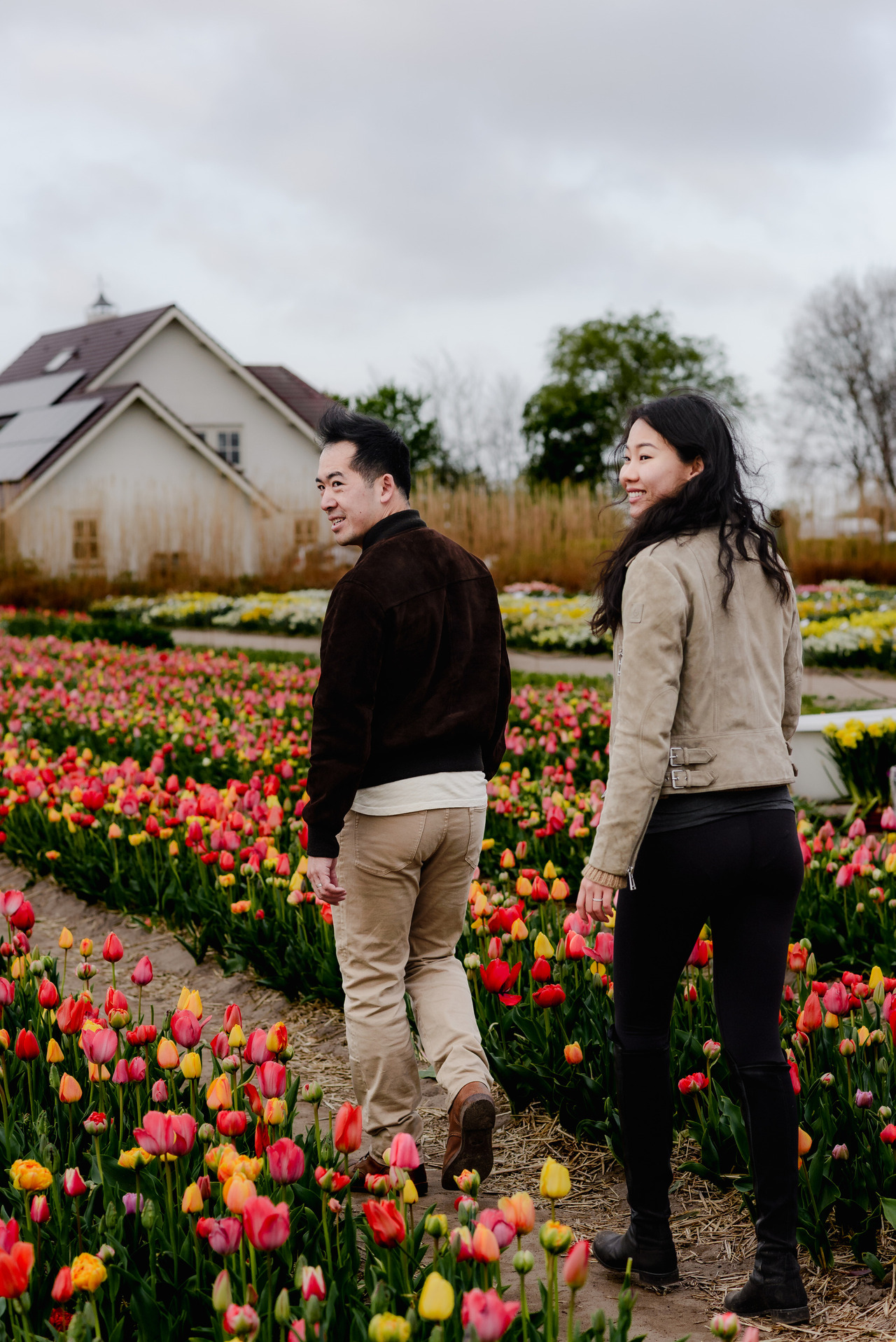
6. People walking calmly between rows
In gardens, this is expected and designed for. In fields, this is a clear sign that something is wrong. A simple rule of thumb:
If you are unsure whether you are allowed to enter, you probably are not. Tulip gardens make it clear that visitors are welcome.
Why This Difference Matters
Respecting this distinction protects the farmers, the bulbs, and the future of tulip season itself. Tulips are a major Dutch export and part of a long tradition that depends on careful planning and protection.
Tulip gardens exist because farmers want to share their work with visitors in a sustainable way. Visiting these gardens supports the industry while allowing everyone to enjoy the beauty of tulips responsibly.

In the background, there is a production field. You need to stay outside at least 2 meters. Here, taking the picture from the other side of the road. The fields have no fences, but that doesn't mean people are welcome.
Where Does Keukenhof Fit In?
Keukenhof Gardens is the most famous example of a tulip garden. It is fully designed for visitors and showcases tulips in a controlled, curated environment. While it is not the only option, it helps illustrate the difference clearly: gardens invite visitors in, fields do not.
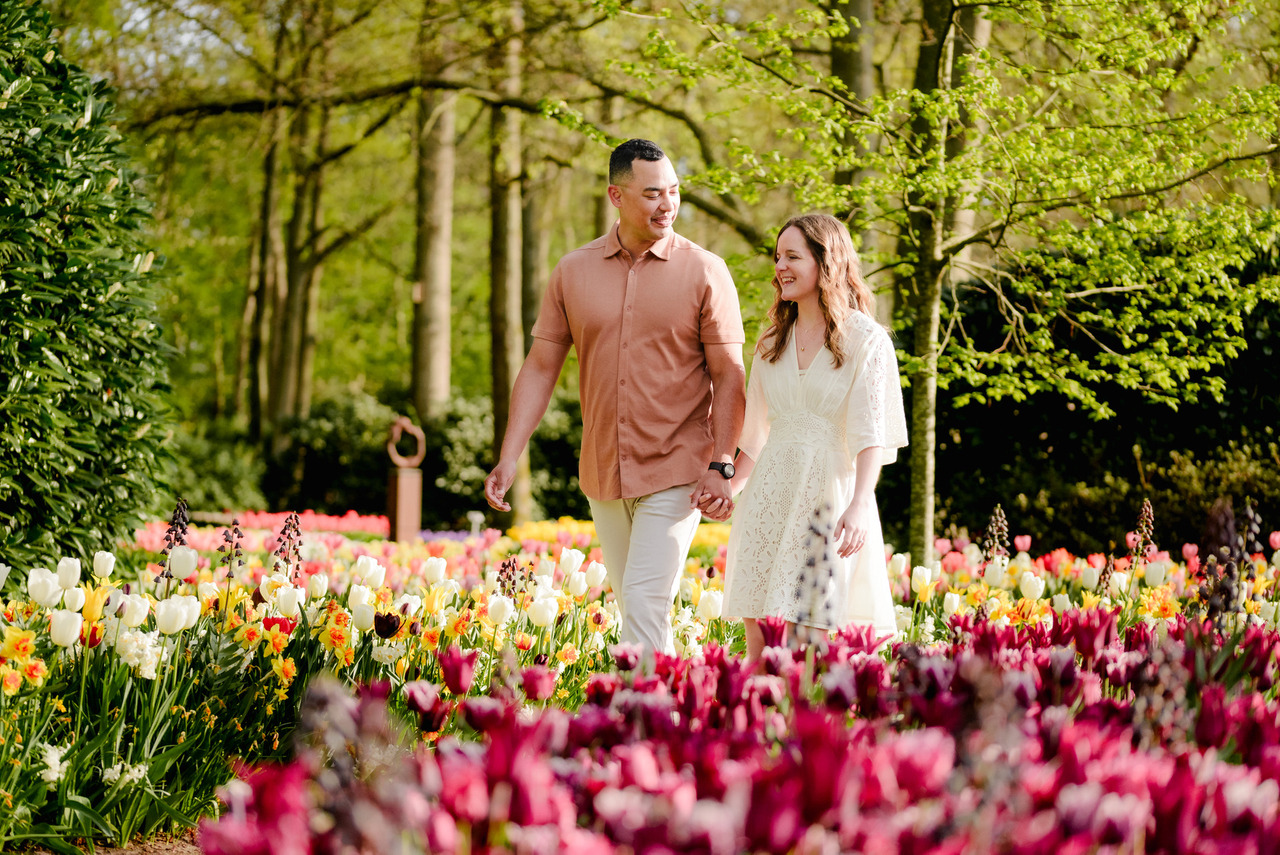
At Keukenhof Gardens
Before Tulip Season Starts
Most visitors do not mean to do the wrong thing. The confusion is understandable, especially when photos online lack context. Learning how to recognize tulip gardens helps prevent misunderstandings and keeps the tulip season enjoyable for everyone.
If you want to walk among tulips, take photos, or plan a visit, always choose tulip gardens. They exist for that exact reason.
Tulip season is a shared experience. Respecting where and how we enjoy it is part of keeping it beautiful.
Until next time in Amsterdam, and maybe see you during our beautiful tulip season,
Joanna
Your Photographer in Amsterdam


