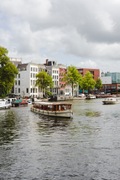

If you're wondering where to take photos in Amsterdam, the answer depends on what you want Amsterdam to look like in your photographs.
When you visit Amsterdam for the first time, it is easy to look at the canal houses and feel that they are all part of the same landscape. But once you spend more time walking through the city, the differences become much easier to see.
The Jordaan doesn't look quite like the Canal Belt. The Nine Streets have a different rhythm from the streets around the Amstel. The oldest part of Amsterdam feels different again, and the wide view across the Amstel is almost the opposite of standing beside one of the city's smallest canals.
This matters when you are choosing a location for an Amsterdam photo session.
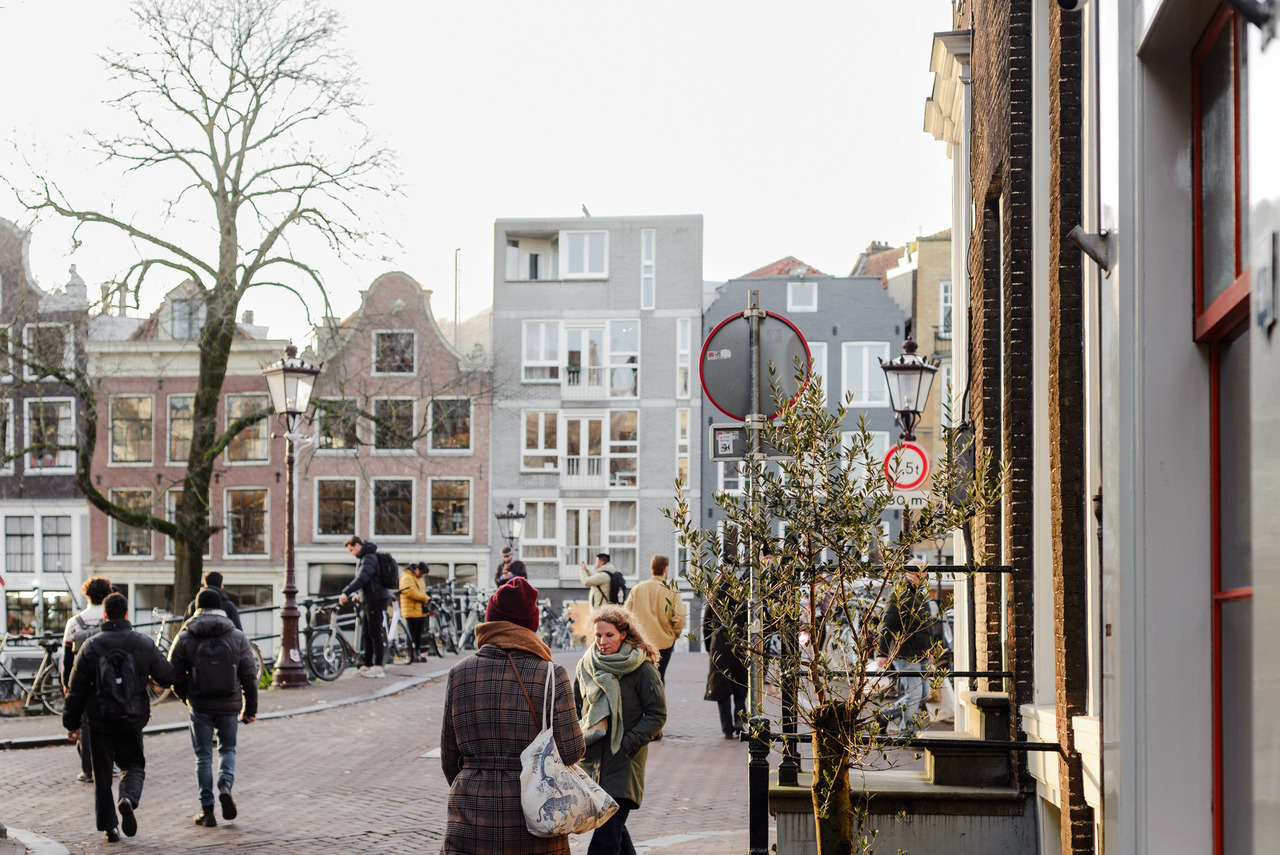
You may have saved a photograph online because you loved its background and thought, This is what I want Amsterdam to look like. You don't necessarily need to know the name of every canal or neighbourhood, but knowing the visual differences between the main areas can help you choose a place that feels right for you.
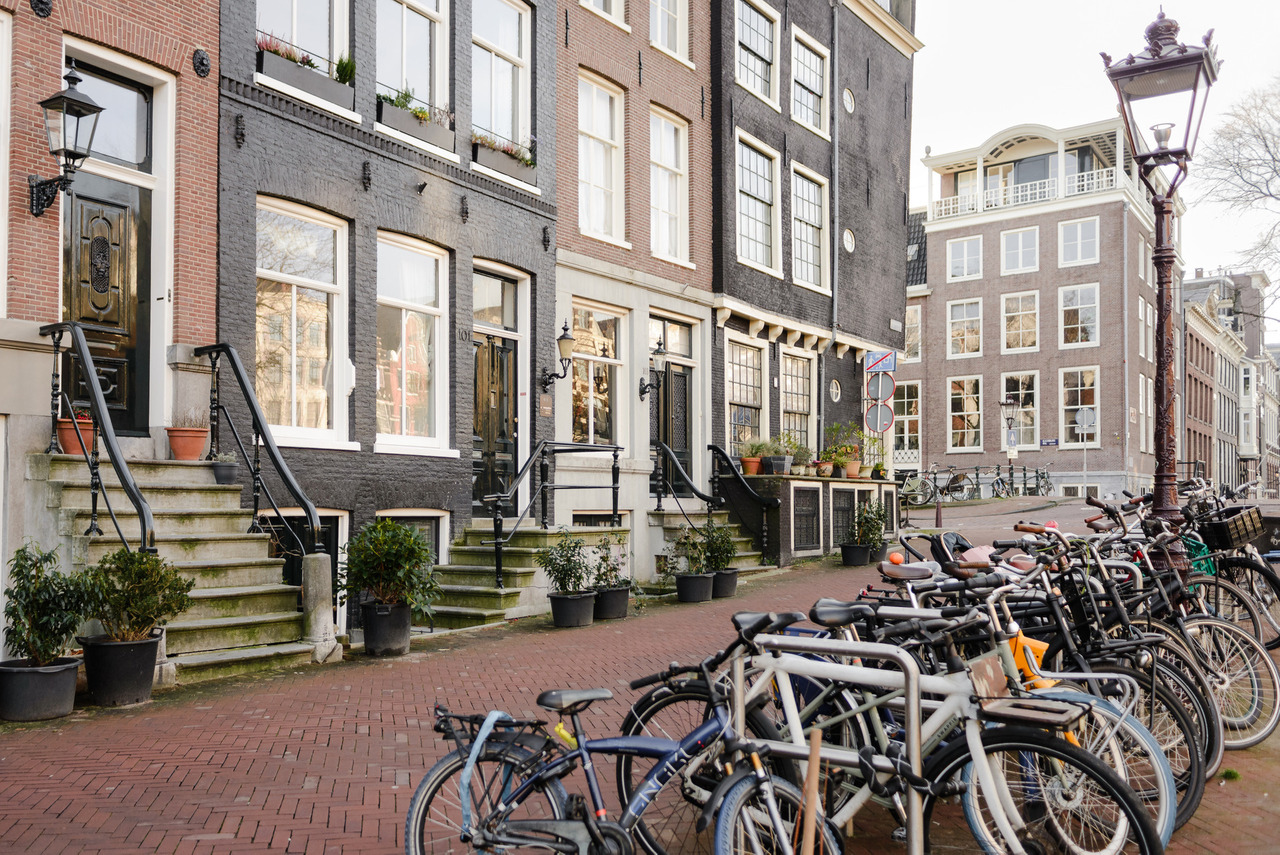
This is my guide to the parts of Amsterdam where I photograph most often, what makes each one different, and what you can expect to see in your photographs.
Jordaan: smaller streets and a more residential Amsterdam
The Jordaan sits on the western side of the Canal Belt, roughly between Prinsengracht and Marnixstraat, with Brouwersgracht at its northern end and Leidsegracht towards the south.
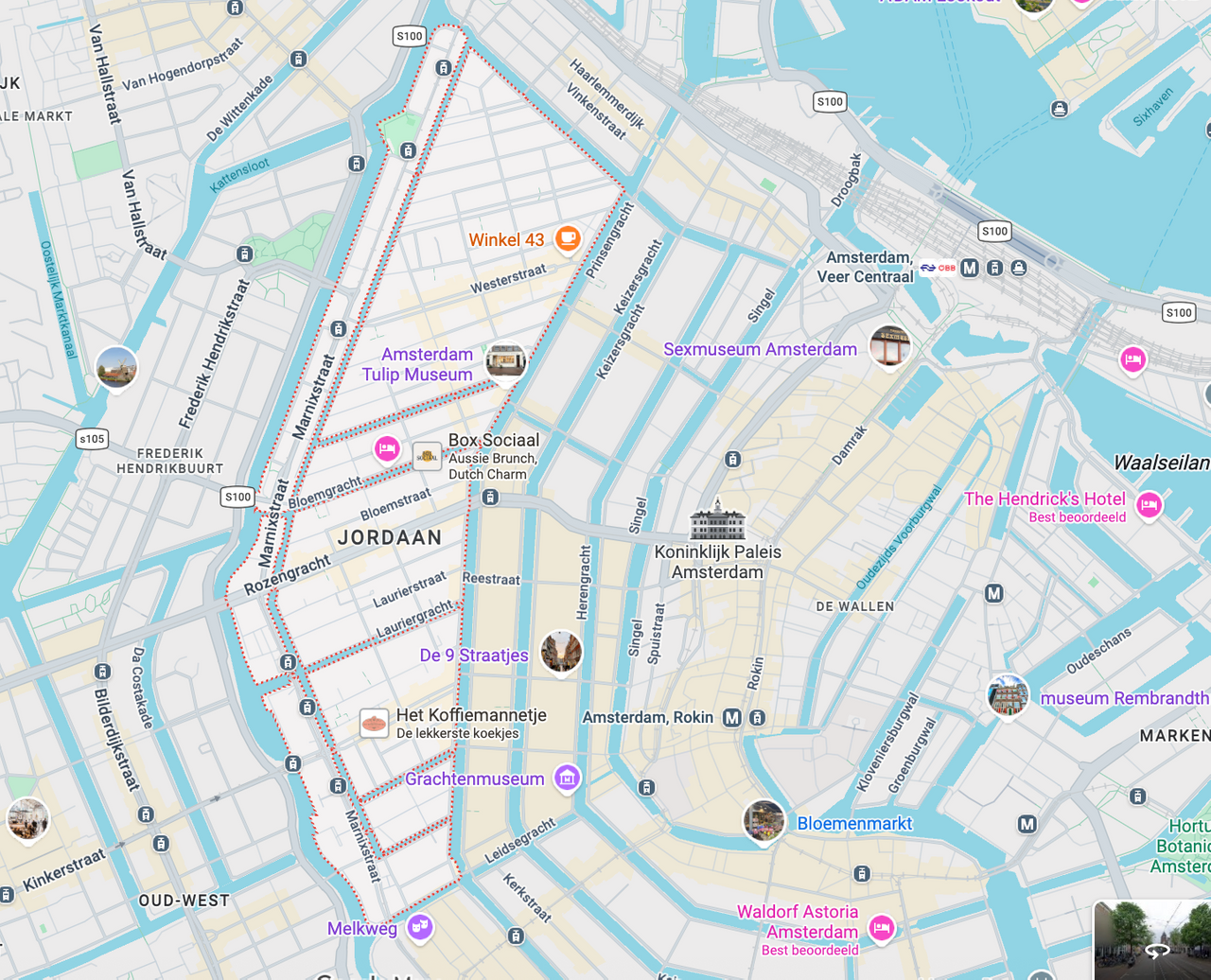
One of the easiest ways to understand the Jordaan is to stop imagining the grand canals for a moment.
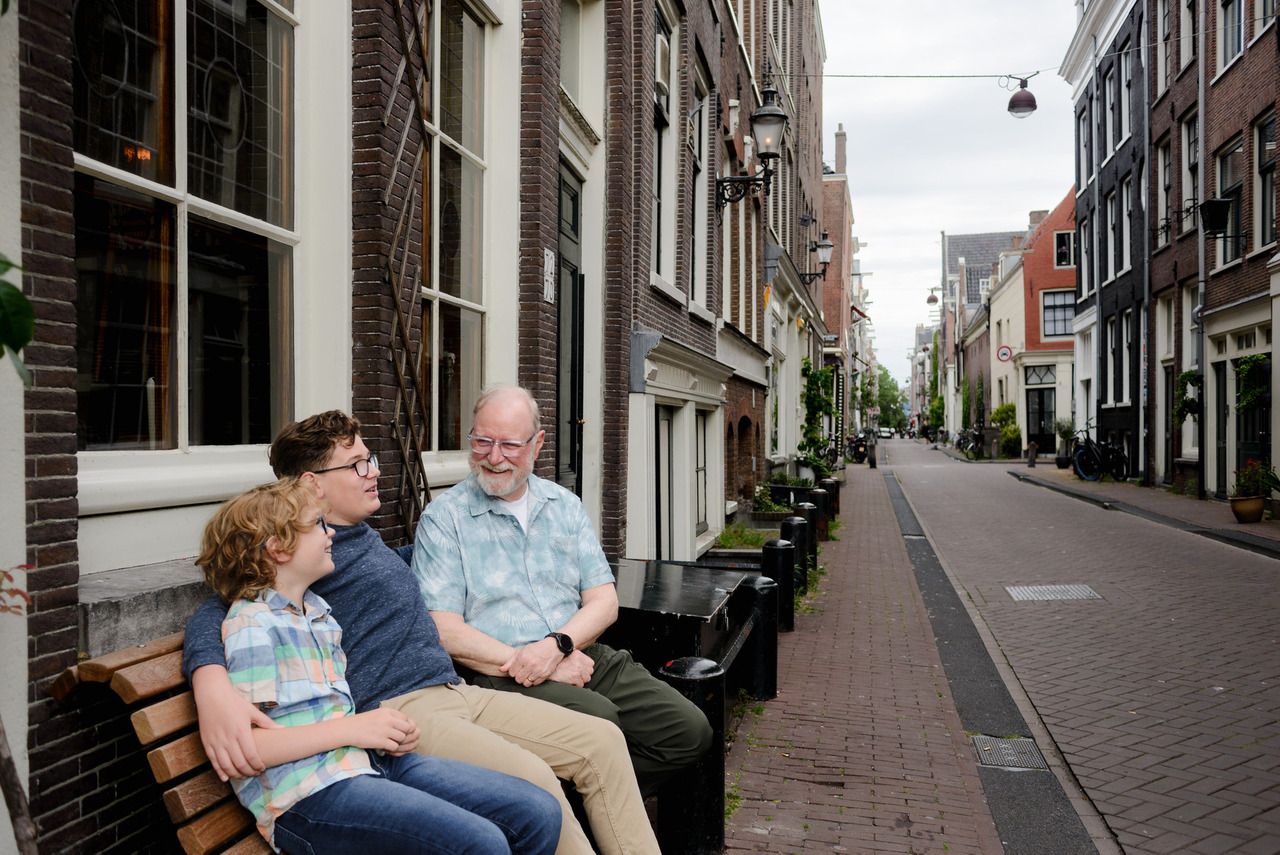
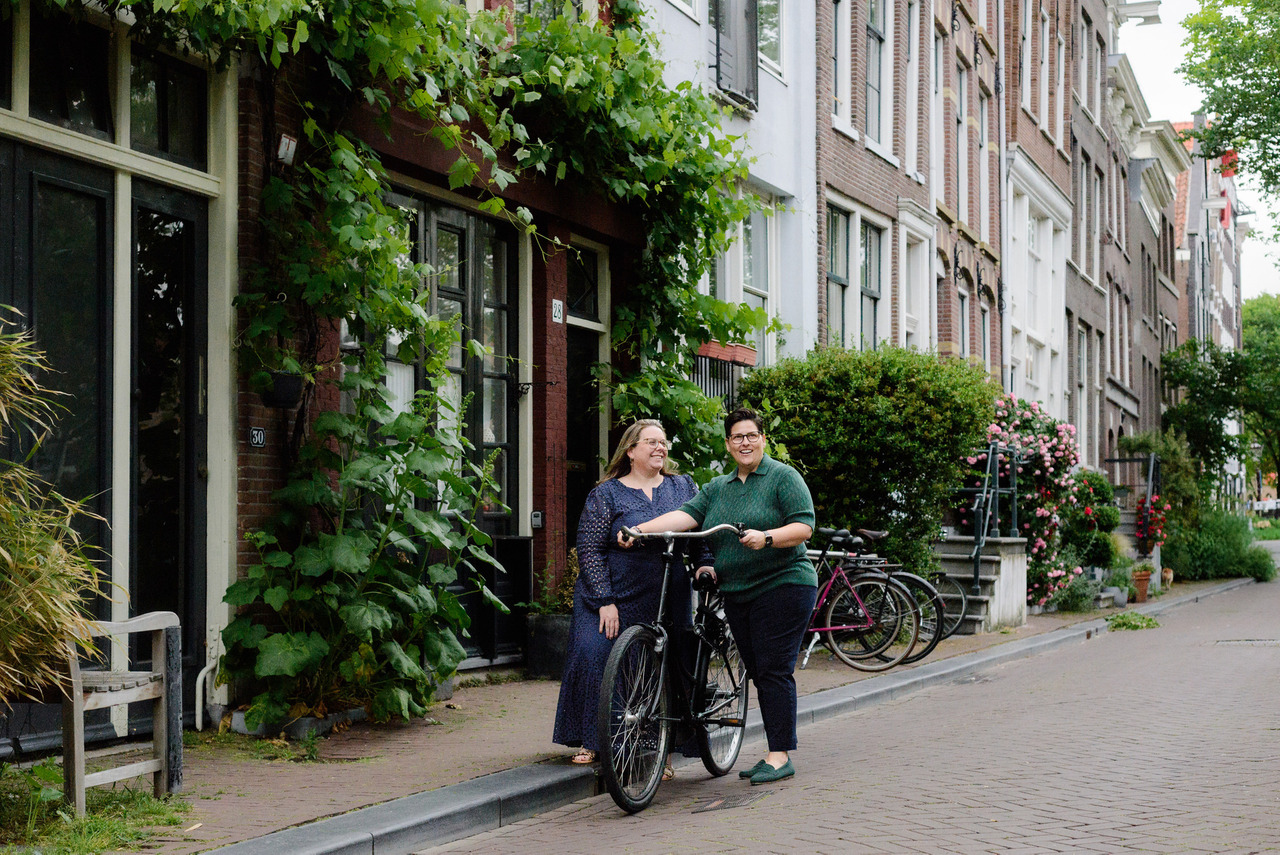
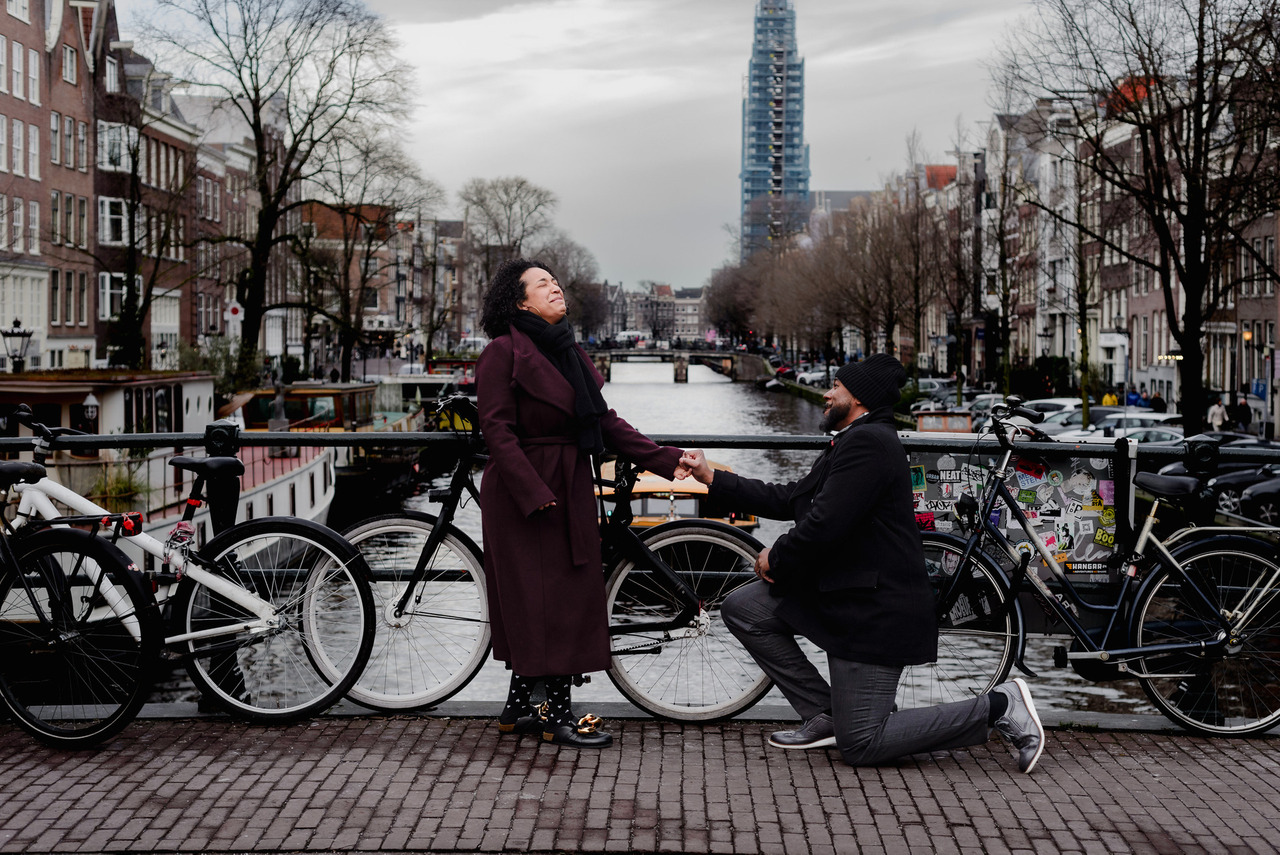
Inside the neighbourhood, the scale becomes smaller. There are narrow streets, little bridges, plants outside people's homes, smaller houses, and canals such as Bloemgracht and Egelantiersgracht. You are still unmistakably in Amsterdam, but it feels more residential.
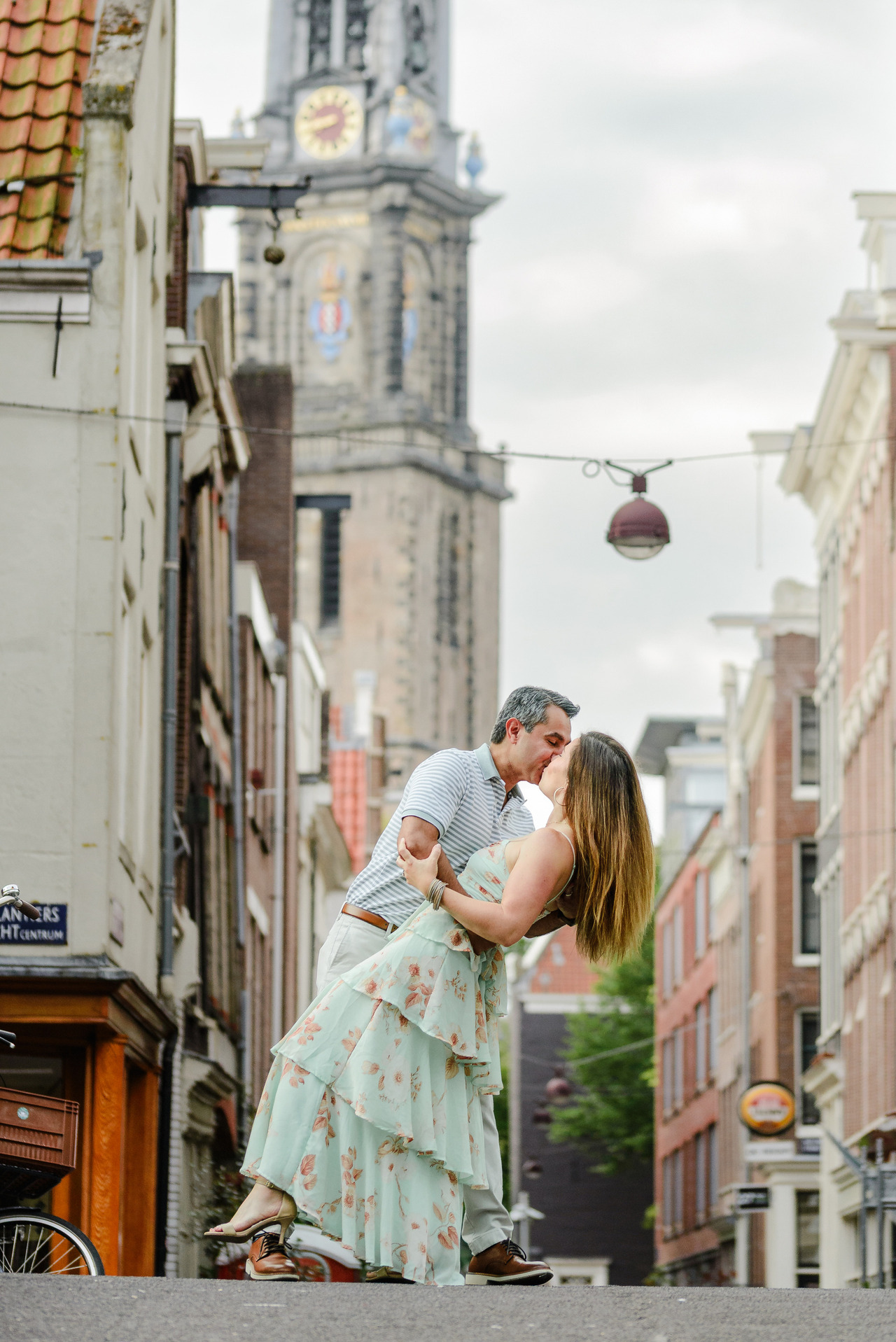
One of my favourite elements to include is Westerkerk. From inside the Jordaan, its tower appears between houses and above the streets, connecting the neighbourhood visually with the larger city around it.
This is also why I think it is useful to understand where the Jordaan actually is. When you search for Jordaan photographs online, you will often find the name being used quite broadly for images from the western side of central Amsterdam. Some of those classic large-canal views are actually part of the Canal Belt.
Both are beautiful. They simply give you different photographs.
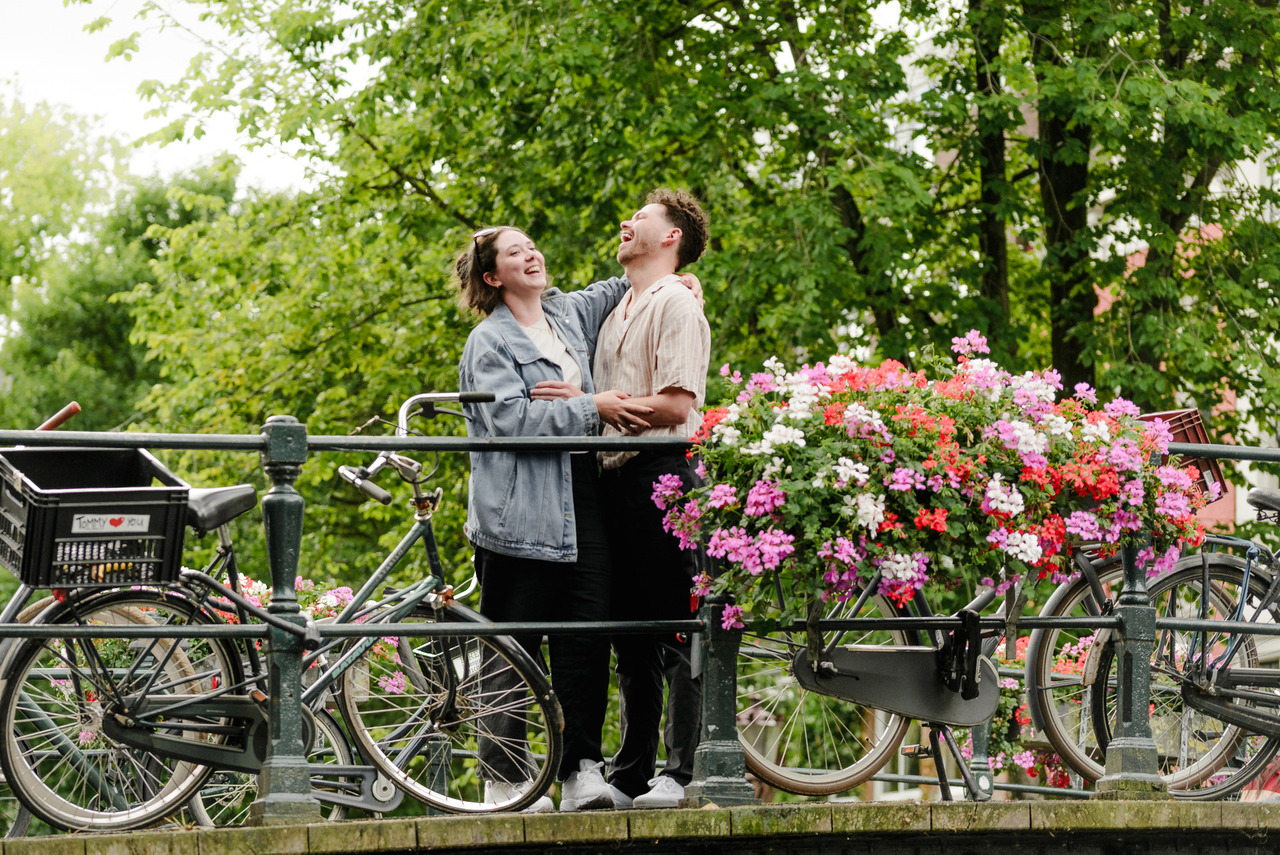
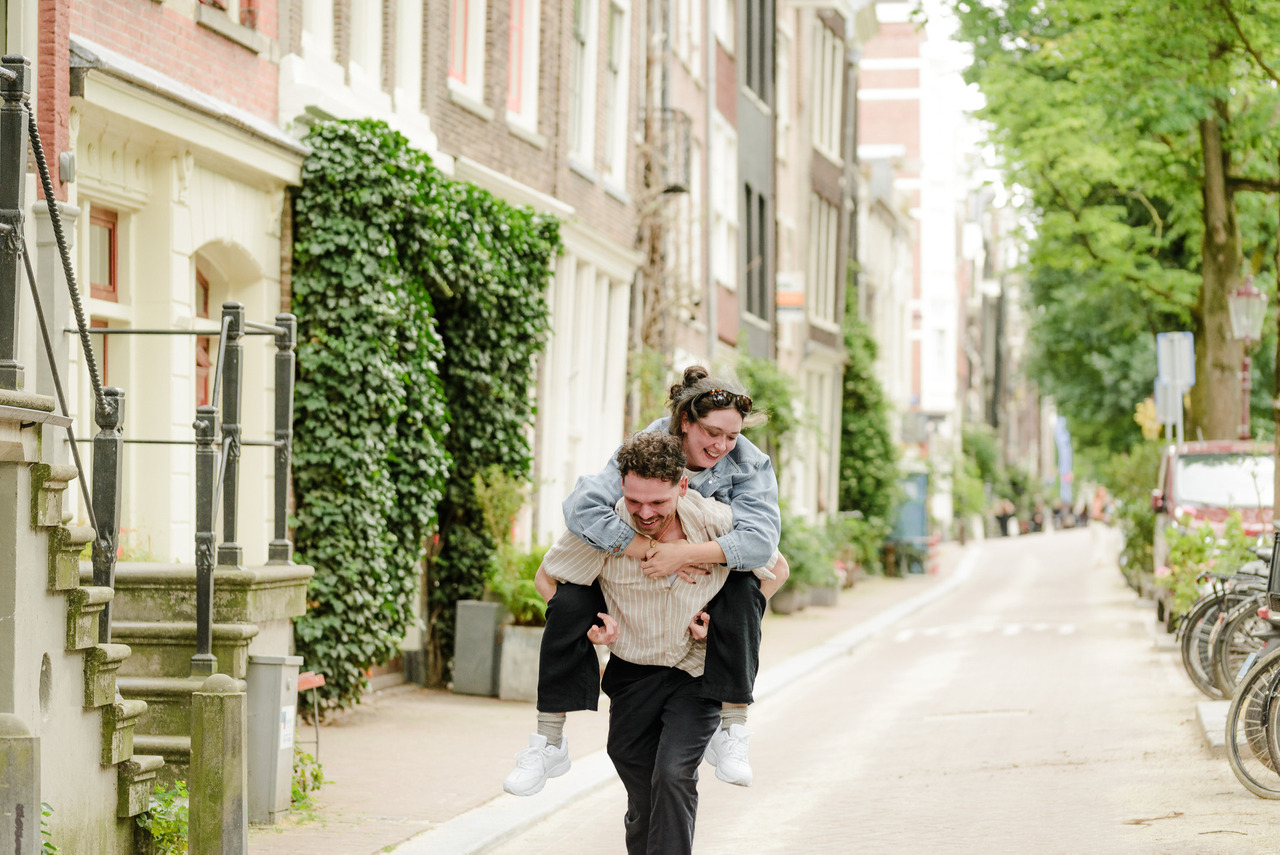
Western Canal Belt: the Amsterdam you probably imagined before arriving
If you tell me that you don't have a particular location in mind and simply want your photographs to feel unmistakably Amsterdam, the Western Canal Belt is very often where I will begin.
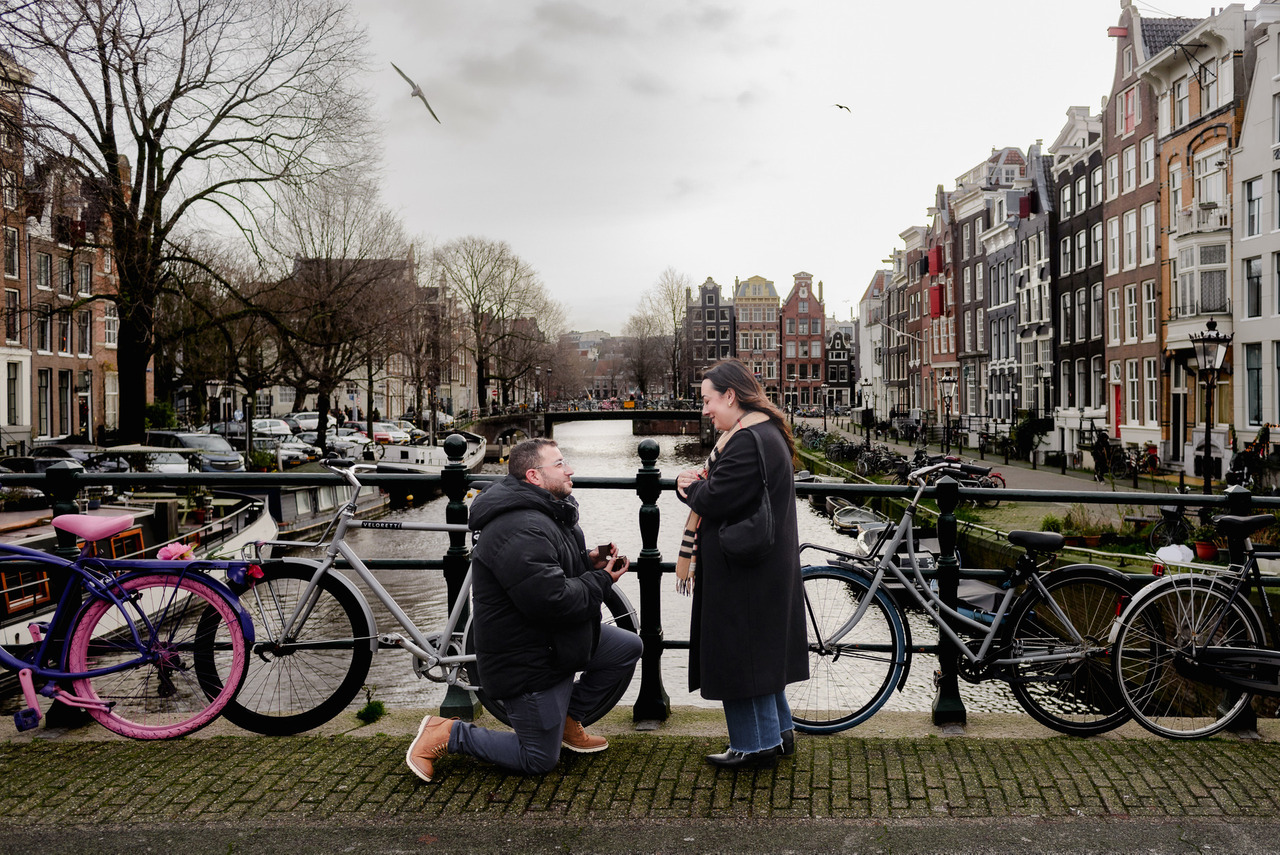
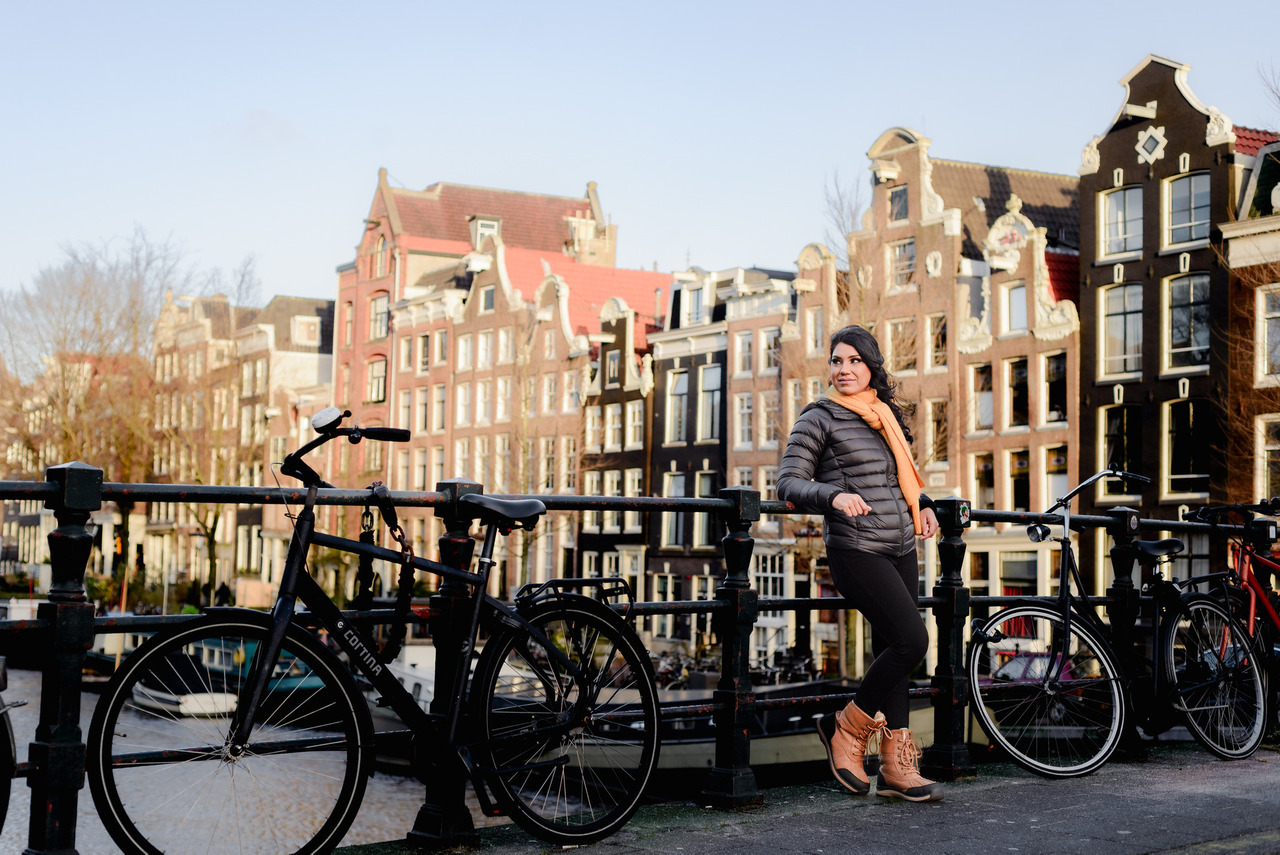
Here we have the larger canals, rows of historic canal houses, bridges and those long perspectives that make Amsterdam so recognisable.
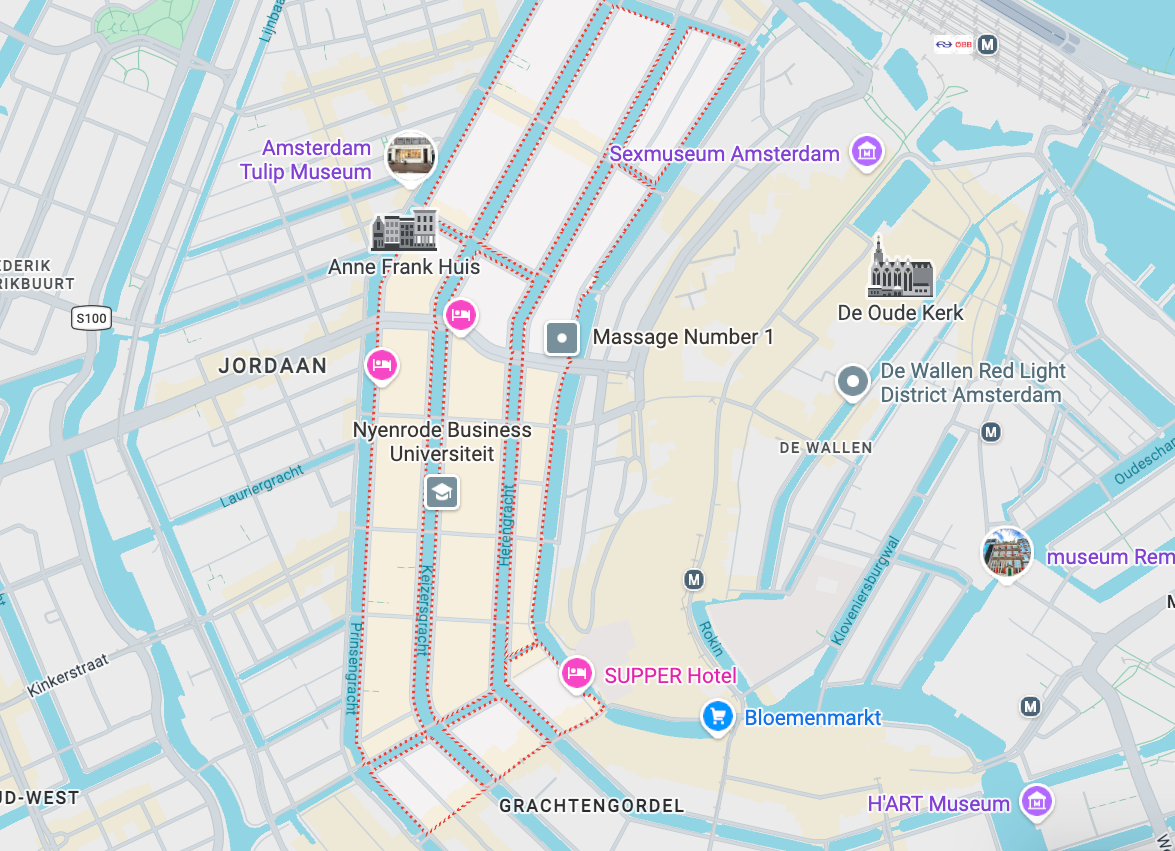
I particularly like the area from Singel towards Keizersgracht, especially around the northern part of the Canal Belt near Brouwersgracht. Within a relatively short walk, we can change the scale and perspective several times without leaving the area.
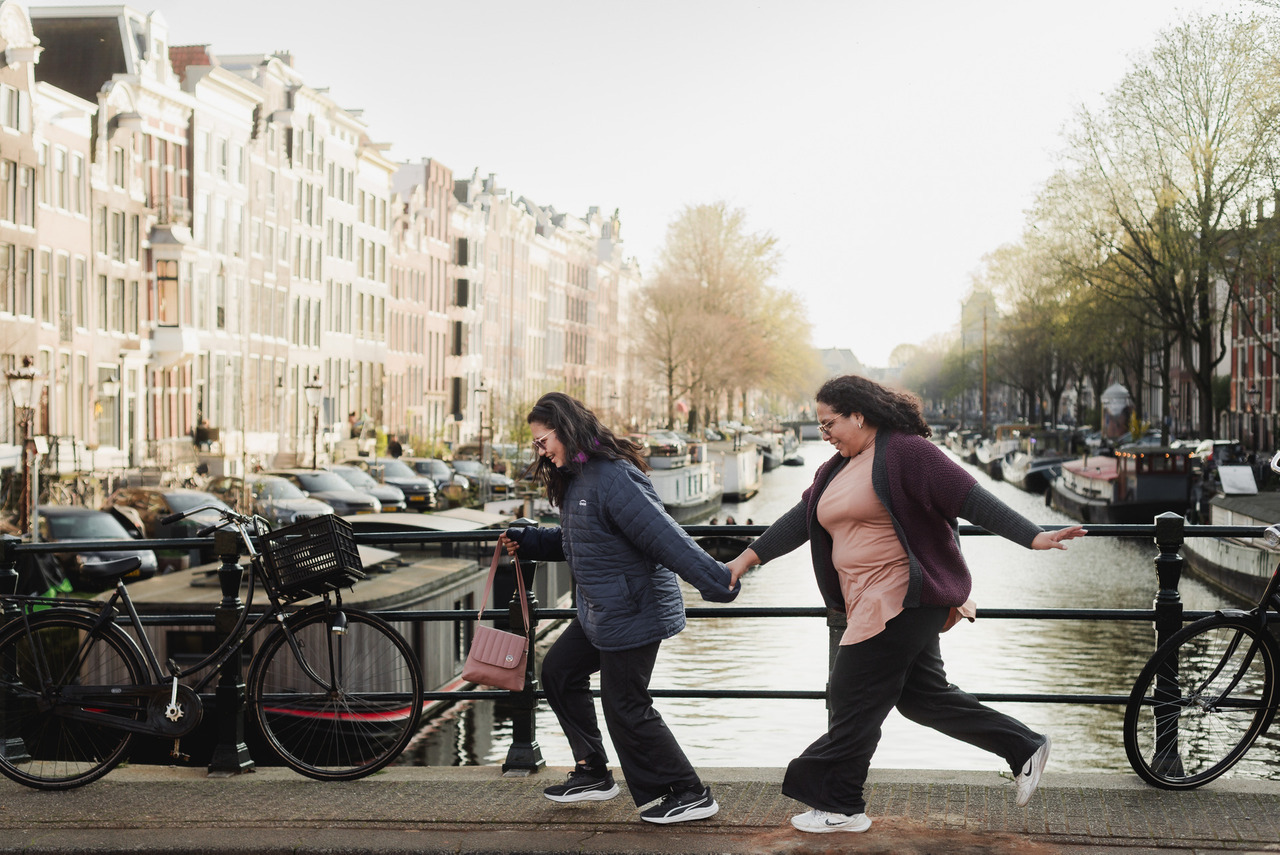
This is probably the closest to what many visitors imagine when they think about an Amsterdam photo session: water, bridges, canal houses and streets that immediately place you in the city.
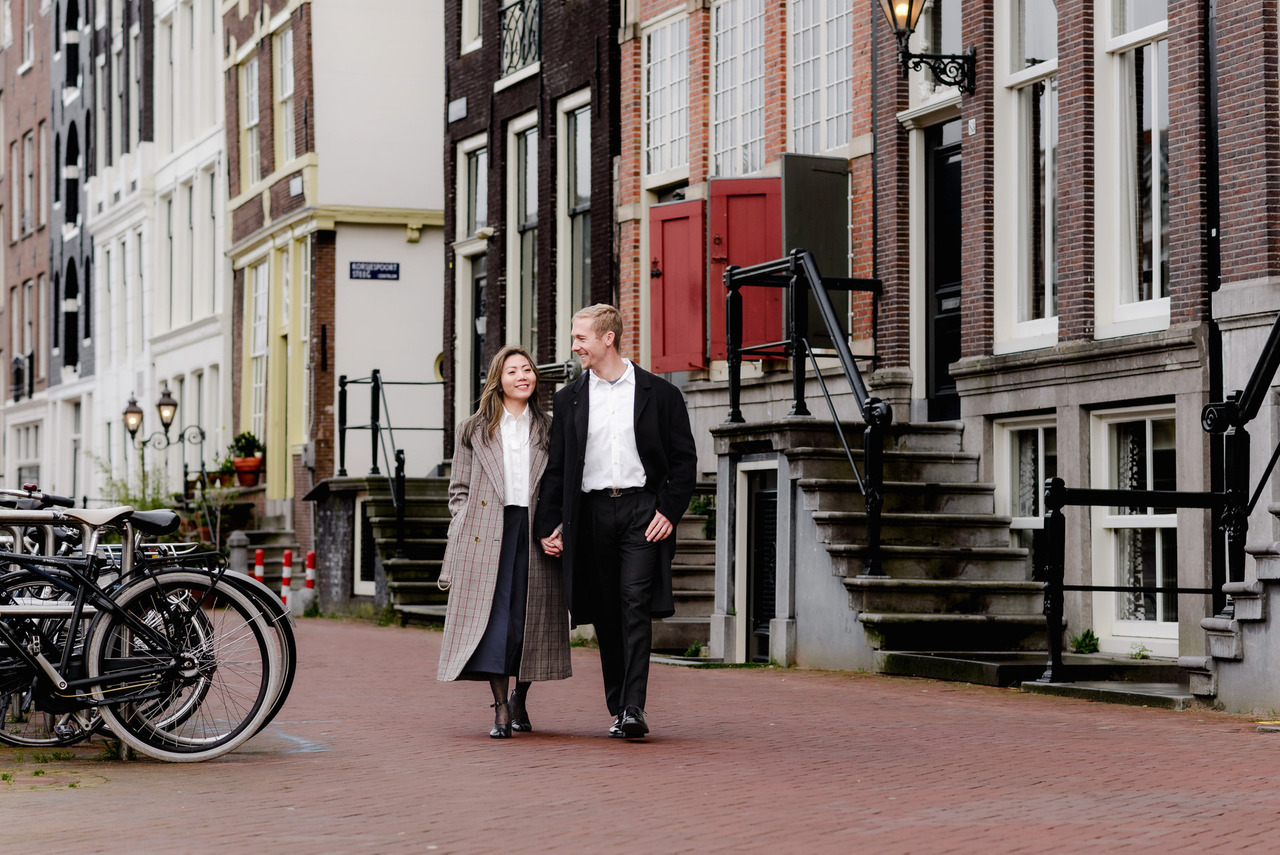
It is one of my favourite choices for morning sessions, when we can use the light and the streets before the day fully develops around us.
Negen Straatjes: canals, little streets and city life
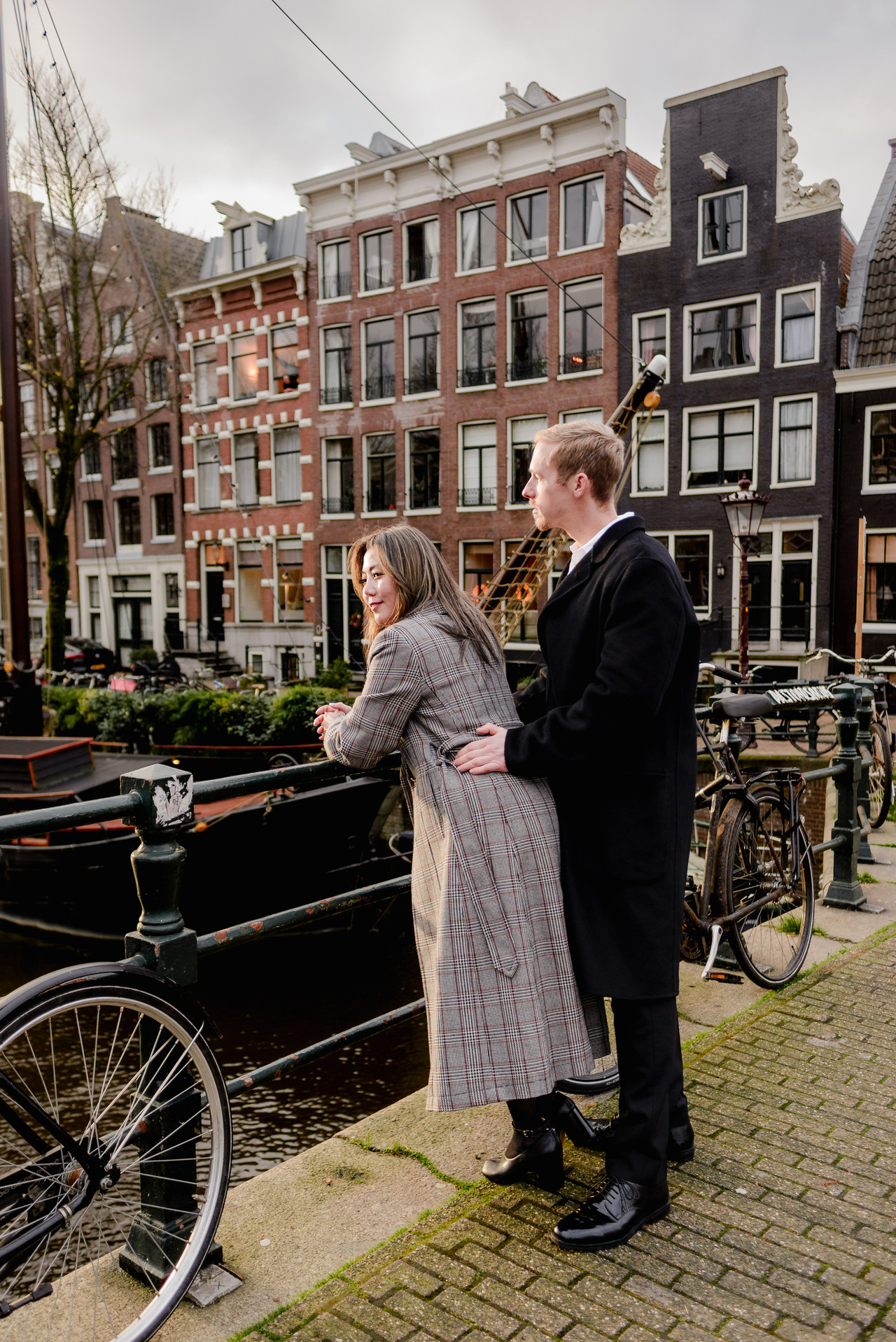
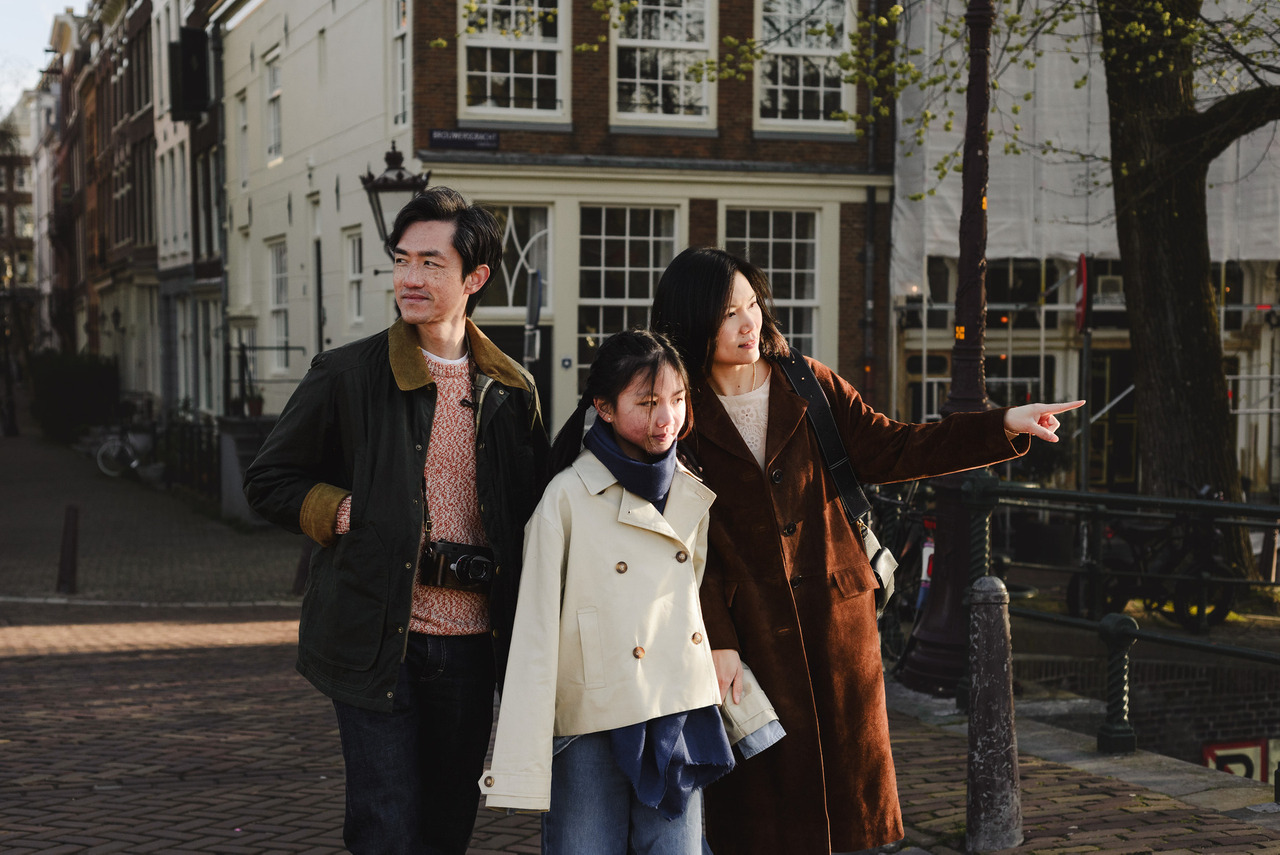
De Negen Straatjes, or the Nine Streets, is part of the Western Canal Belt, but I think it deserves its own section because the experience of photographing here is different.
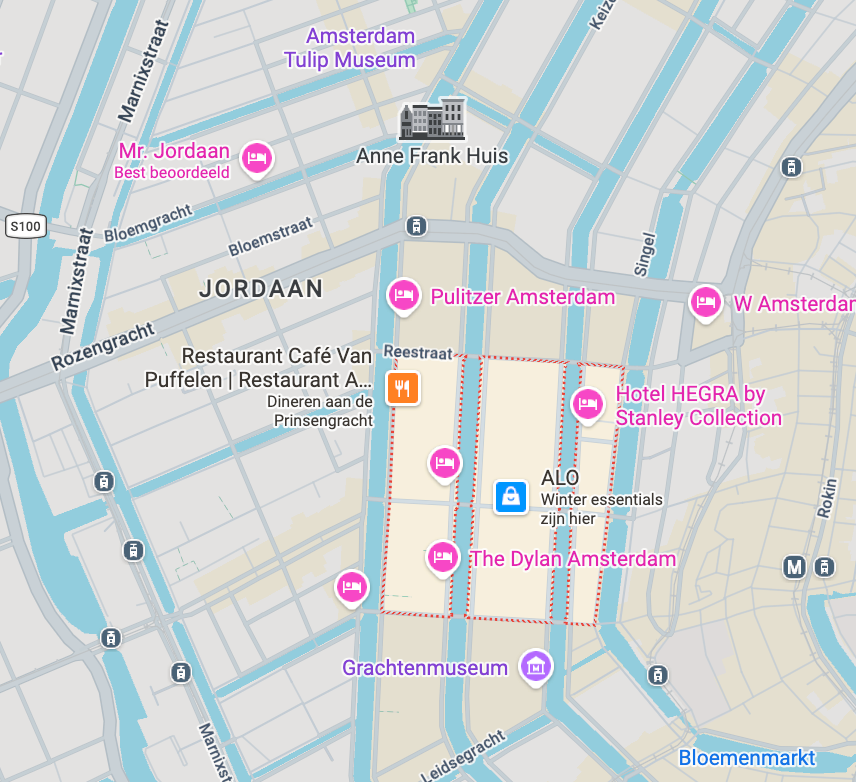
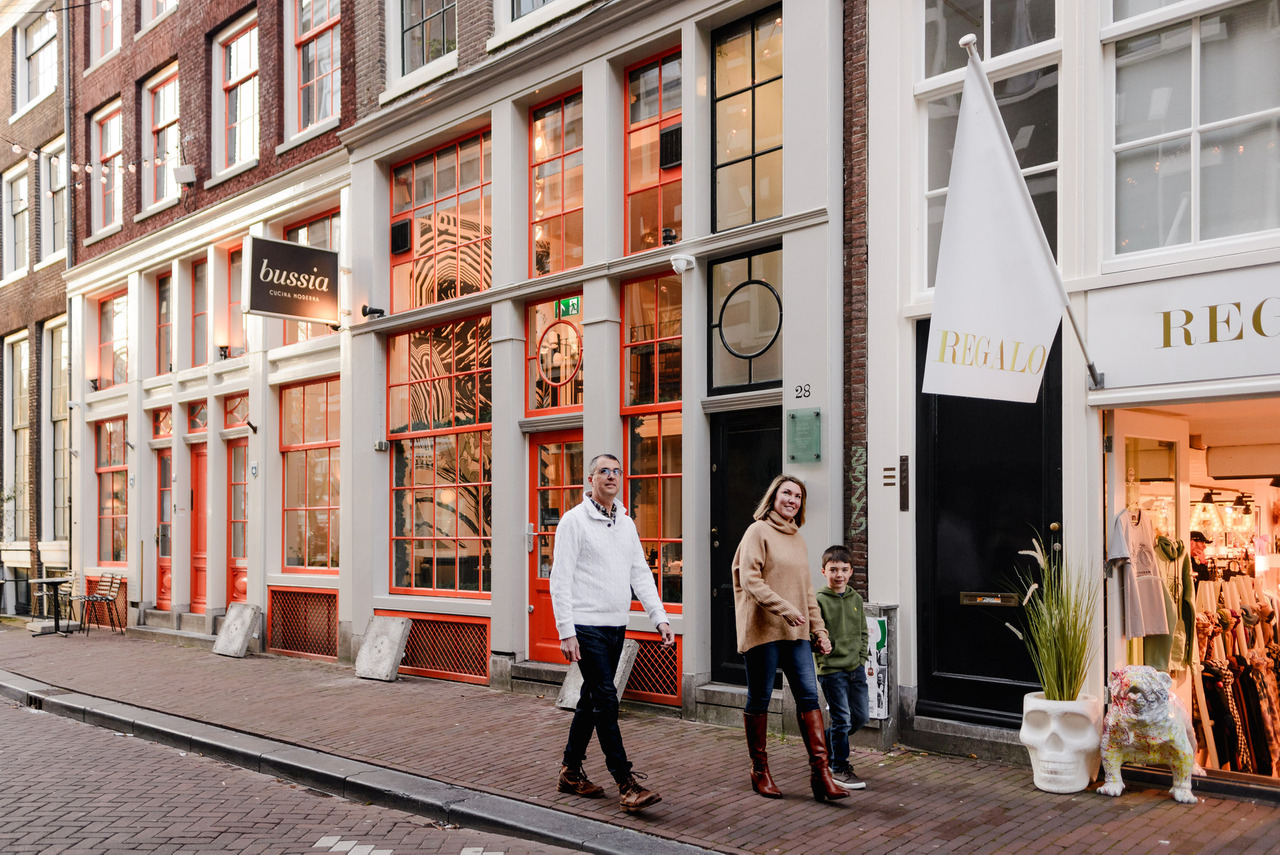
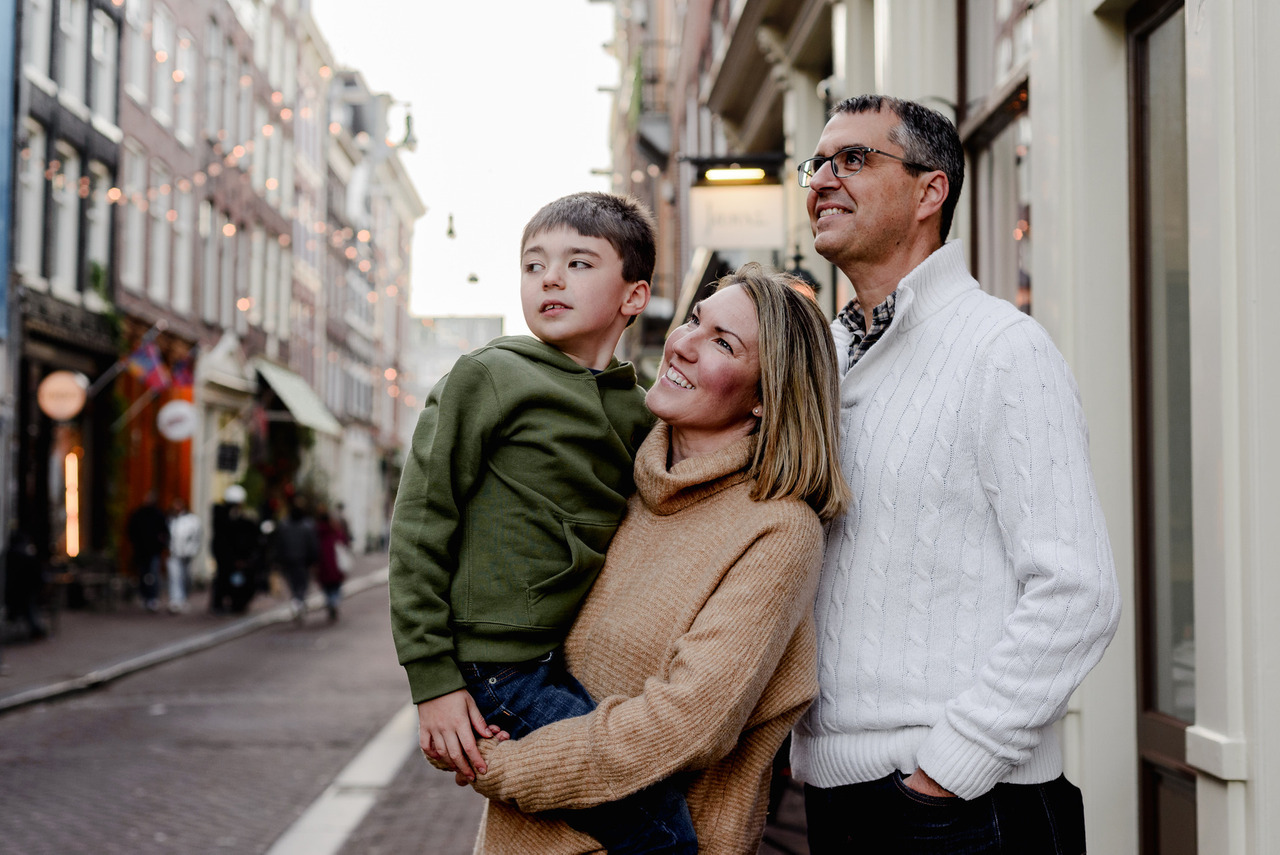
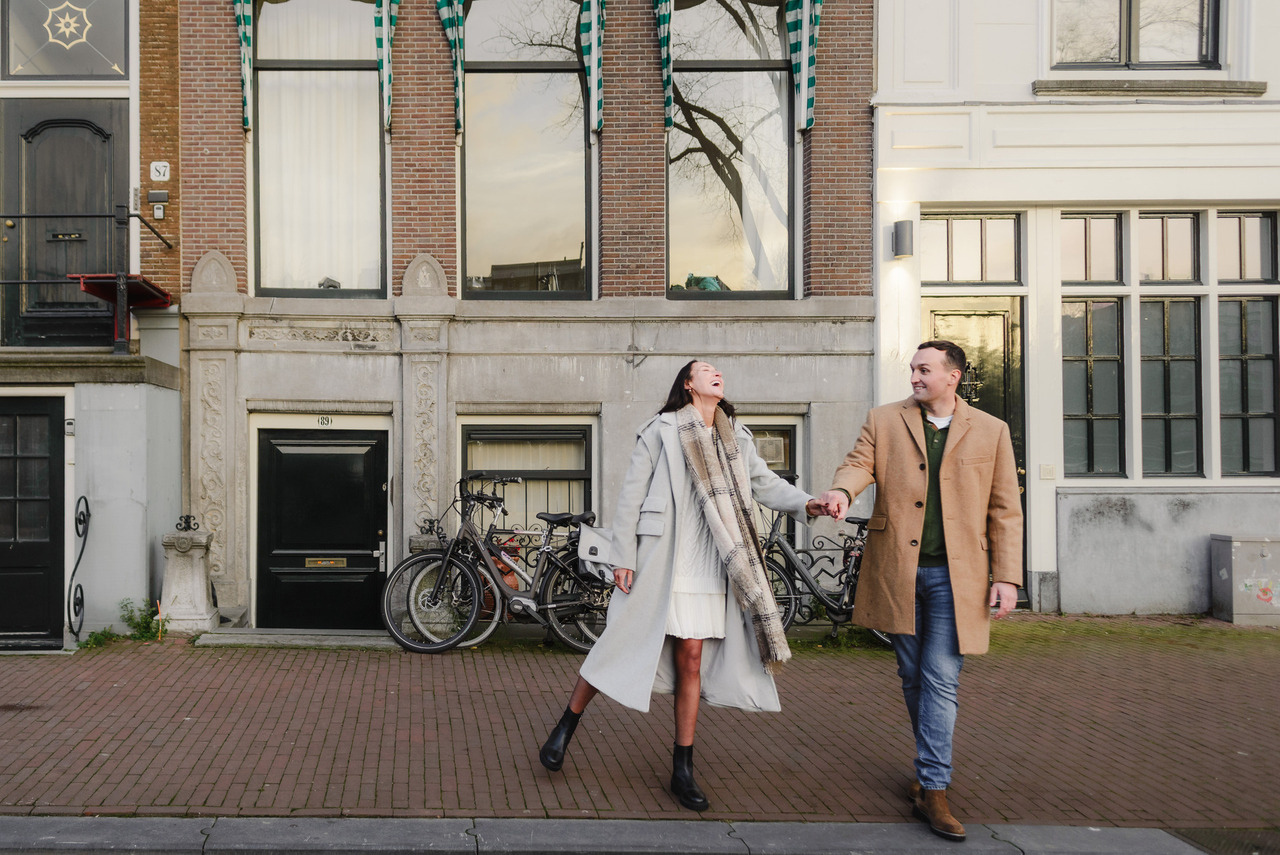
The area gets its name from nine small streets crossing the main canals. This creates a mixture of two versions of Amsterdam: the larger canal views and much smaller streets filled with shops, cafés and everyday city life.
I don't treat a photo session here as a checklist where we need to visit all nine streets. Instead, I use the parts that photograph beautifully at that particular time and connect them with the surrounding canals.
One of my favourite areas is towards the southern edge around Keizersgracht and Leidsegracht. Leidsegracht isn't one of the Nine Streets itself, but it forms part of the edge of this area and gives us some beautiful canal perspectives.
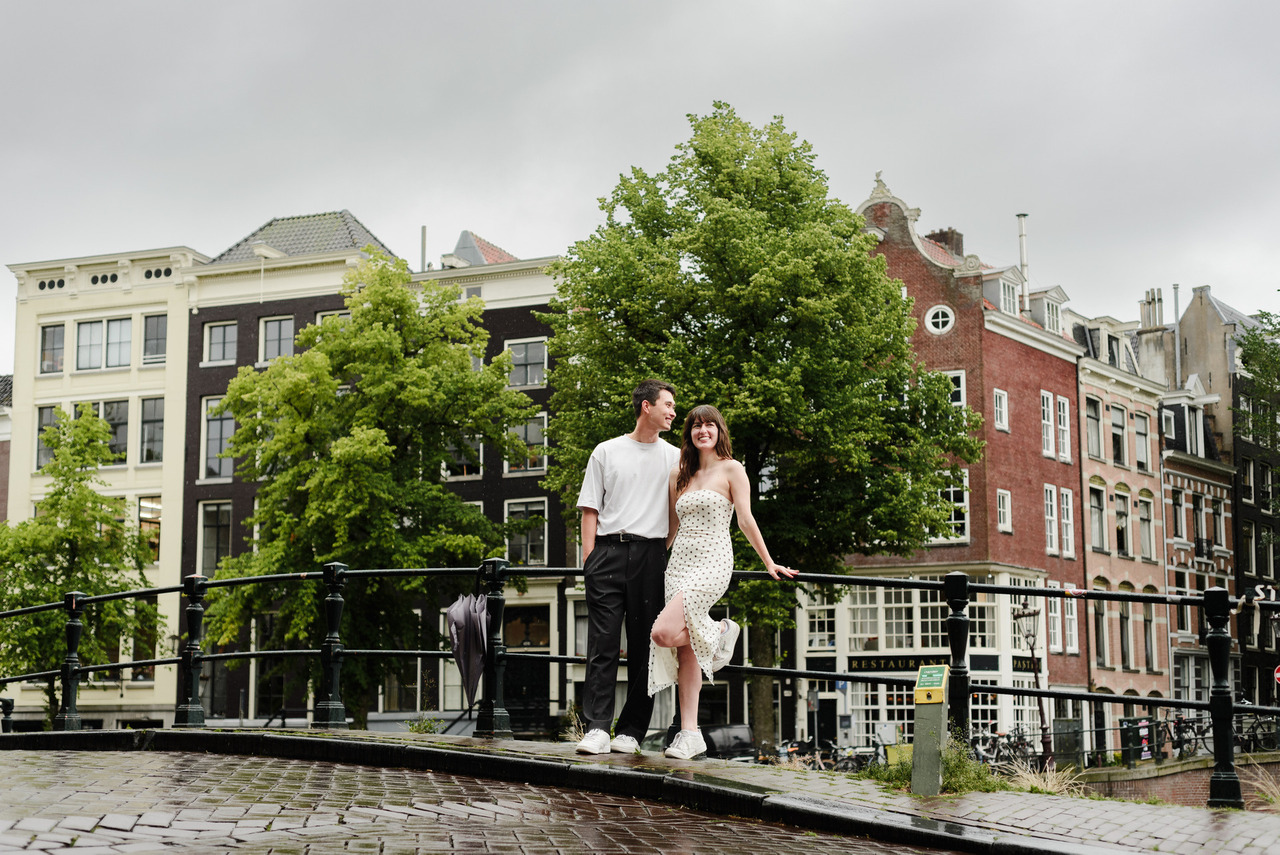
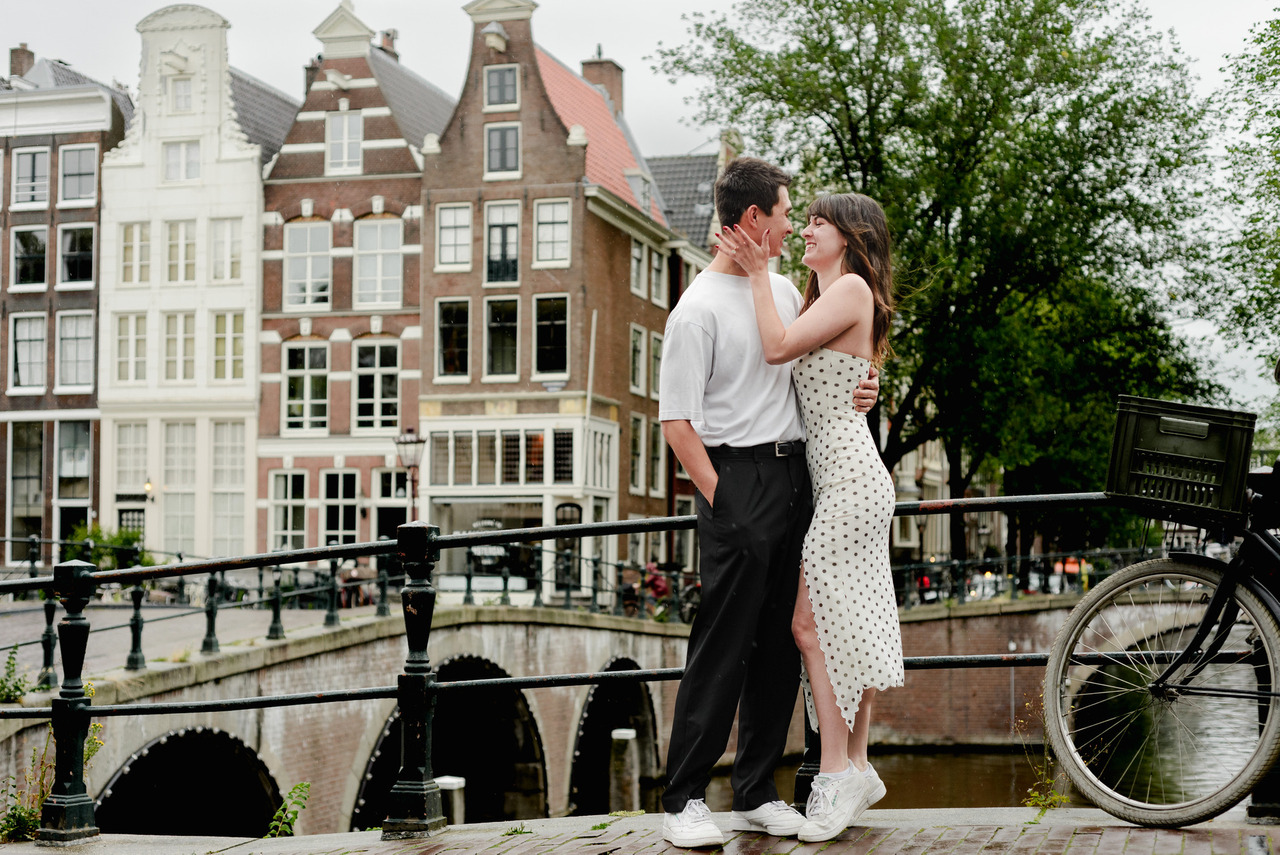
Unlike many of my other routes, I particularly like Negen Straatjes in the afternoon. Early in the morning, the streets are working: rubbish is being collected, deliveries are arriving, and restaurants and shops are preparing for the day. Later, the area begins to look and feel like itself.
Old Amsterdam: narrow canals and the oldest feeling of the city
This is one of the areas I particularly love because it gives us something completely different from the organised lines of the Canal Belt.
Around Grimburgwal and the southern sections of Oudezijds Voorburgwal and Oudezijds Achterburgwal, Amsterdam feels older and tighter. The canals are smaller, the architecture is less uniform, passages connect streets unexpectedly and little bridges reveal completely different views depending on which direction you look.
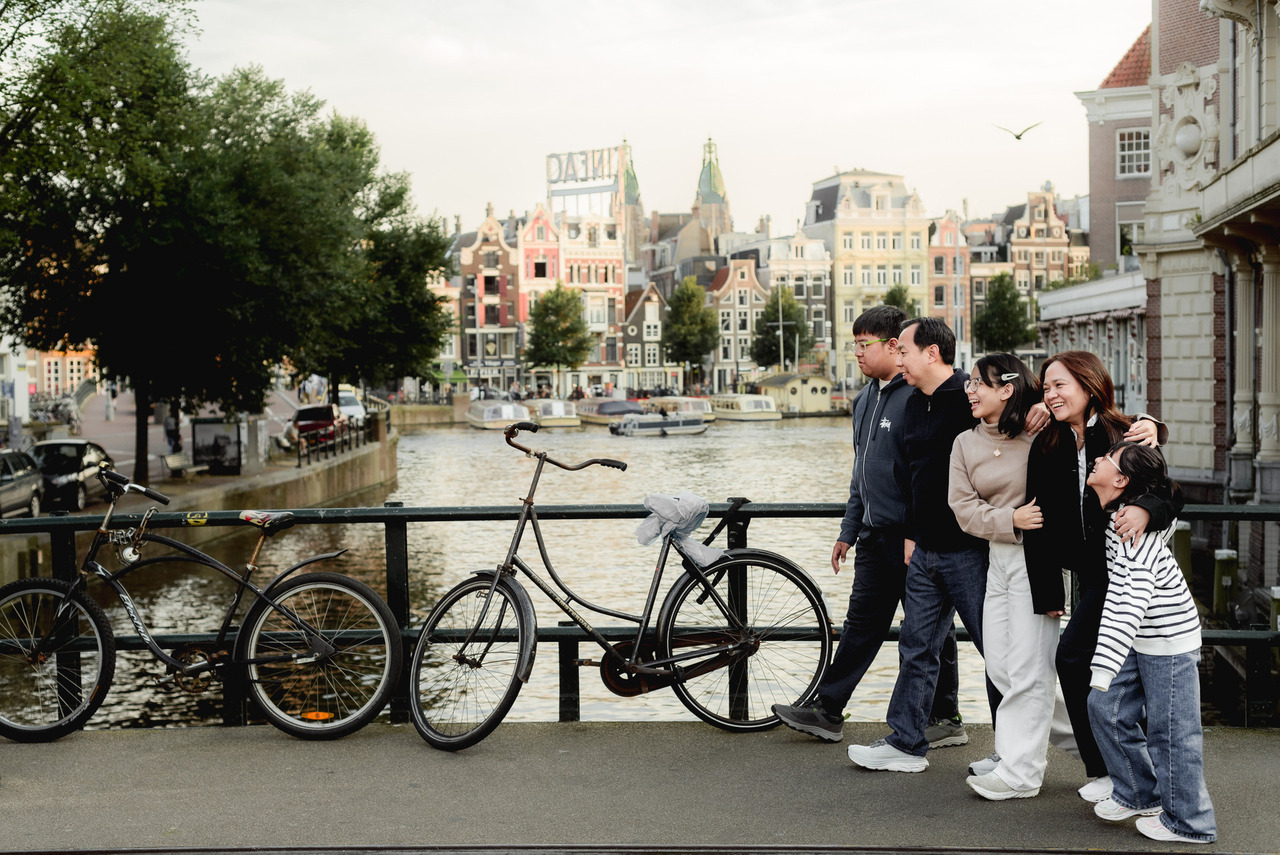
I also like moving through Oudemanhuispoort and towards the quieter canals around Rusland and Raamgracht. From here, there are places where the Zuiderkerk appears in the distance without needing to make the church itself the destination.
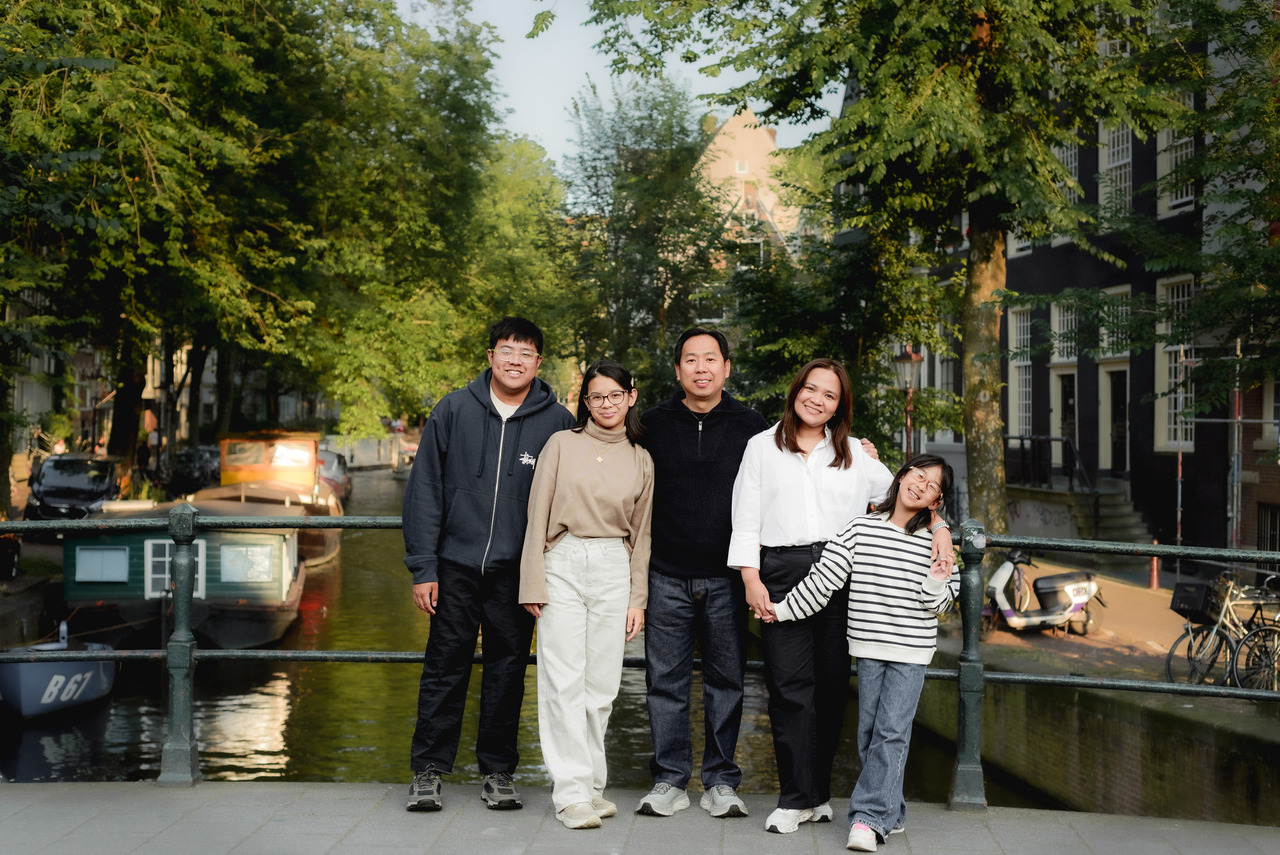
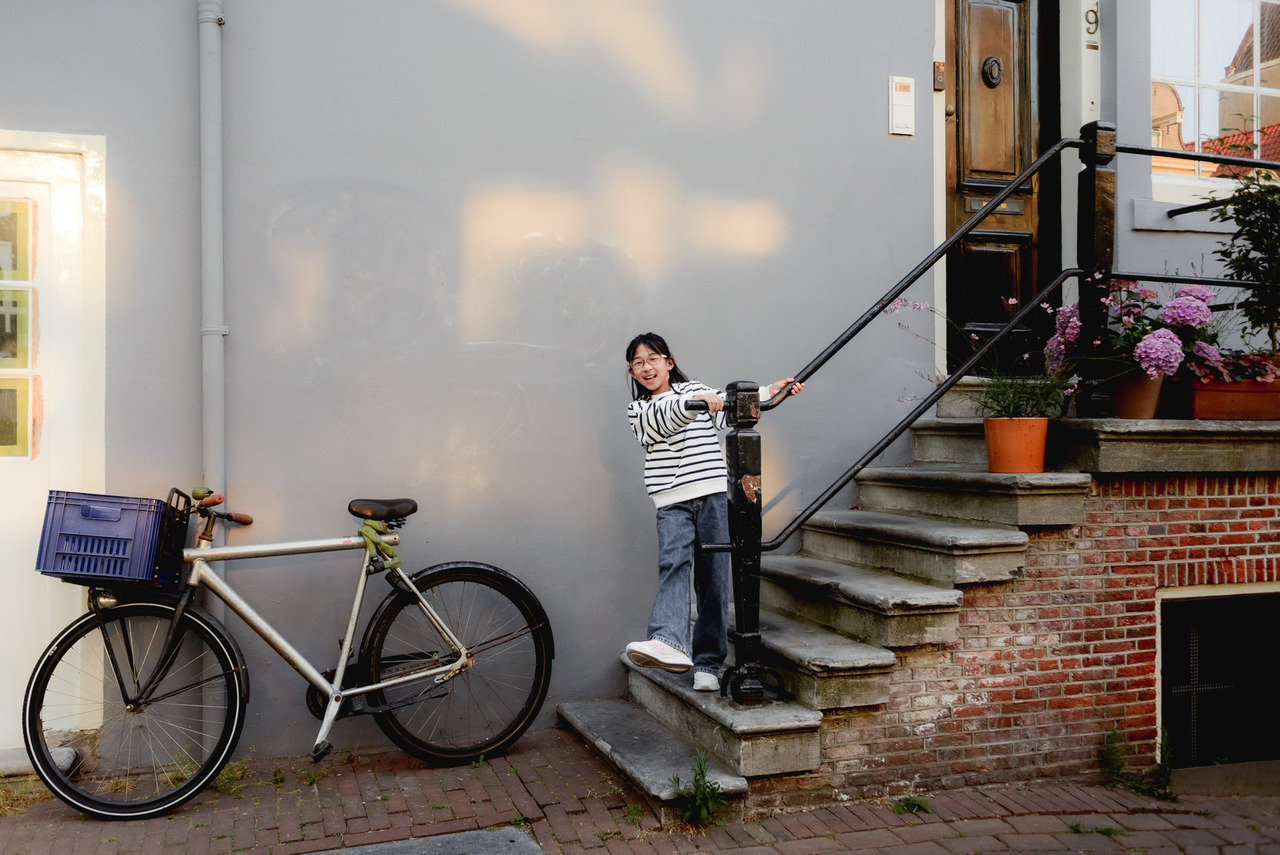
This is what I think of as Old Amsterdam in my photography. It isn't one official neighbourhood name that describes the entire route; it is my way of describing the visual character of this part of the historic centre.
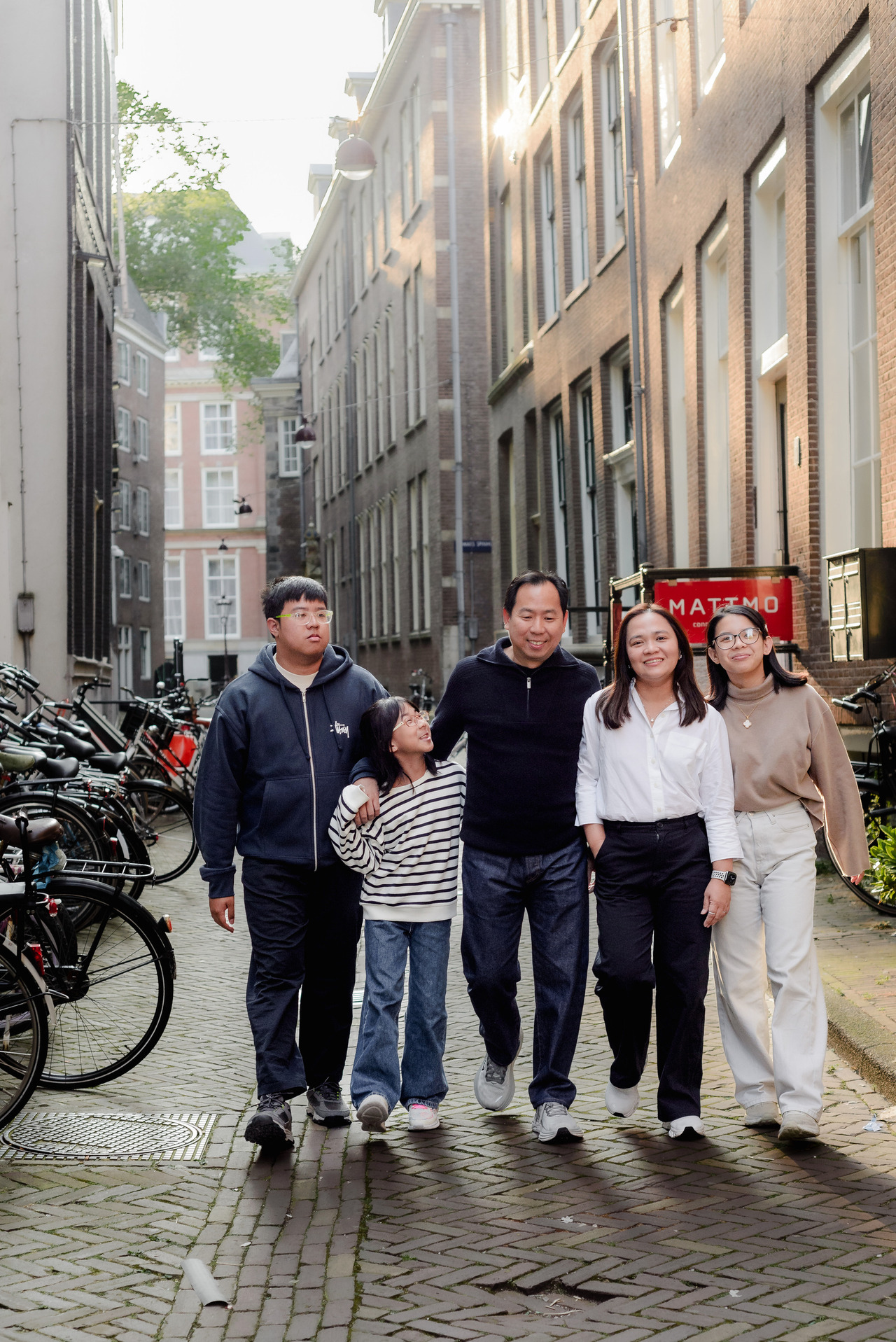
If the Western Canal Belt gives you the grand postcard version of Amsterdam, Old Amsterdam gives you something more irregular and intimate. You notice how the city grew rather than seeing one perfectly planned landscape.
Canal Belt South: bridges, long perspectives and elegant canal houses
As we move south through the Canal Belt, the visual character changes again.
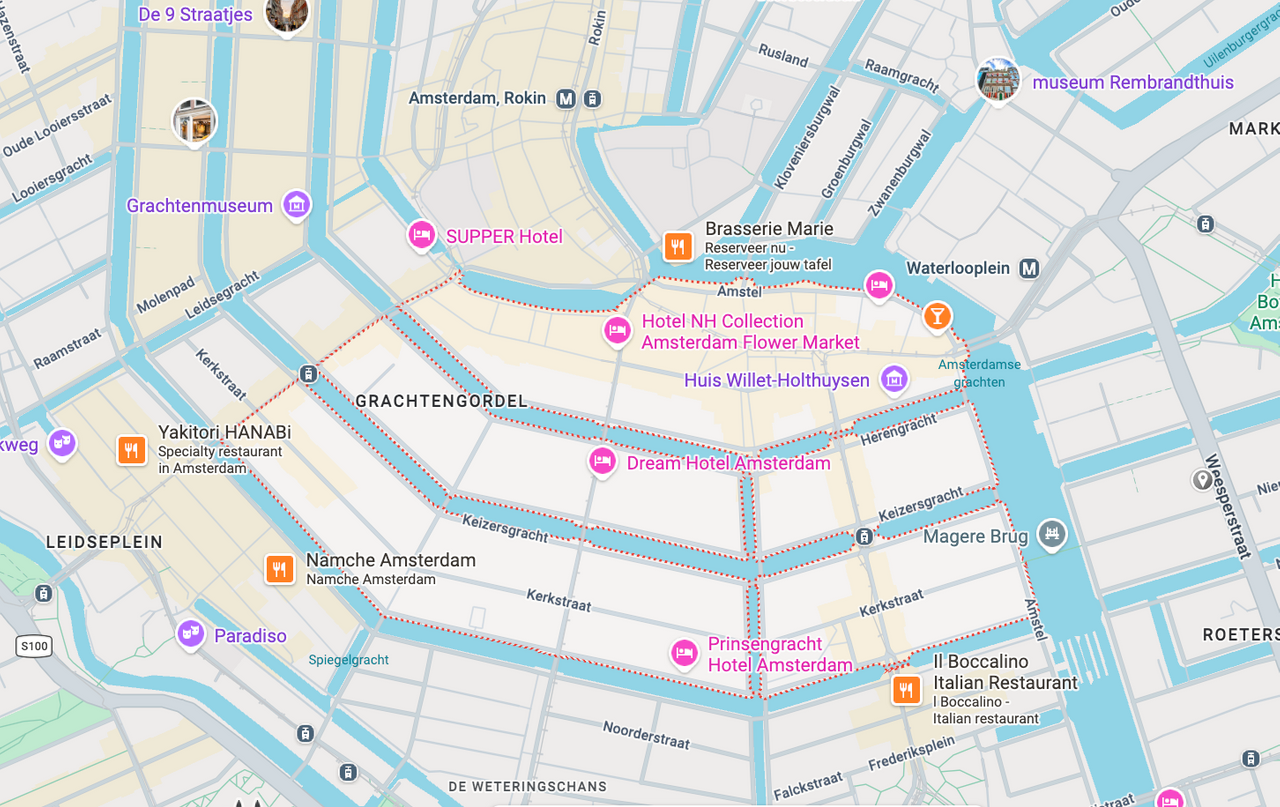
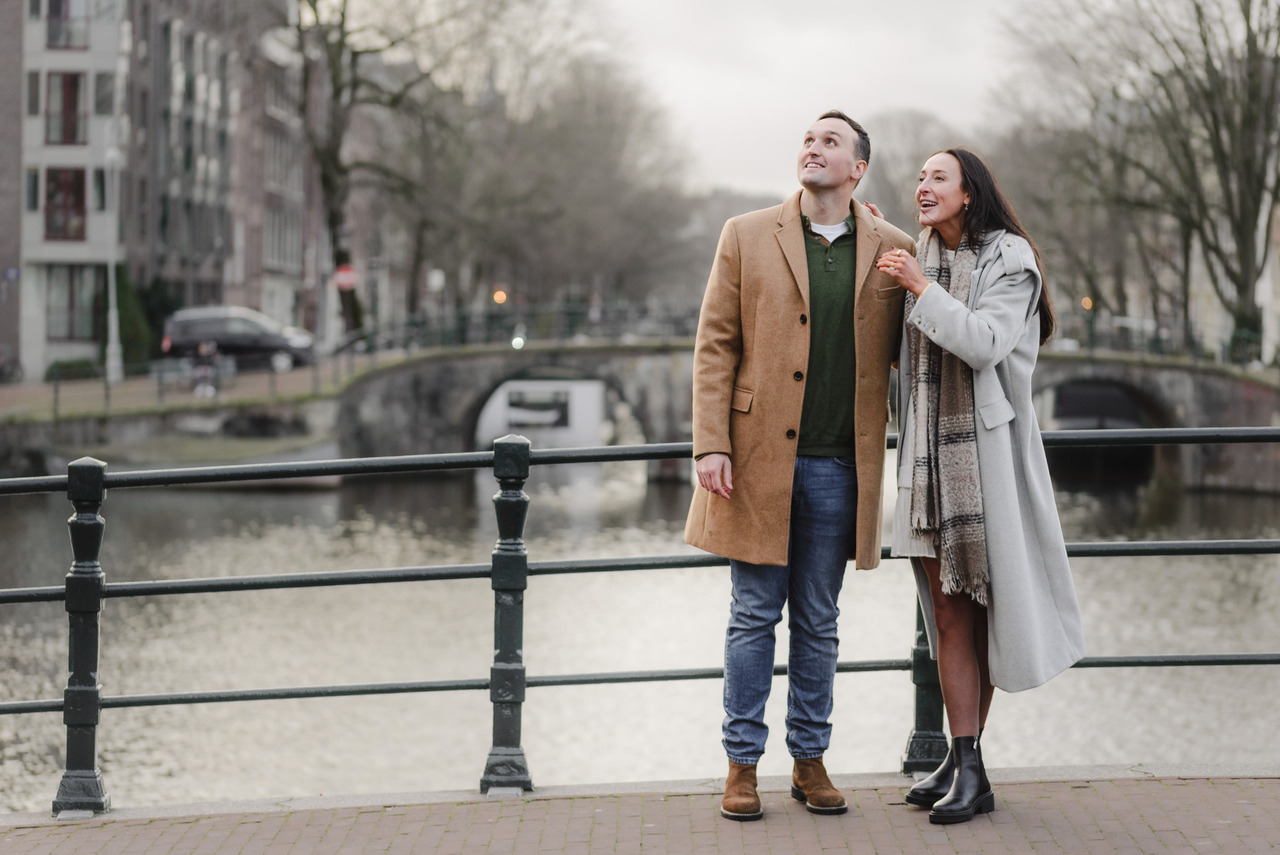
For this area, I often begin around the intersection of Reguliersgracht and Herengracht and work towards Vijzelgracht. Reguliersgracht is particularly beautiful because of the way its bridges line up through the canal, creating depth behind the people I photograph.
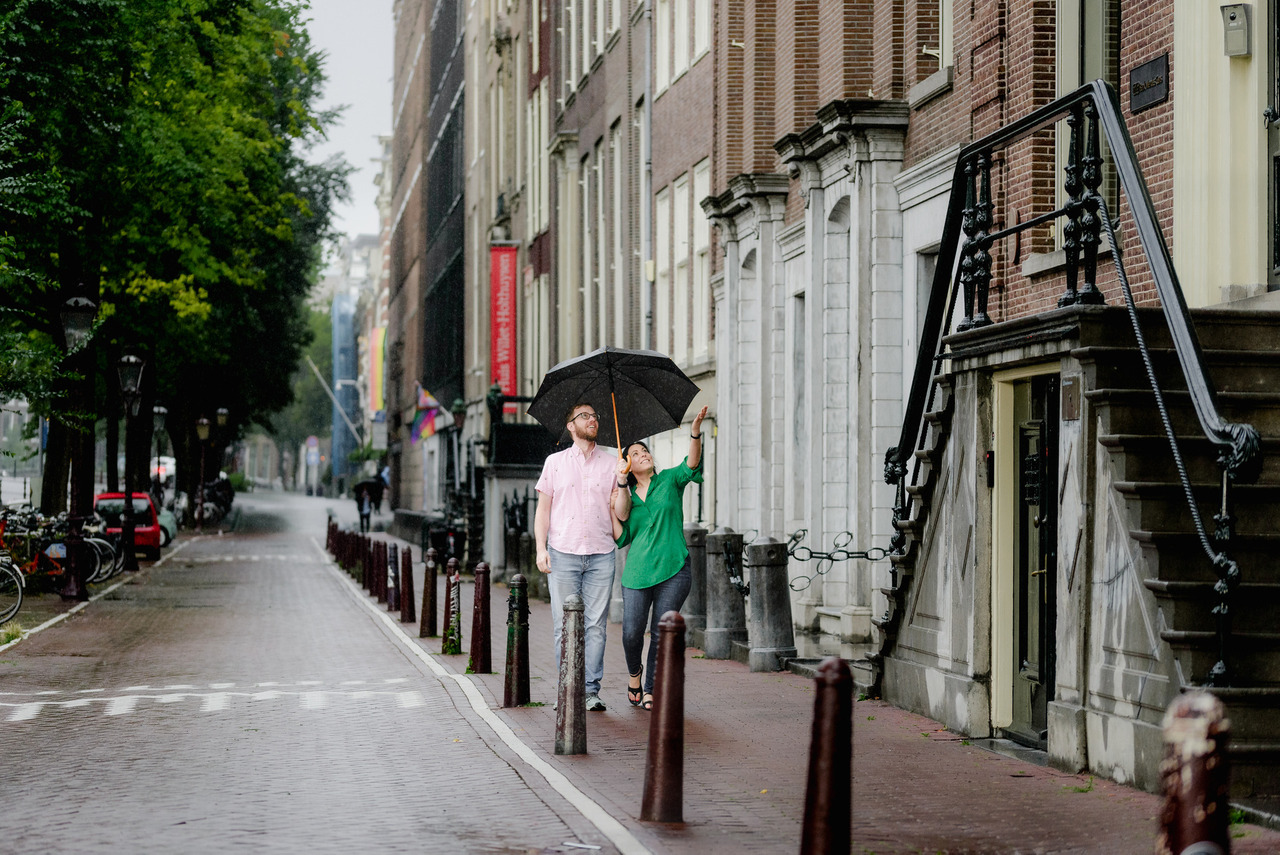
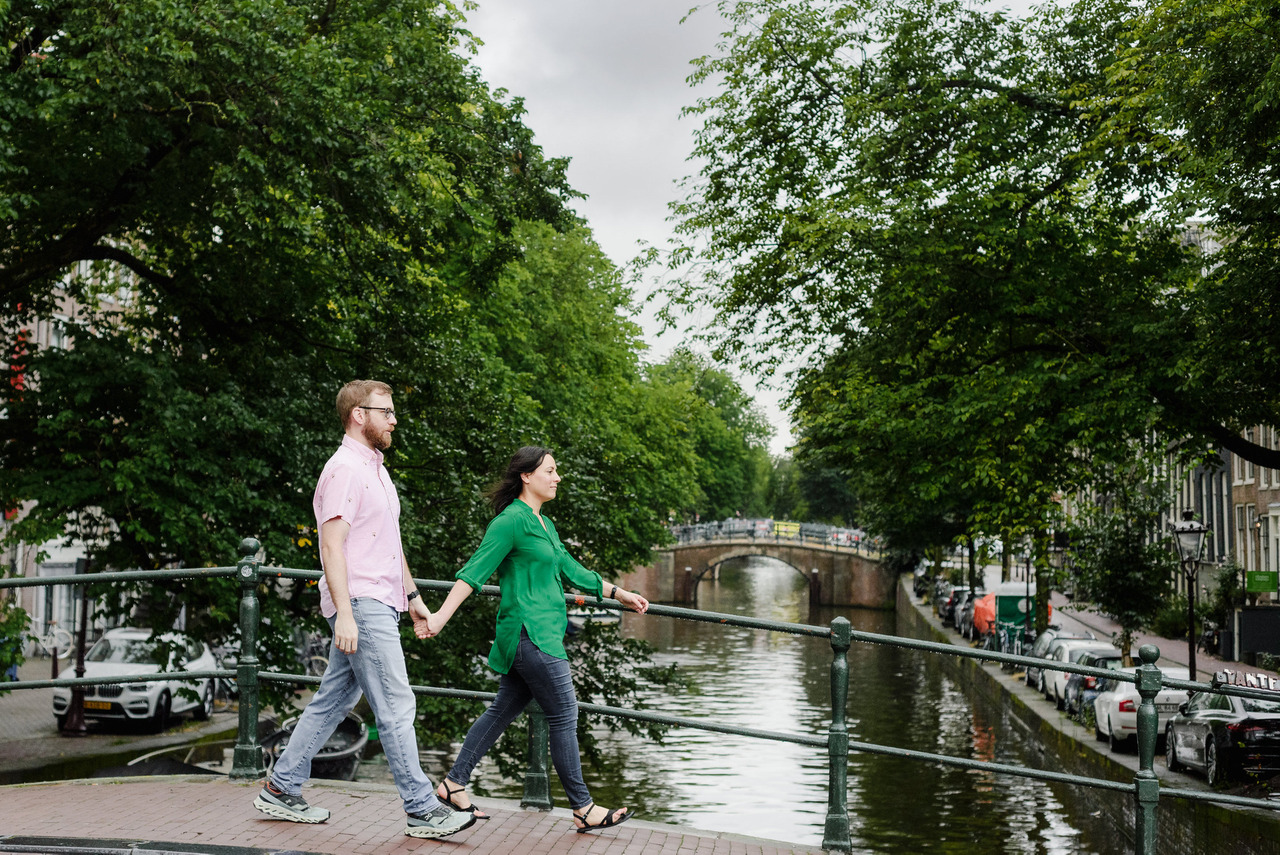
There are still the canal houses and water that define Amsterdam, but this part of the Canal Belt has its own feeling and works particularly well when it is already close to where someone is staying.
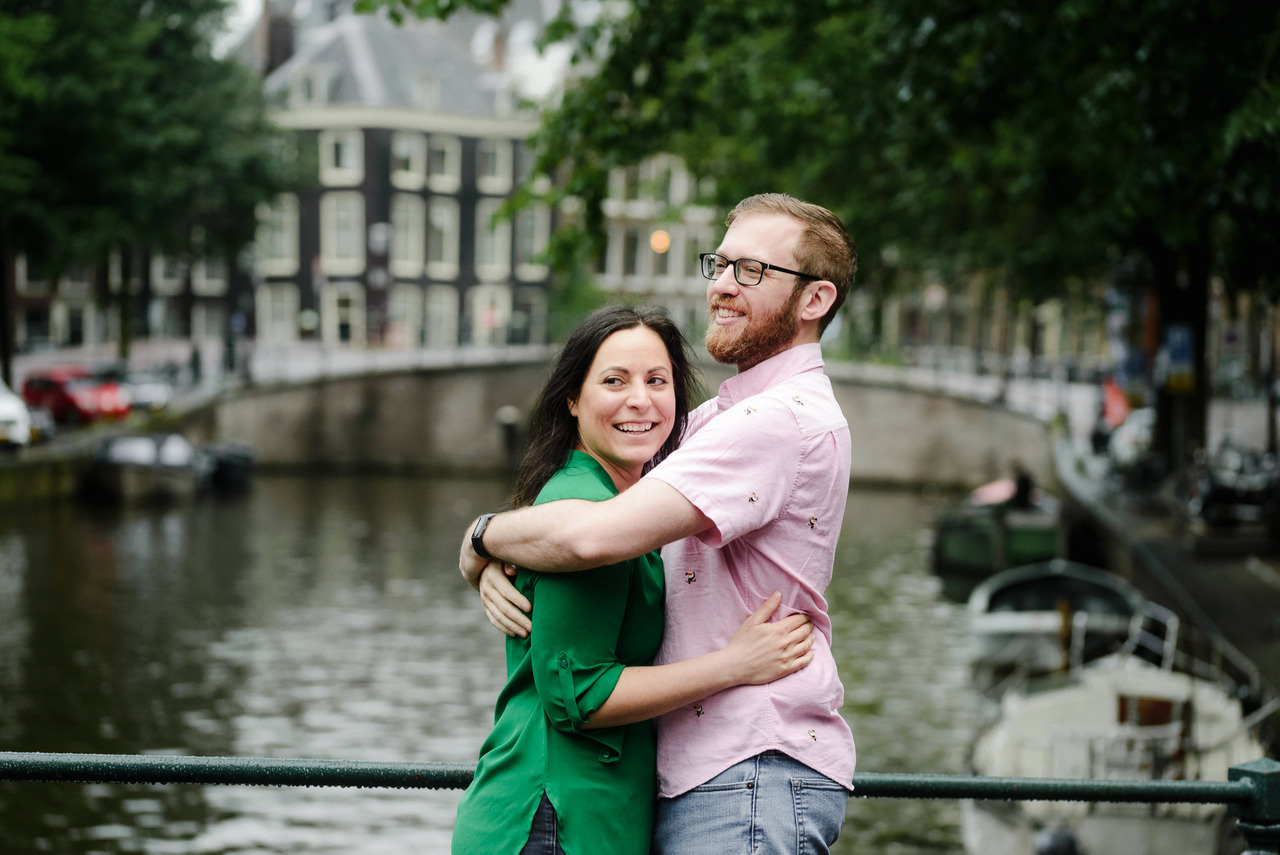
For example, if you are staying around the southern Canal Belt, I don't necessarily need to bring you across the city to create photographs that feel completely Amsterdam. Sometimes the best location is already outside your hotel.
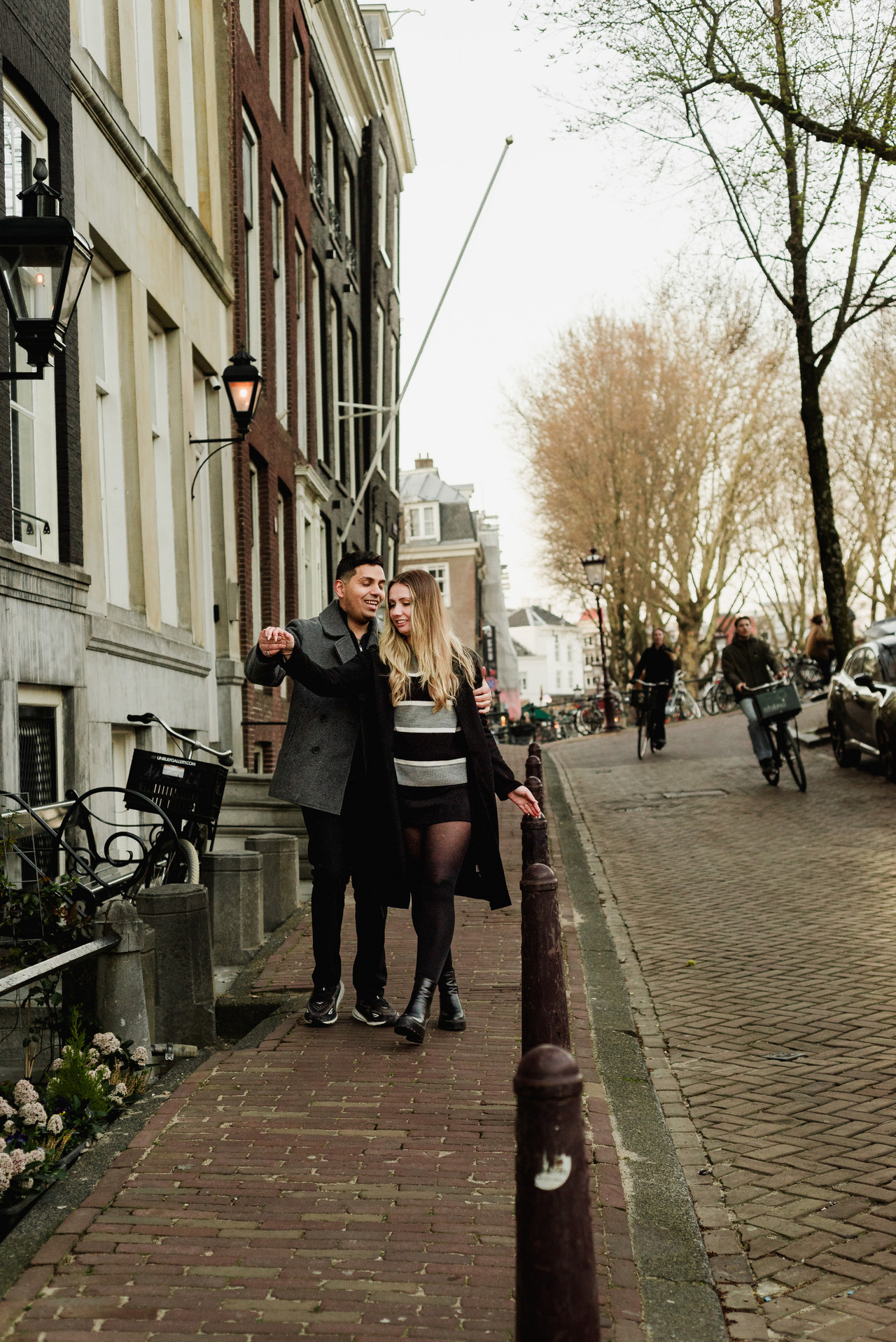
Magere Brug & the Amstel: when Amsterdam opens up
Most of the locations in this guide are built around canals and relatively intimate streets. The Amstel gives us something completely different.
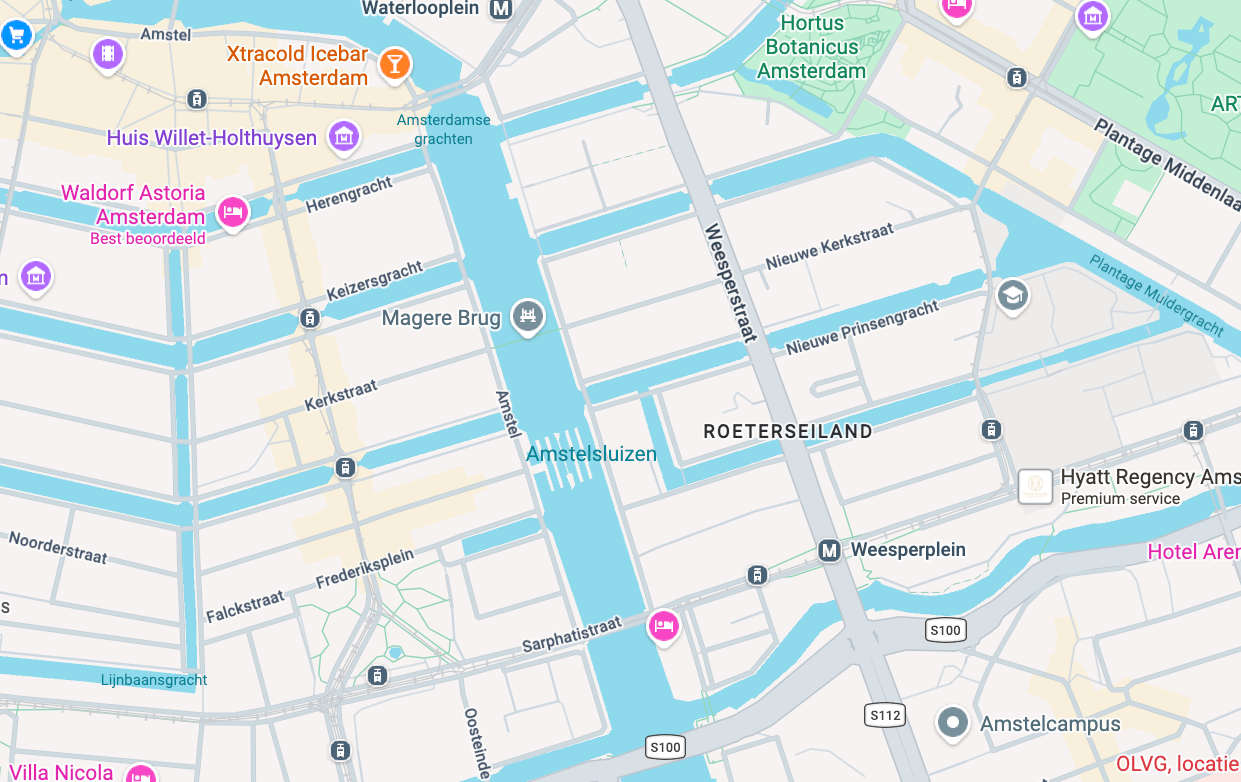
Here, the city opens.
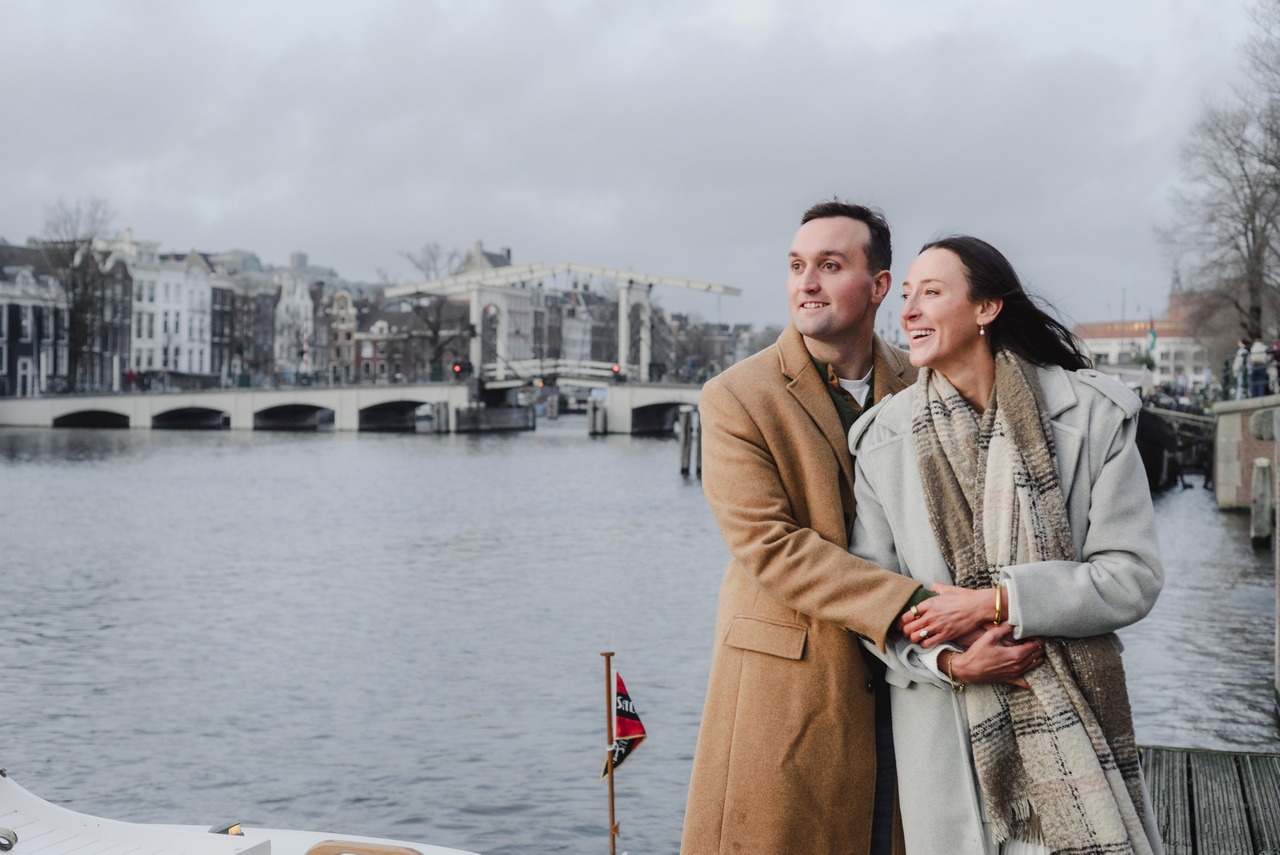
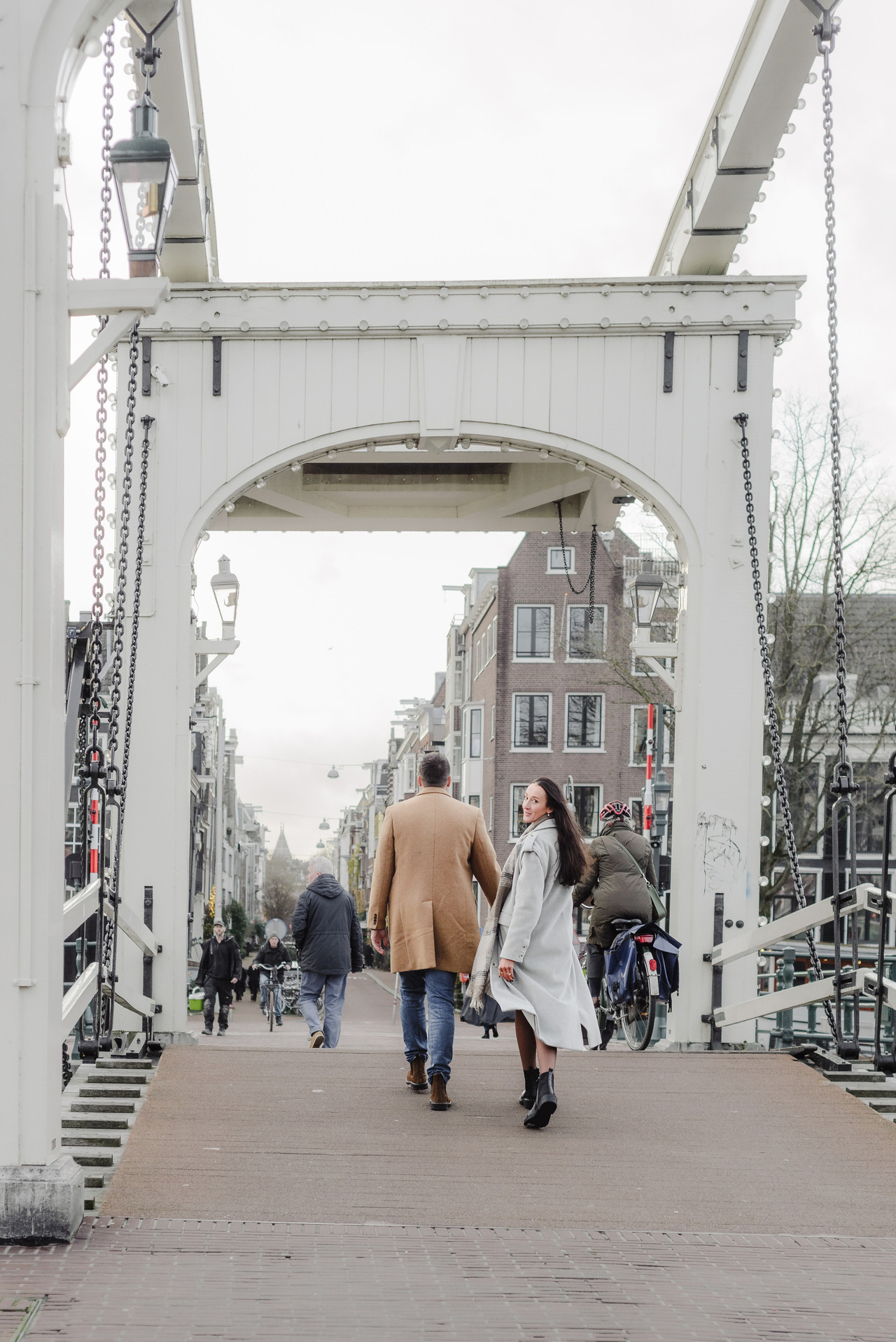
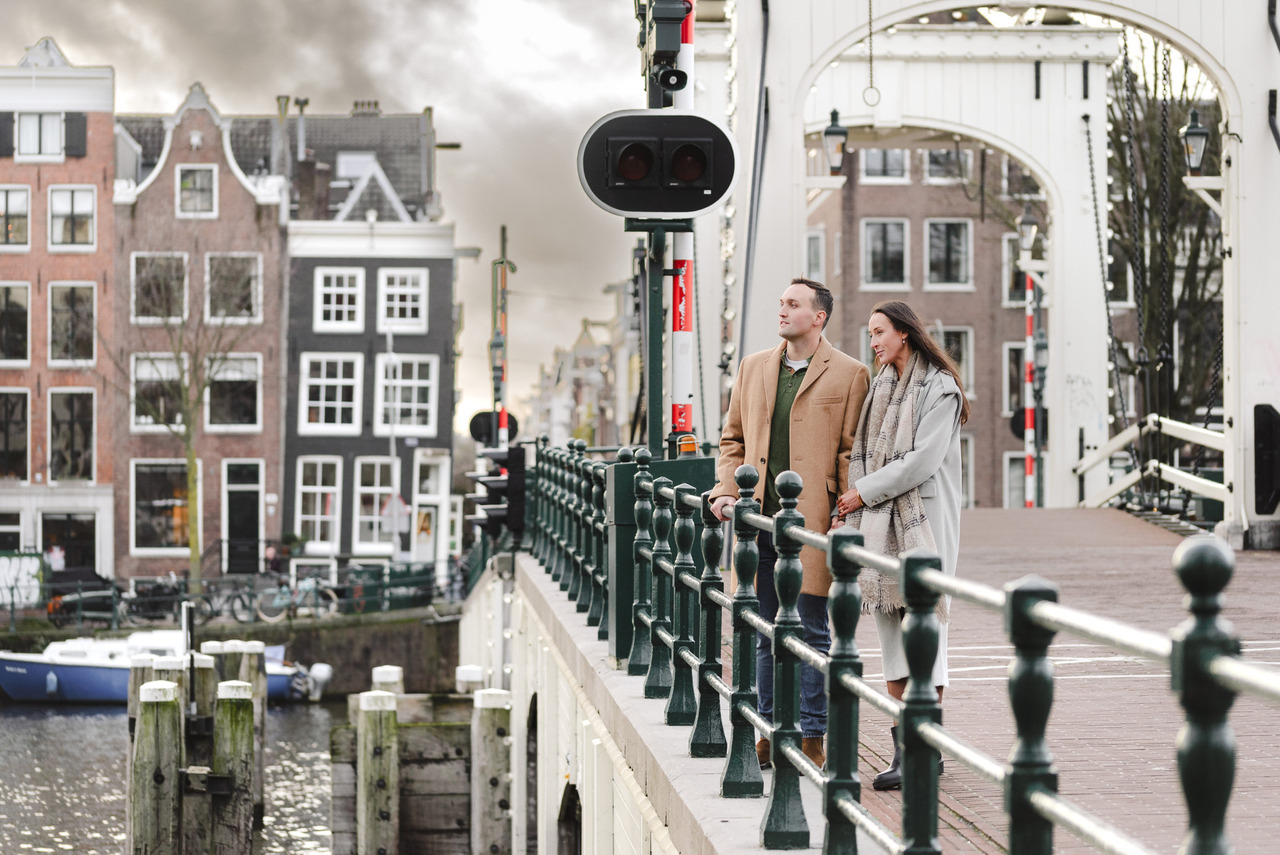
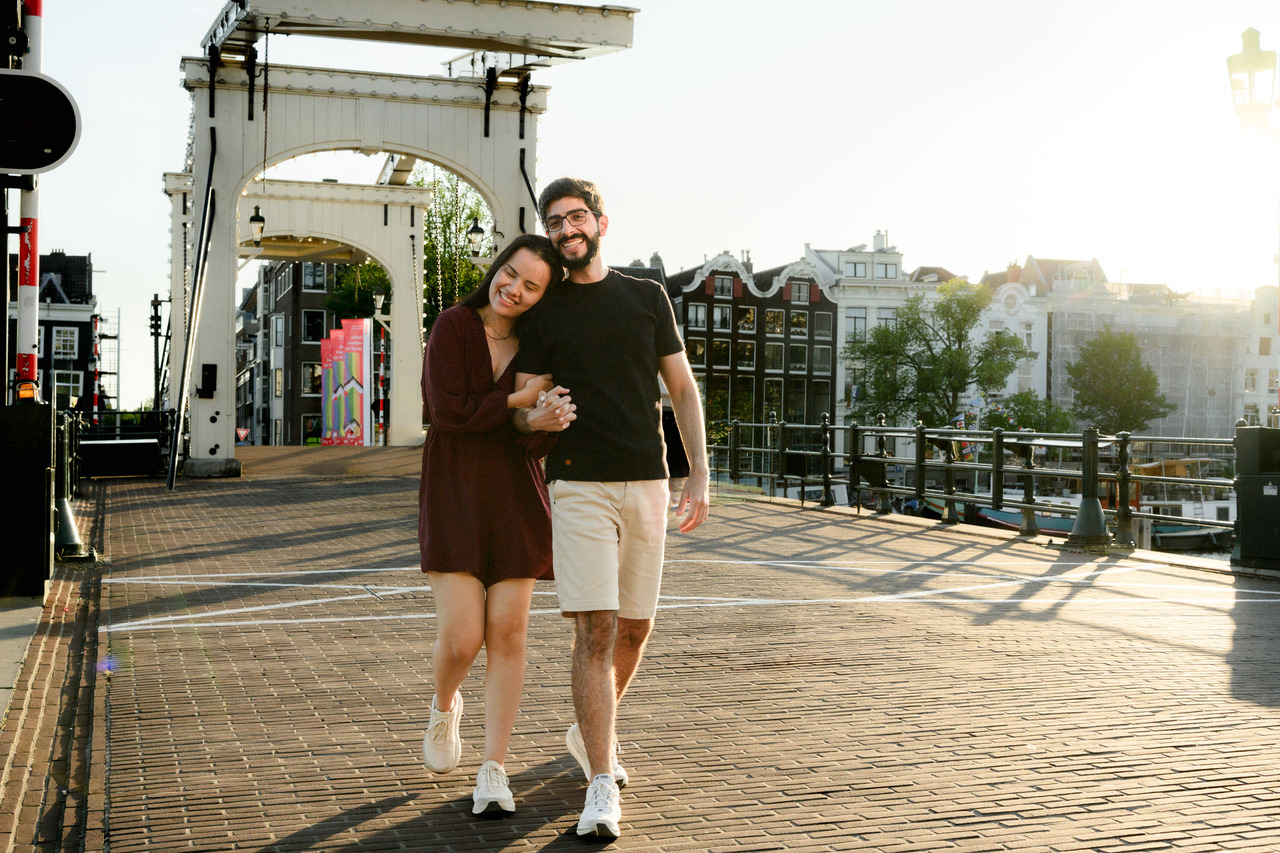
My Magere Brug route uses the bridge itself, the Amstel and the areas where the river meets canals such as Prinsengracht and Herengracht. Instead of being surrounded by narrow canal houses at every moment, we have more water, more sky and longer views.
That difference is particularly noticeable in photographs.
Magere Brug is an important Amsterdam landmark, but I don't think a session here should mean standing beside one bridge and making dozens of variations of the same photograph. The bridge is part of the route. The Amstel is really what gives the area its character.
If you love open views and want Amsterdam to feel larger around you, Magere Brug & the Amstel may be a better choice than the smaller streets of Jordaan or Old Amsterdam.
Historic Centre & Damrak: arriving in Amsterdam
There is something very different about photographing close to where Amsterdam begins for so many visitors.
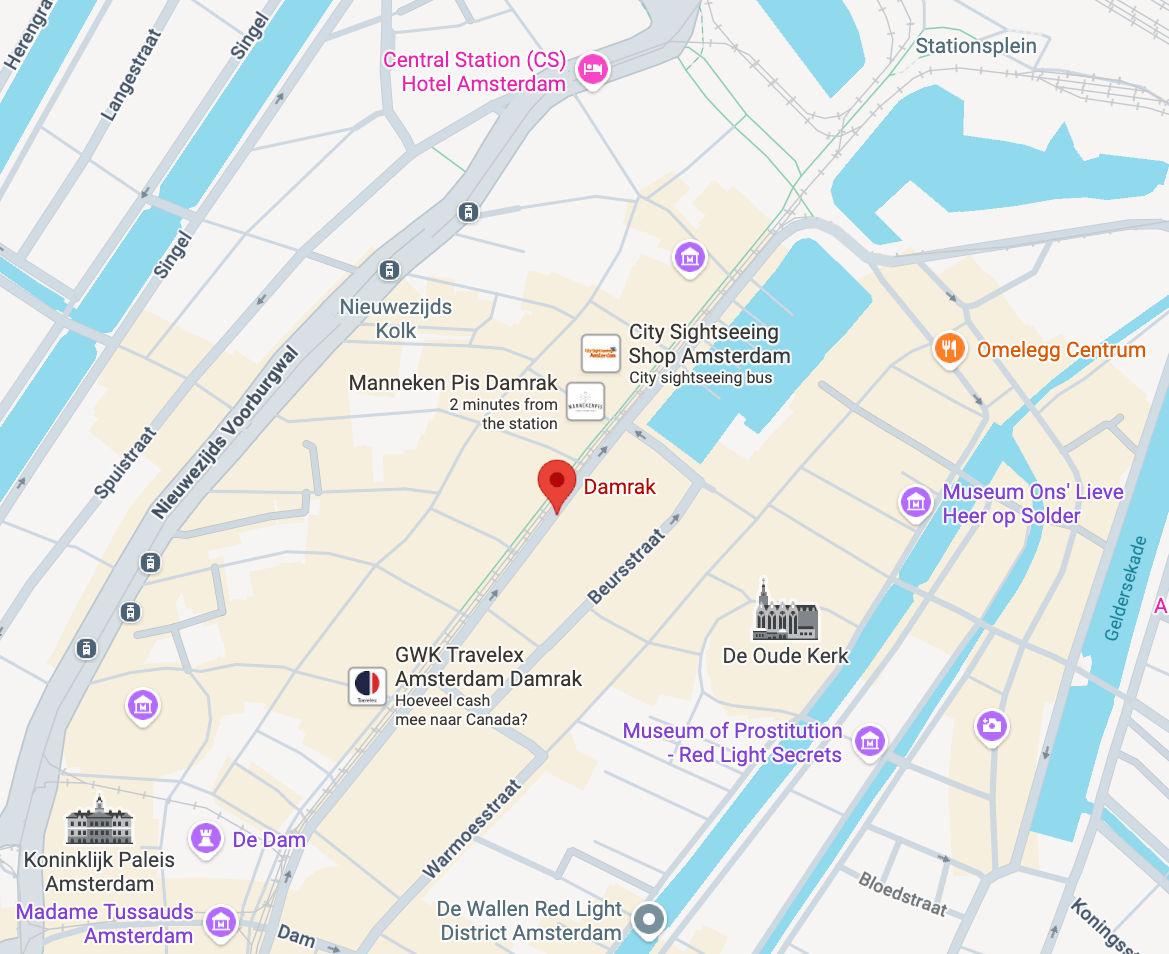
I like to start around Nieuwe Brug, close to Central Station. From here, we immediately have some of the city's most recognisable views before moving towards Damrak.
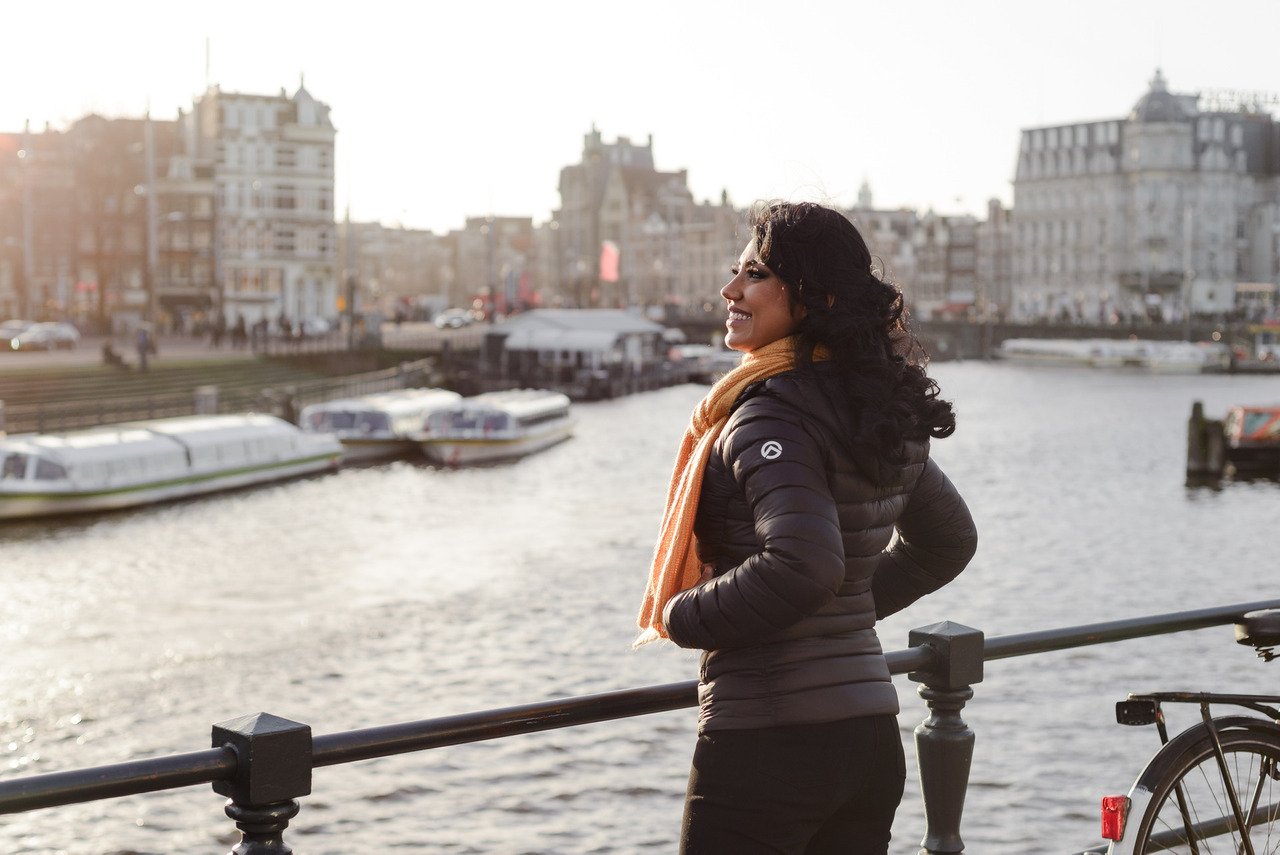
Damrak is bold Amsterdam. The houses beside the water are instantly recognisable, Central Station is nearby, and the streets around you feel very much like the centre of a capital city.
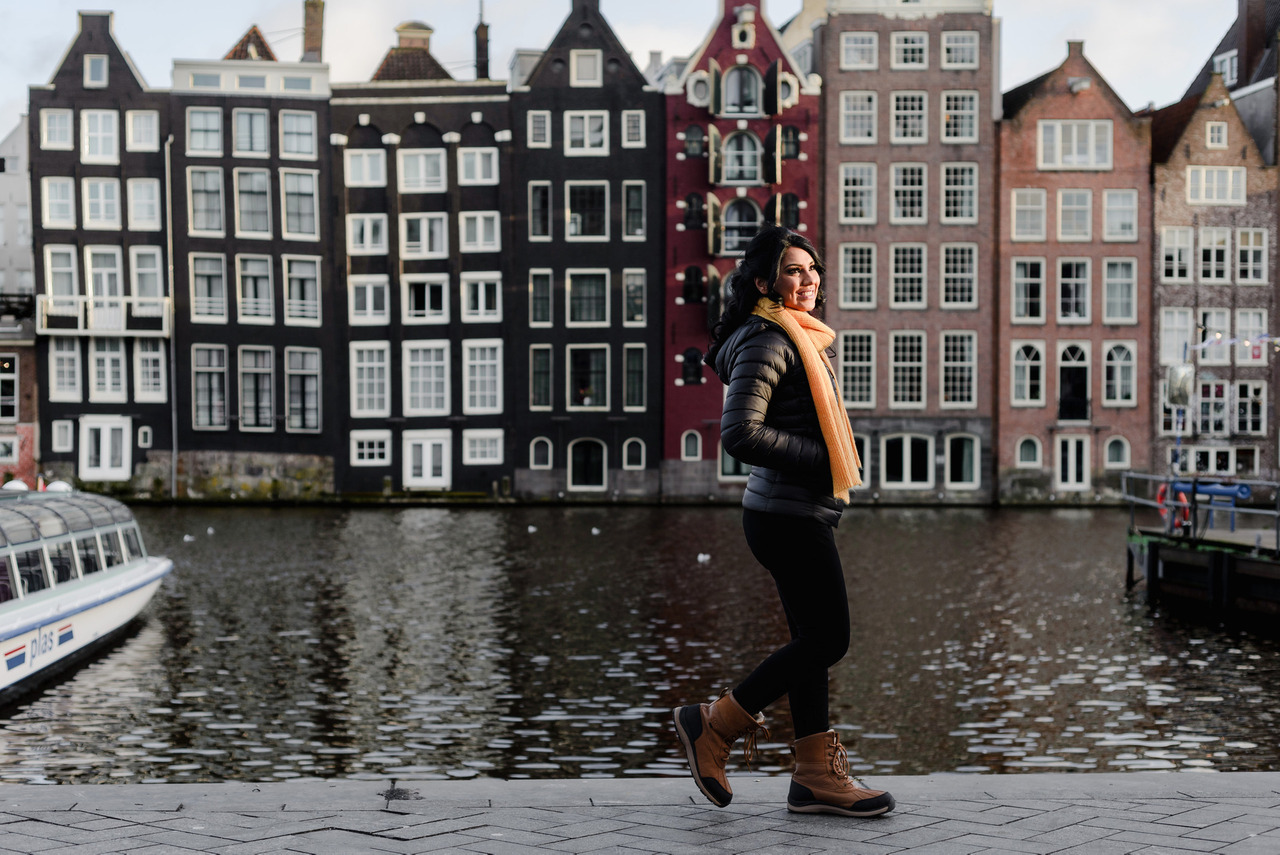
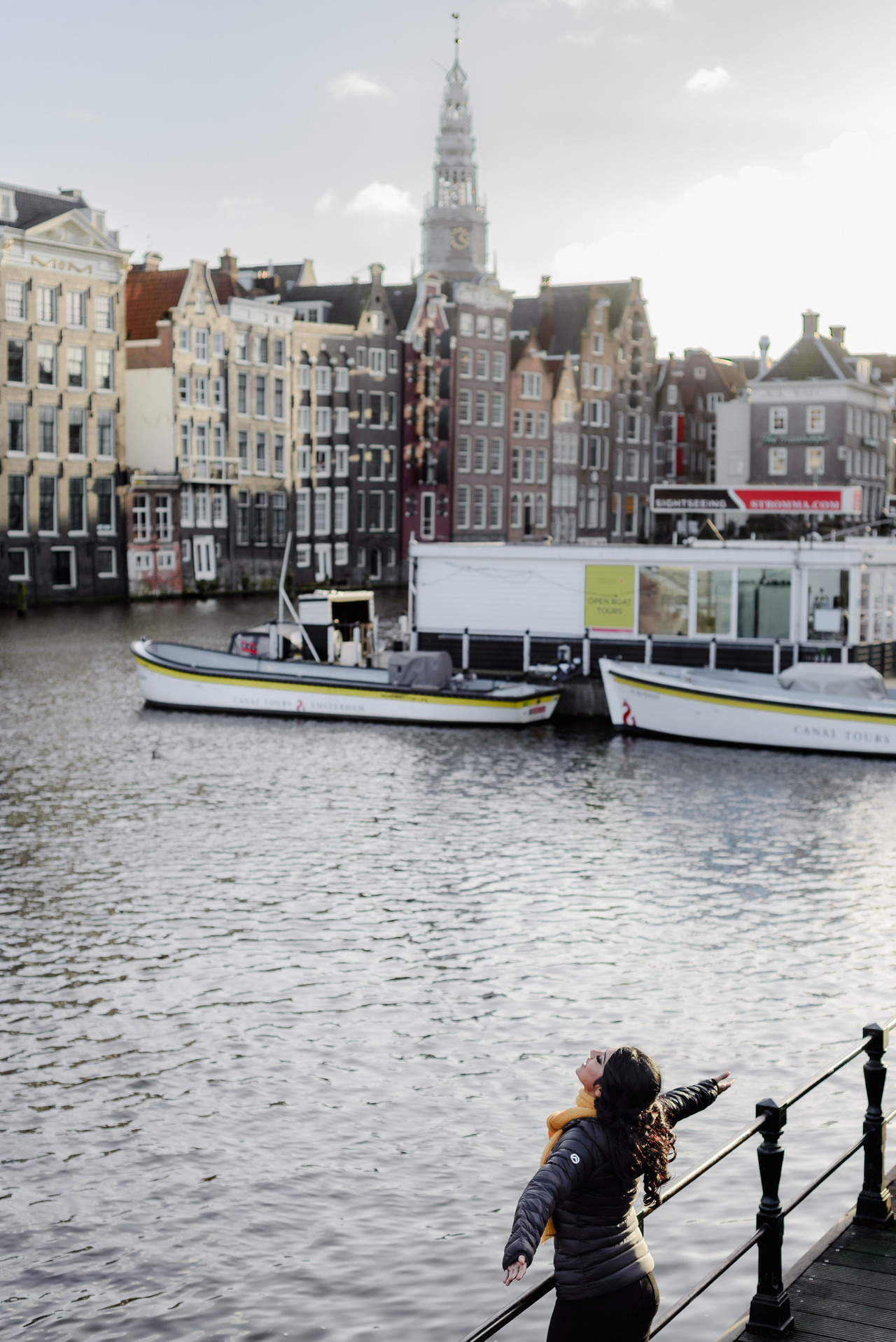
From there, we can move through the smaller streets around the historic centre, sometimes incorporating Dam Square and the architecture around it before gradually making our way towards Singel.
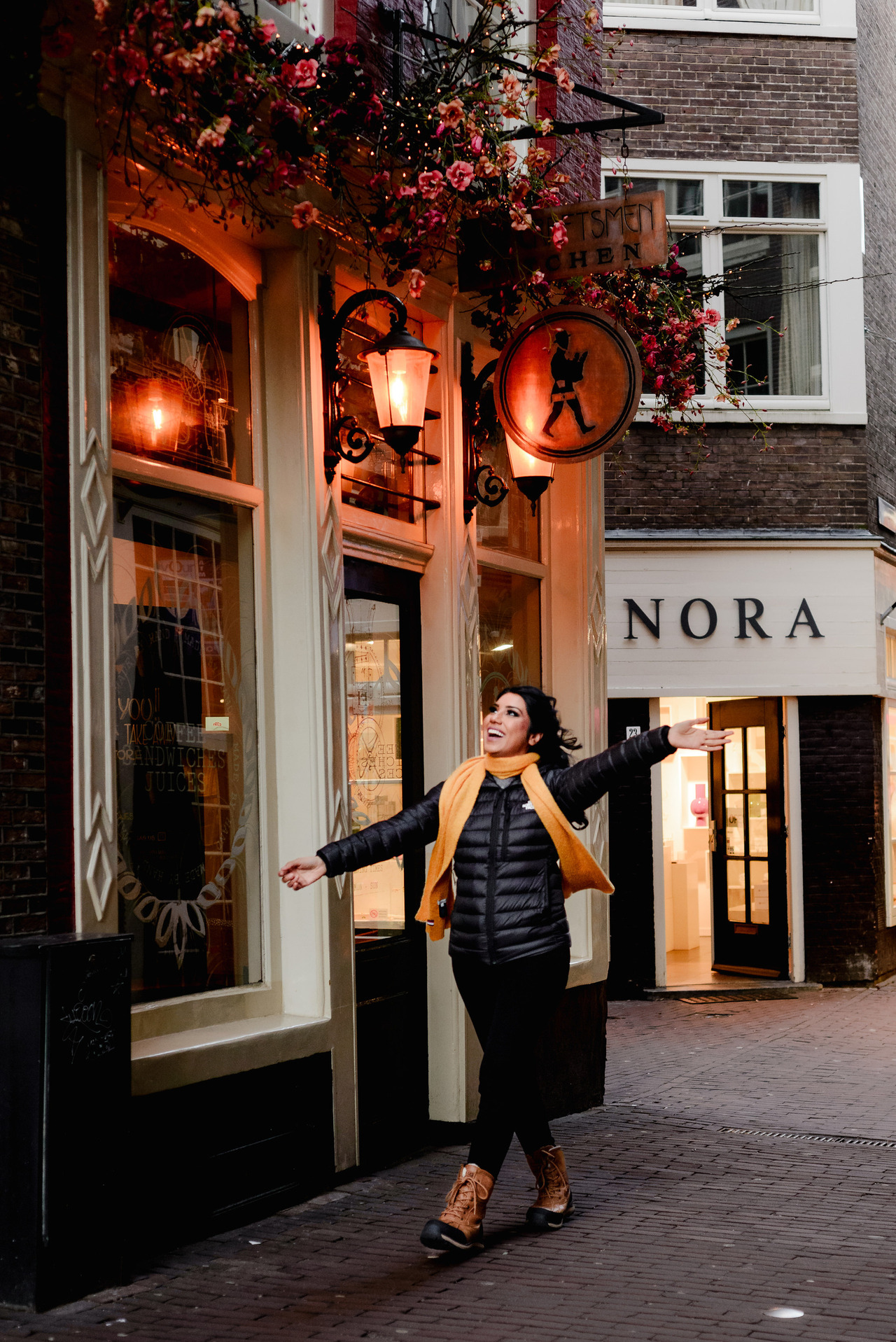
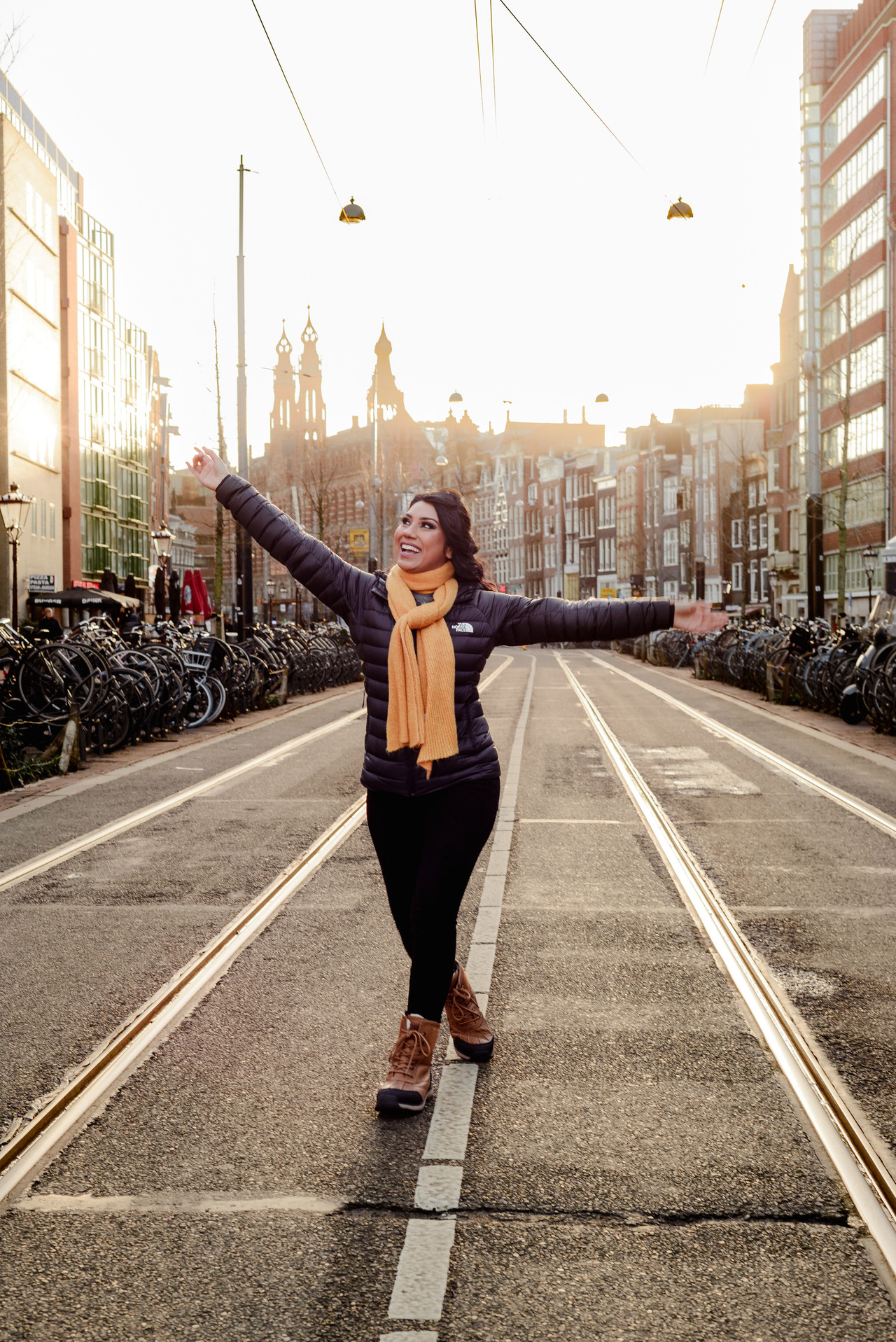
I consider Singel the natural end of this particular photographic area. Cross it, and we begin entering the world of the Canal Belt.
This route works especially well if you want some of Amsterdam's major landmarks in your photographs while still having smaller streets and quieter moments between them.
So, which Amsterdam should you choose?
There isn't one location that photographs best for everyone.
If you want smaller streets and a residential feeling, I would look at Jordaan. If what you imagine is classic canal houses and bridges, start with the Western Canal Belt. For little streets mixed with elegant canals and more city life, consider Negen Straatjes.
Old Amsterdam gives you something older, tighter and less polished in its architecture, while Canal Belt South offers elegant canals and beautiful bridge perspectives. Magere Brug & the Amstel is my choice when open water and larger views are important. And if you want recognisable landmarks and the energy of central Amsterdam, Historic Centre & Damrak makes sense.
But you also don't need to make this decision based only on a neighbourhood name.
If you book directly with me, the location doesn’t need to be selected from a fixed list of routes. I can recommend a starting point based on where you are staying, the time of your session, the light and the kind of Amsterdam you want in your photographs. Sometimes that means beginning close to your hotel rather than spending part of your holiday travelling across the city simply because another location has a more familiar name. The areas in this guide are a starting point for that conversation, and for longer sessions we can sometimes combine neighbouring areas.
For example, I often recommend the southern Canal Belt for guests staying around that part of the city, while the Western Canal Belt can be ideal for someone based closer to the historic centre. The location should work with your day, not make your day work around the photo session.
What changes between a 45-minute and 90-minute session?
Every area in this guide can work for a 45-minute photo session.
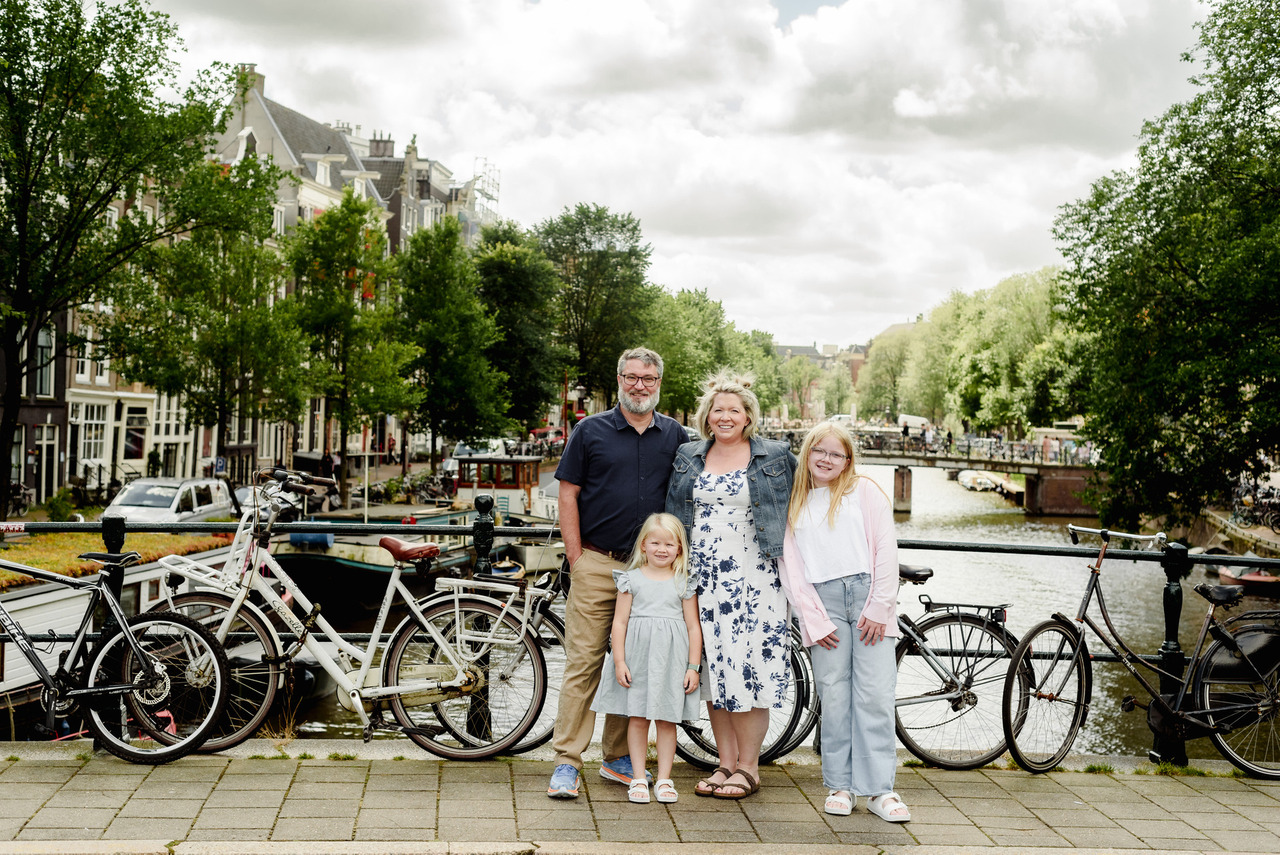
With 90 minutes, I don't necessarily try to cover twice as much Amsterdam. Sometimes we simply have more time to explore one area, stop when something catches our attention and create more variety within it.
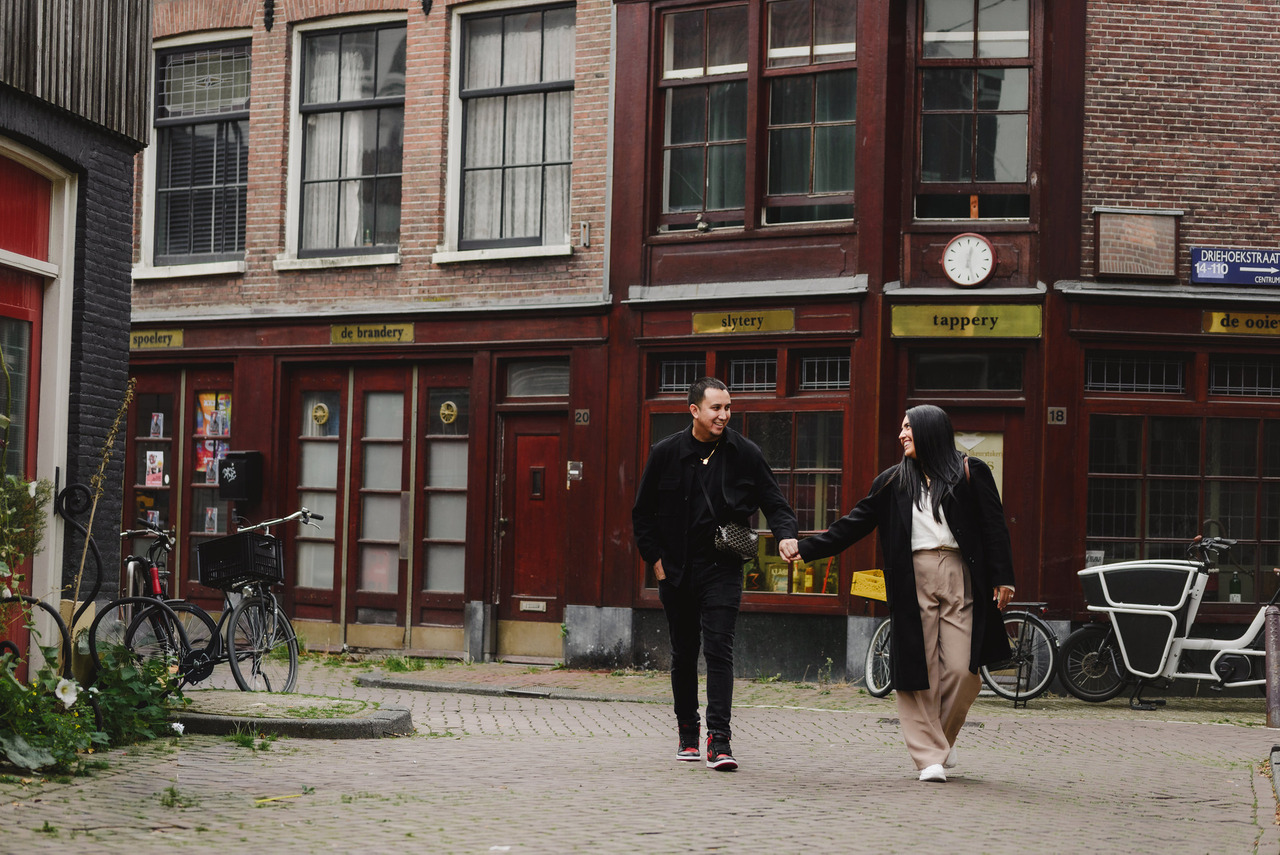
Other times, it makes sense to connect neighbouring areas.
Jordaan and the Western Canal Belt, for example, sit beside each other with Prinsengracht between them. We can begin with the larger canal views and later move into smaller Jordaan streets, giving you two distinct versions of Amsterdam within one story.
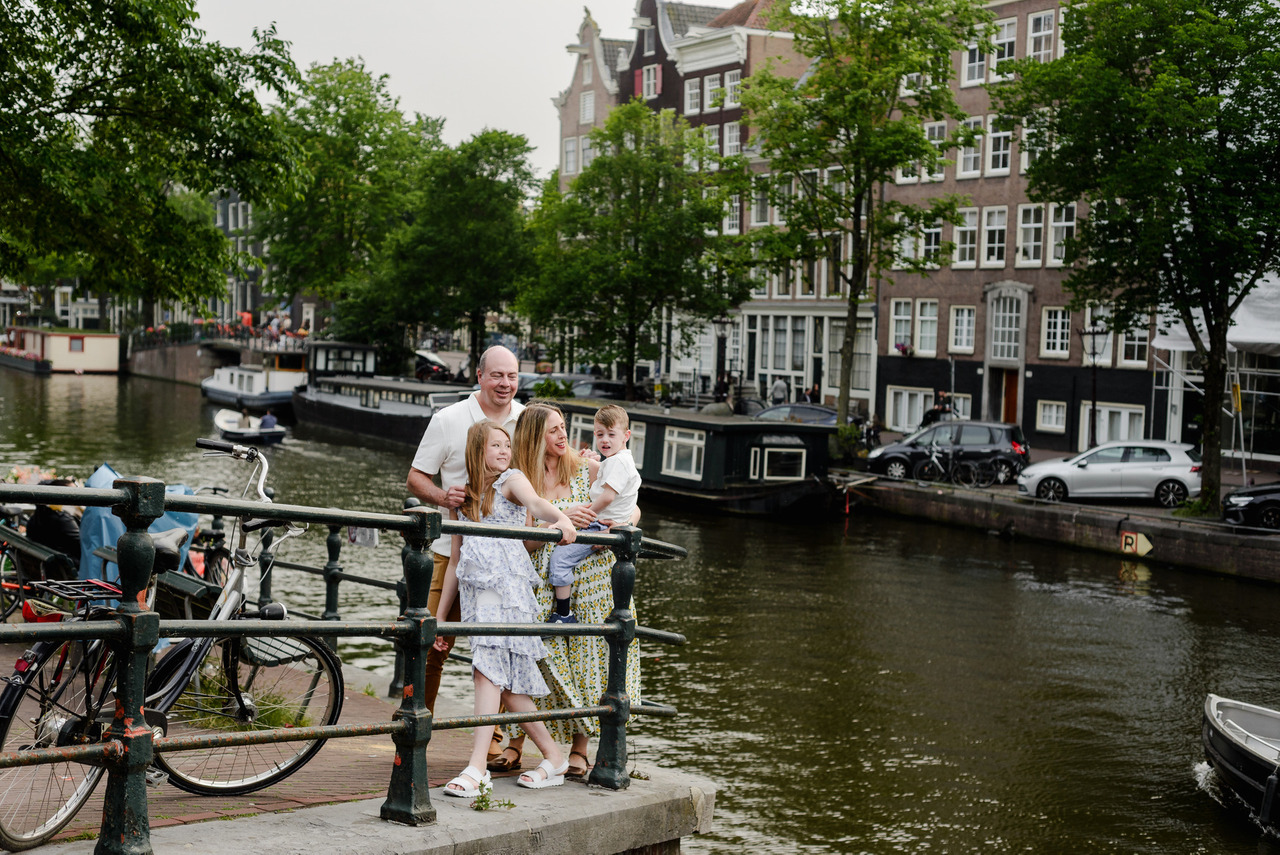
The route depends on what matters more to you: exploring one area in greater detail or having greater variety in your final gallery.
A photo session in Amsterdam is still a walk through a living city
These routes aren't fixed sets of backgrounds. Before a session, I consider the light, weather, construction, and what is happening in the city. During the session, I also pay attention to what works for the people I'm photographing. Sometimes we stop longer somewhere because the light is beautiful. Sometimes we continue walking because something more interesting is happening ahead.
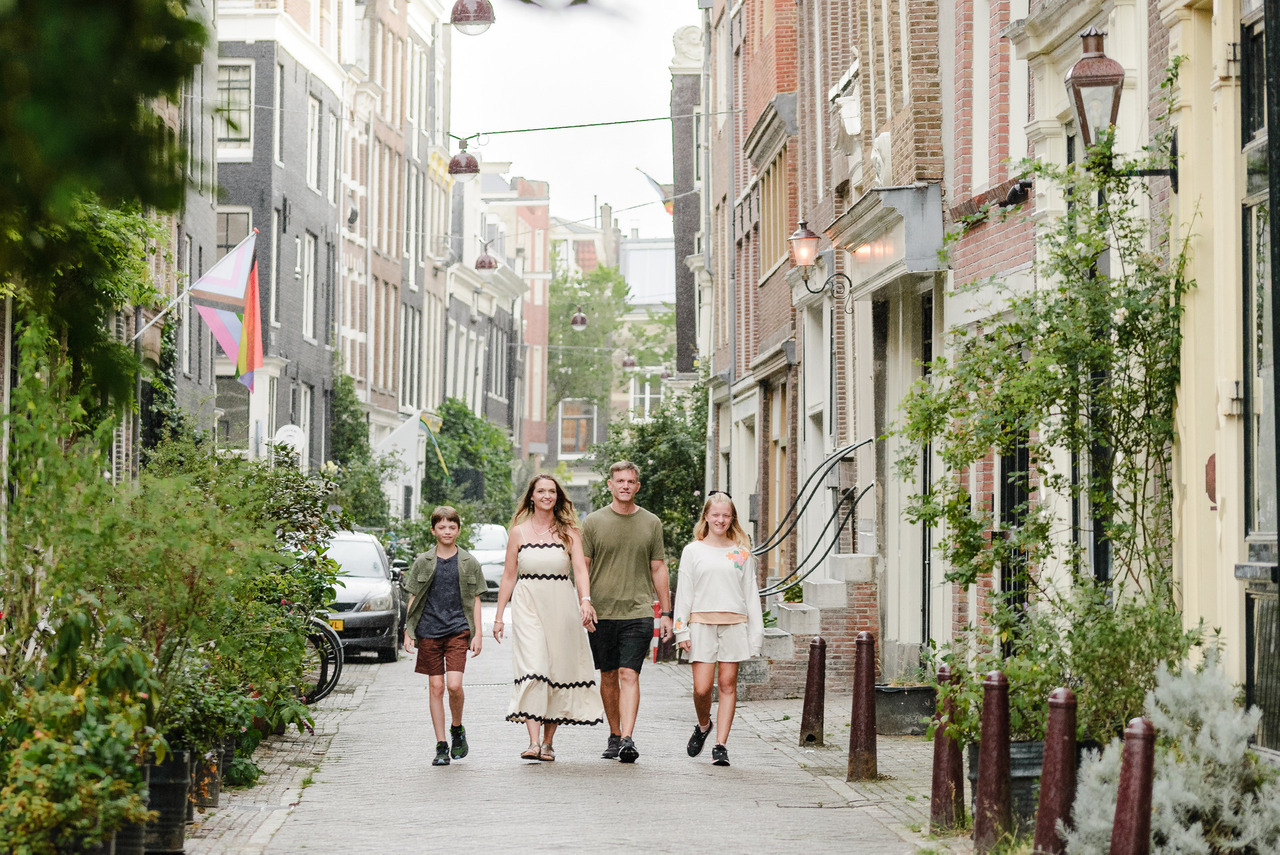
Amsterdam is not a studio. People live here, cycle to work, receive deliveries, sit outside their houses and cross the bridges we photograph on. That's part of what makes photographing here so interesting.
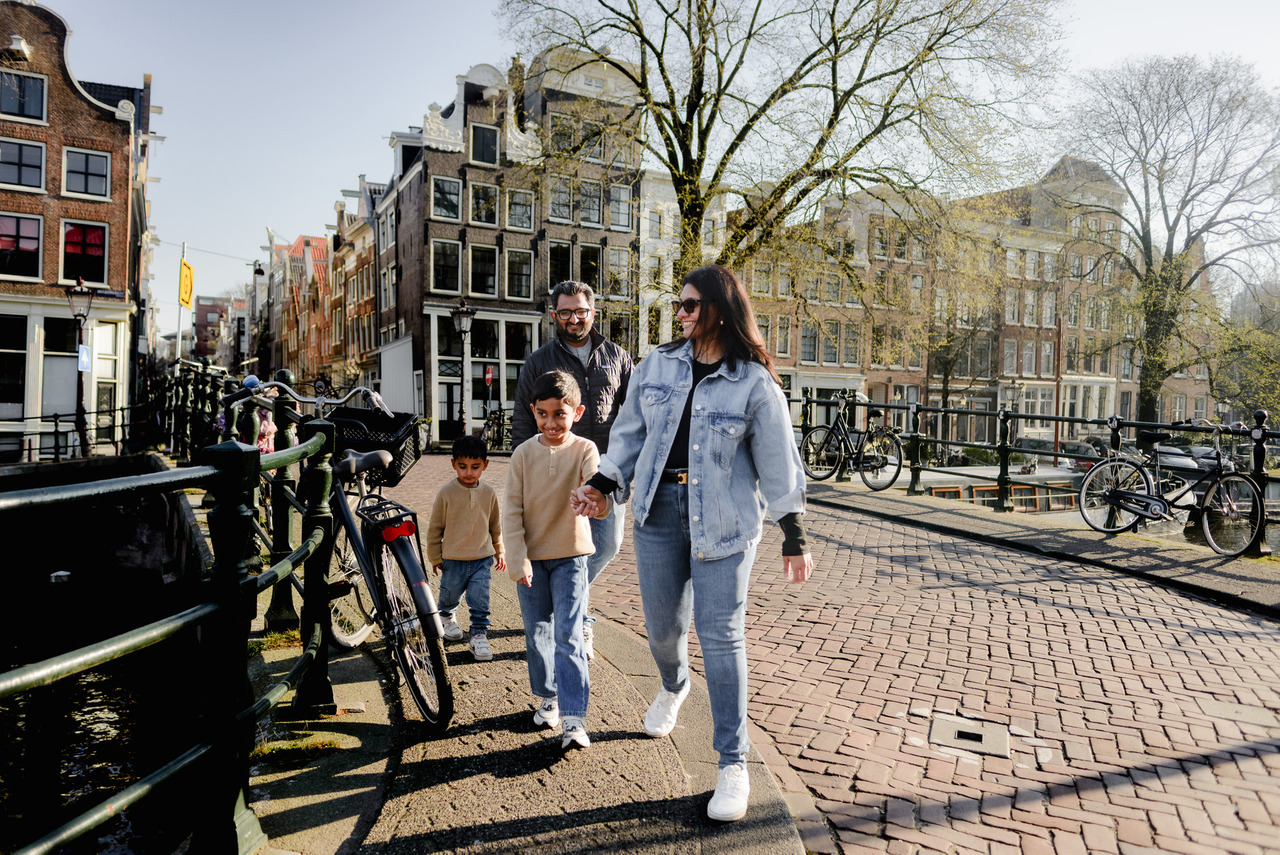
The neighbourhood gives us our starting point and visual language. The city gives us the rest.
And perhaps that is the easiest way to choose your location: don't ask which part of Amsterdam is the most beautiful. Look through the photographs from each area and ask yourself: Which Amsterdam do I want to remember?
See you next time in Amsterdam.
Joanna
Your Vacation Photographer in Amsterdam