
The first time I encountered Yayoi Kusama, I didn't know who Yayoi Kusama was. It was my first day in Paris in April 2023. I was there for a meetup with other photographers, and I was walking around the city by myself with my camera when I came across something impossible to ignore.
There was a gigantic figure of a woman outside the Louis Vuitton headquarters on Rue du Pont-Neuf, holding a paintbrush as if she were painting enormous coloured dots across the building.
The figure was 15 metres high, and it was part of the Louis Vuitton collaboration with Yayoi Kusama and stayed there from March until July 2023.
I had no idea who she was, but I remember thinking that something this distinctive had to come from someone iconic with a visual language behind it.
So I Googled the figure, and I found her. That was my introduction to Yayoi Kusama.
Three years later, I walked into the Stedelijk Museum in Amsterdam to see a retrospective covering more than seven decades of her work. This time, of course, I knew the dots, I knew the pumpkins, and I knew what a Kusama looked like.
What I didn't know was how she got there, to become an icon, and I think that is what I found most interesting about this exhibition.
Before the pumpkin became the pumpkin
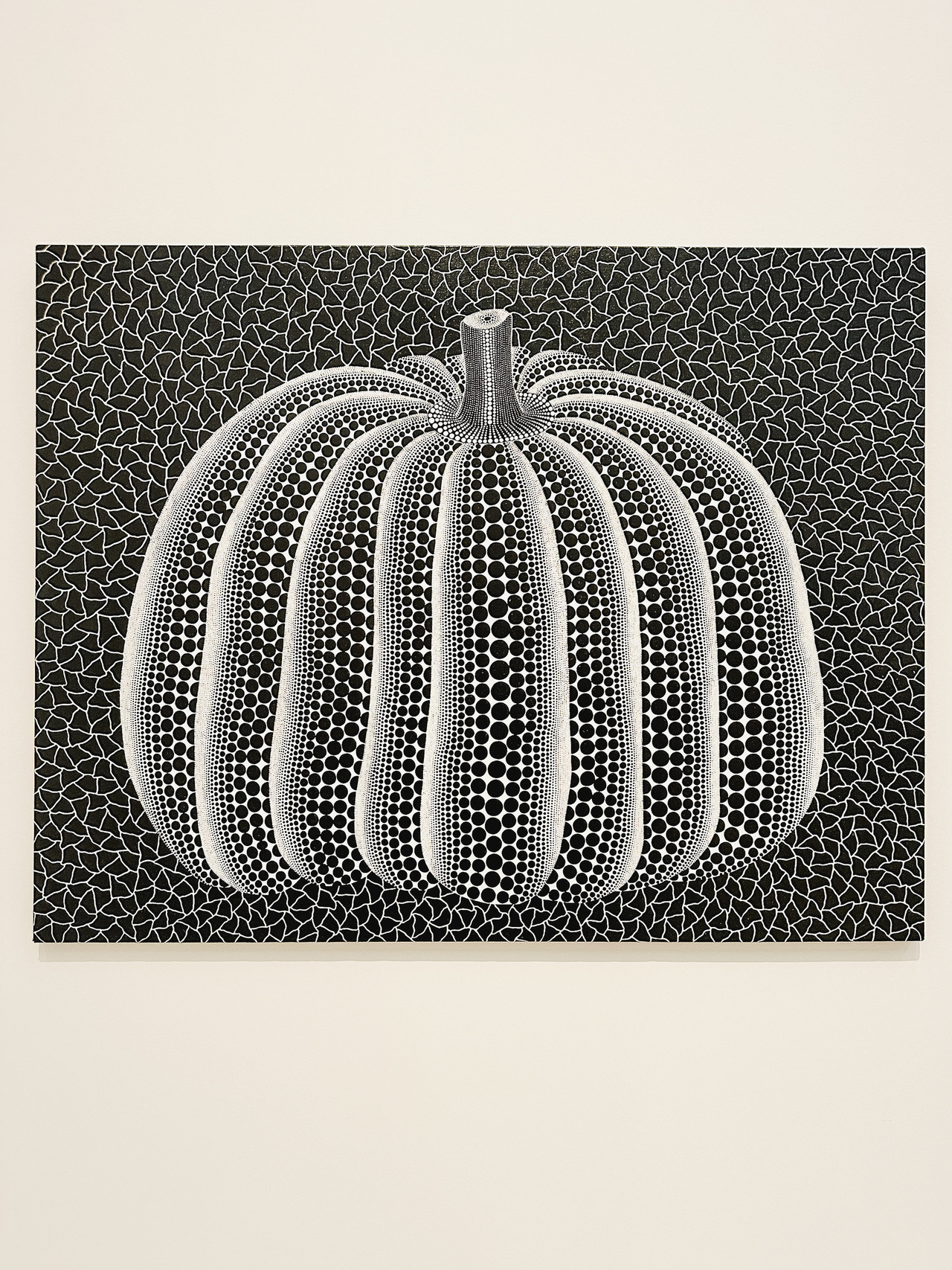
If you know only a little about Kusama, you probably know the pumpkins. The large yellow pumpkin covered in black dots has become one of the most recognizable images associated with her work. But the exhibition doesn't simply give you the famous pumpkin and move on.
You encounter different works and different versions. You begin to see how shapes, dots, repetition, and ideas return. And eventually you arrive at a space filled with pumpkins.
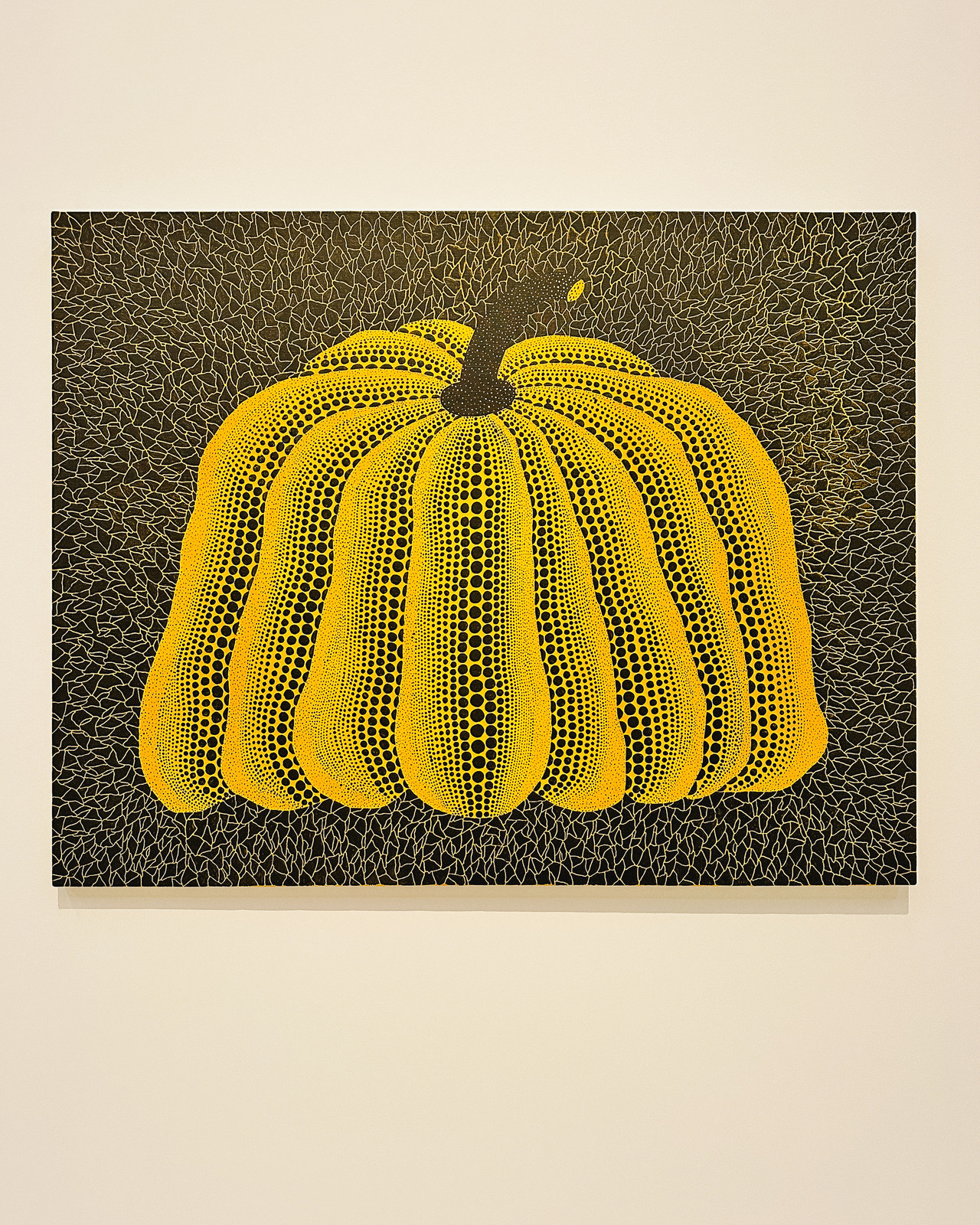
I loved that progression because by then you are not only looking at an iconic object. You are beginning to understand that an artist can return to the same subject over and over again without really making the same thing.
Kusama had a relationship with pumpkins from childhood. In a 2010 text displayed at the exhibition, she describes them as lovable, humorous, and a source of peace. She calls the pumpkin her “spiritual home since childhood.”
And then there is the way she makes us see them: Yellow and black. Covered in dots that change in size as they move across those strange, rounded forms.
When I showed a video from the exhibition to my mother, who didn't know Kusama's work, her first reaction made me laugh. She thought they were bananas, all together. Only after reading that they were pumpkins did she see the pumpkin, and actually, I understand why.
When somebody says pumpkin, most of us already have an image in our heads. We expect orange, or maybe green. We expect a certain shape, but we don't necessarily expect yellow and black.
So why can't a pumpkin be yellow? Of course, yellow pumpkins exist. That's not really the question.
The interesting question for me is how much of what we see is determined by what we already expect to see.
Who decided what a pumpkin should look like?
One of the things I learned while visiting the exhibition was that the pumpkin has not always carried positive associations in the language around Kusama.
That caught my attention because language does this all the time. We take things from nature, bodies, illnesses, animals, or objects and turn them into descriptions of people. Eventually we use those associations so automatically that we rarely stop to ask where they came from.
I experience this living in the Netherlands too. Dutch has insults involving diseases, something I found incredibly strange when I first encountered it. A disease is something that happens to a person and needs treatment. Why would we turn that into an insult?
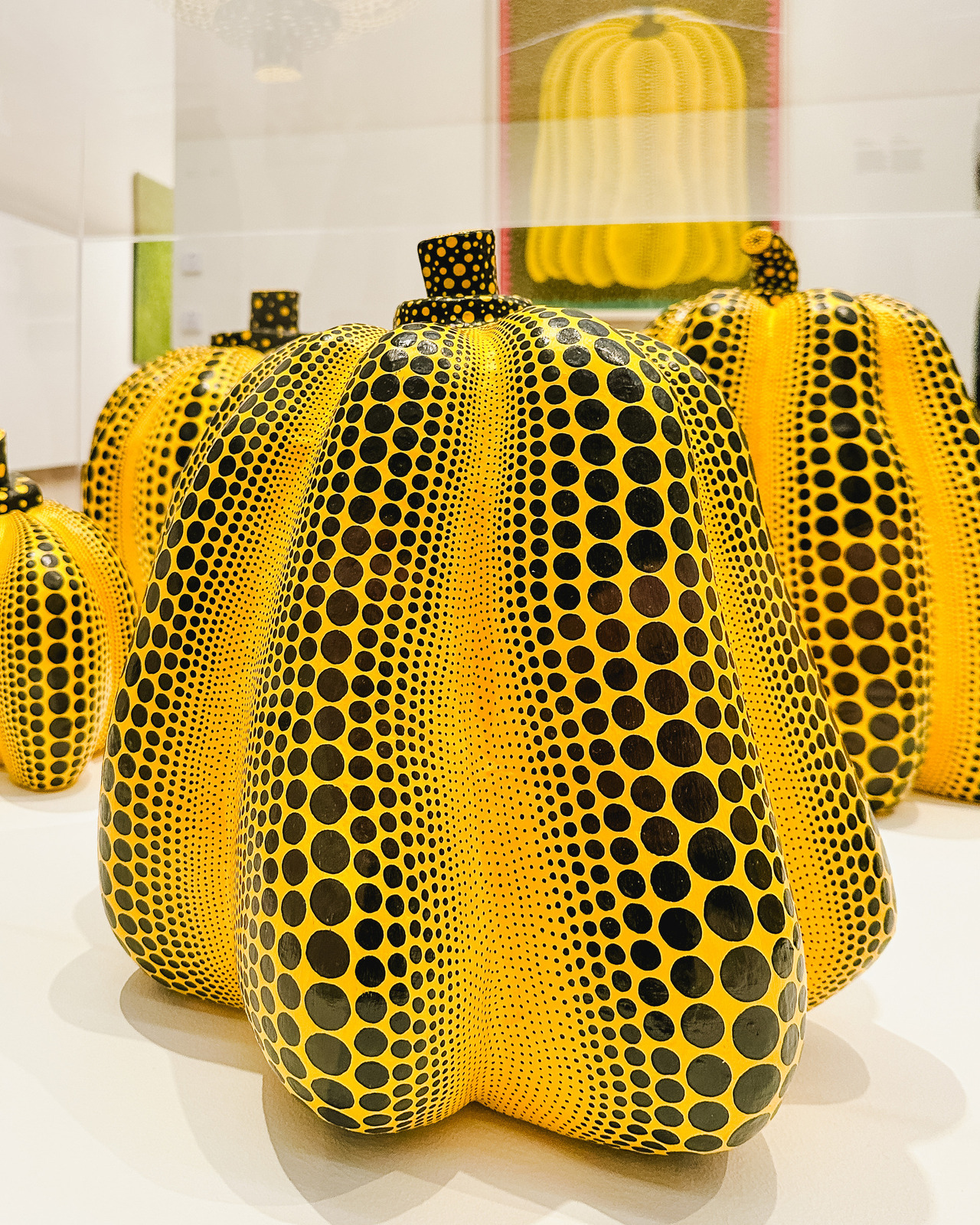
It made me think about how easily we inherit associations without deciding whether we agree with them. Kusama's response to pumpkins went in another direction. She loved them.
She saw humour, beauty and comfort in them. And she kept returning to them. Eventually, the thing she saw became so closely associated with her that millions of people now see a yellow pumpkin covered in black dots and think: Kusama.
That is extraordinary when you think about it.
Perhaps this is how a visual language begins
Looking at the pumpkins made me think about my own work, although on a much smaller scale. When I started photographing people professionally in Peru around 2009 and 2010, the photography I saw around me was often much more posed than the work I wanted to make.
Portraits were frequently made indoors with backdrops. Even at weddings, photographers could bring a backdrop and create the portraits there. I didn't want to do that.
I had been looking at photography from elsewhere, and I became interested in using the environment instead. I photographed a couple using the light from a vending machine. During another wedding, I photographed a couple beside a truck carrying recycled materials. I was interested in putting people who were beautifully dressed for a wedding against surroundings that weren't necessarily considered “beautiful.” The contrast was the interesting part.
And at the time, that approach resonated with people. I wasn't sitting there thinking, I am going to challenge the definition of wedding photography. I simply saw another possibility, and that distinction matters to me now.
Because creativity is often described as if we need to invent something completely new. But perhaps part of developing a creative voice is much simpler than that. You notice what catches your attention, follow it, do it again, repeat it without noticing it, return to it years later, and eventually, perhaps, those decisions begin to form a language.
The value of returning to the same idea
One of the things I am taking from this exhibition is that repetition doesn't necessarily mean a lack of ideas, but going deeper into one.
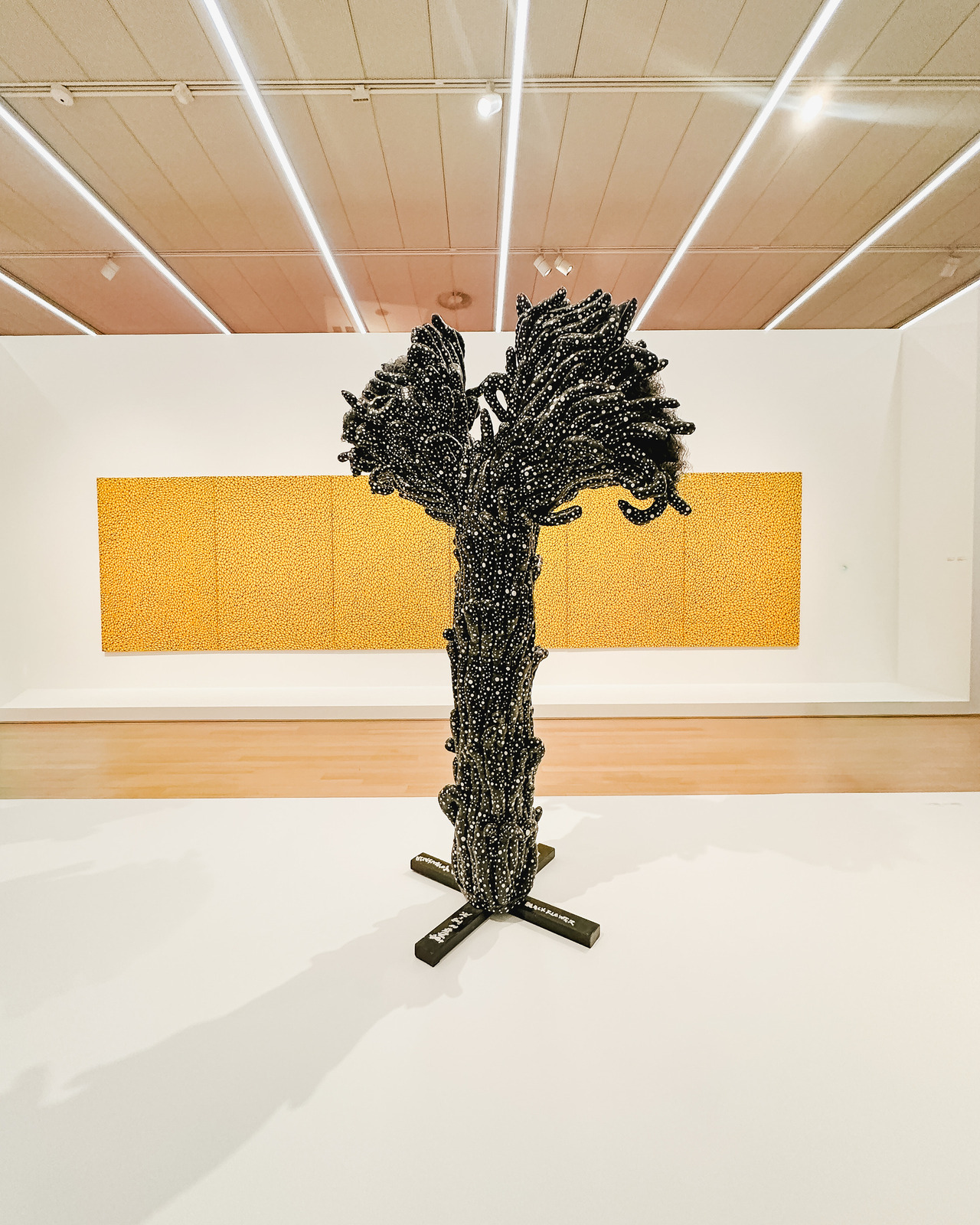
An artist can spend decades returning to plants, dots, nets, pumpkins, bodies, infinity, and repetition, and those ideas can keep changing because the person working with them is changing too. The subject doesn't always have to change.
Sometimes what changes is us.
Our skill, circumstances, the tools available to us, or the scale of our work changes. We understand ourselves differently, and suddenly an idea we explored years ago can become something else entirely.
Perhaps that's also why looking at a retrospective is so different from seeing one famous work online. You don't only see the result but the journey towards it.
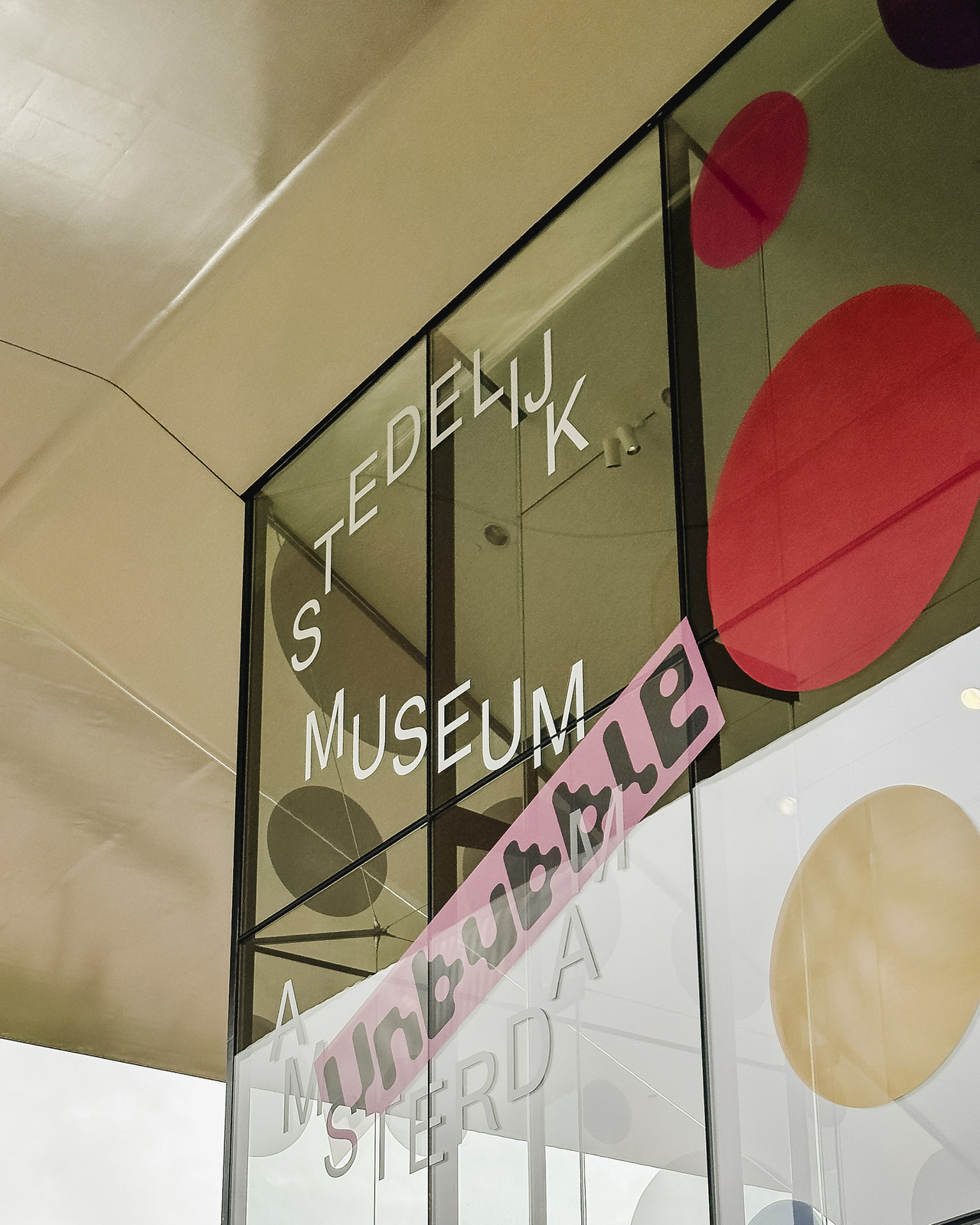
Seeing Yayoi Kusama at the Stedelijk Museum Amsterdam
This is the first article in a series I'm writing after visiting the Yayoi Kusama retrospective at the Stedelijk Museum in Amsterdam.
I'm deliberately not trying to show the entire exhibition in one article or one Reel.
The exhibition made me think about too many different things: where our ideas come from, how our surroundings affect creativity, how difficult it can be to see our own work while we are inside it, and what happens when an artist's ideas become part of the visual language of generations that come after them. Those deserve their own conversations.
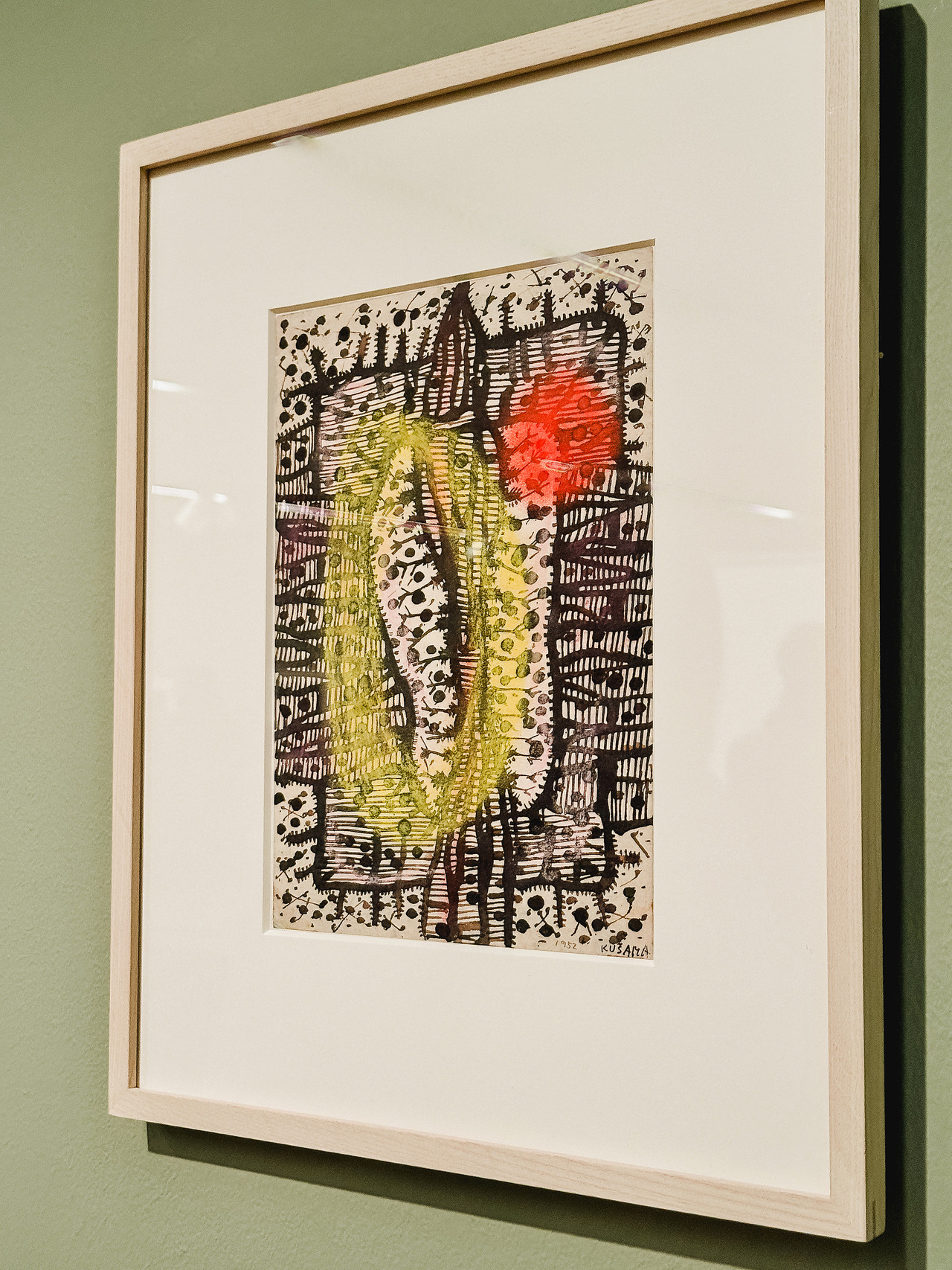
And there is another reason I'm not showing you everything: I think you should go. There is something very different about standing in front of these works, moving from small early drawings to paintings, sculptures and immersive spaces, and slowly recognizing ideas that appear again and again.
If you go, don't rush directly towards the works you already recognize. Look at what comes before them.
You might find that the famous pumpkin becomes much more interesting once you have seen some of the journey that led to it, and perhaps ask yourself a question while you're there:
What have you decided something is supposed to look like, and who taught you to see it that way?
Yayoi Kusama
Stedelijk Museum Amsterdam
11 September 2026 – 17 January 2027
Until the next time in Amsterdam,
Joanna
Vacation Photographer in Amsterdam